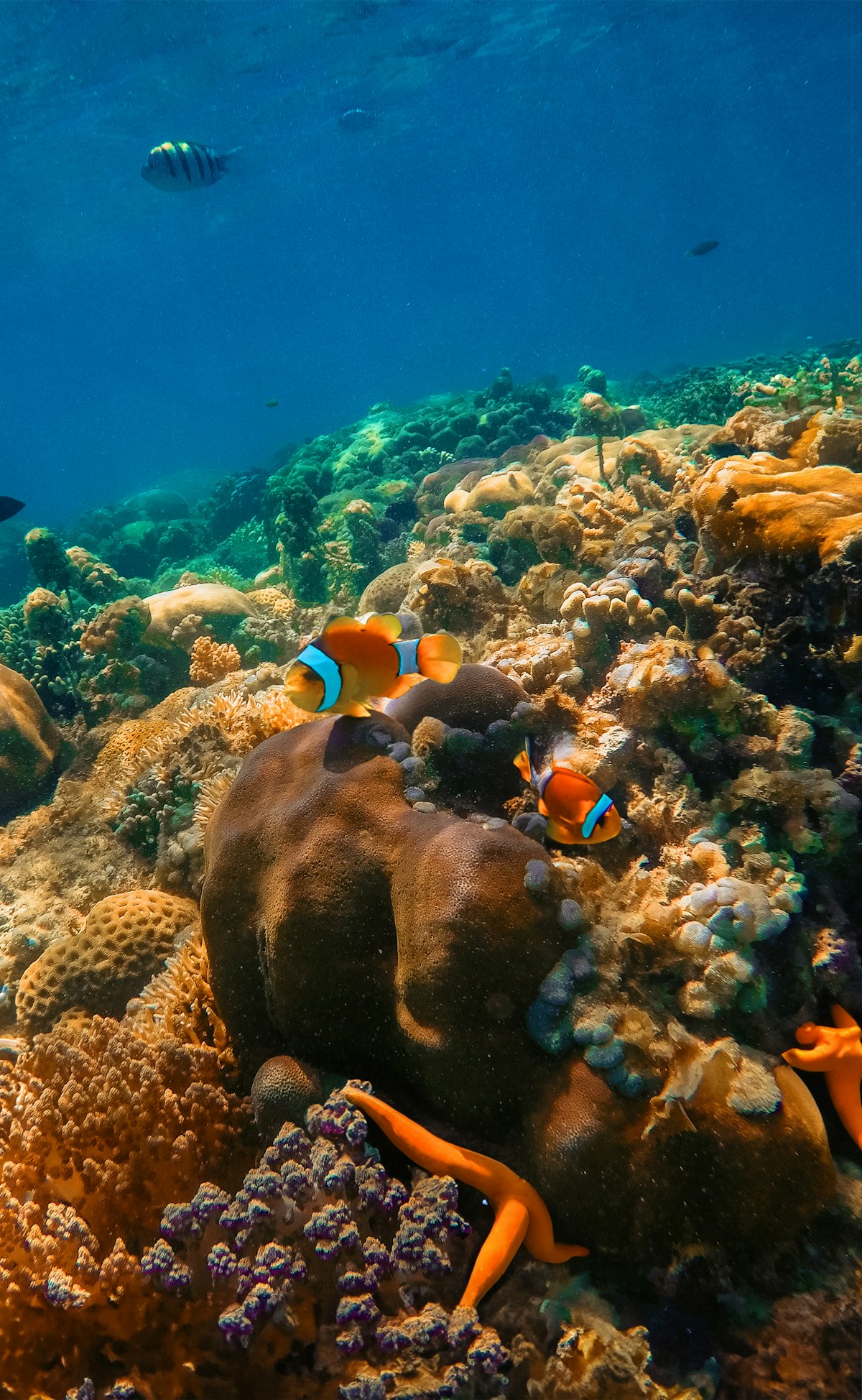
Sanur’s position on the calm eastern coast of Bali makes it one of the most accessible places on the island to enter the water. The natural reef wall that runs along the beach creates a shallow protected lagoon - flat, clear, and easy to enter without fighting surf. For organised snorkelling with dramatically higher fish and ray density, Sanur is also the launch point for Nusa Penida day trips, putting some of Bali’s finest underwater terrain within 40 minutes.
Snorkelling Directly from Sanur Beach
Sanur’s beach faces east across the Badung Strait. A coral reef wall runs roughly parallel to shore at 200–400 metres from the beach access points, enclosing a lagoon that is 0.5–3 metres deep depending on tide. The lagoon is ideal for beginners, families with children, and anyone who wants to float in warm, protected water without a boat ride.
The reef wall itself sits in 3–8 metres. Hard coral formations dominate - table corals, branching staghorn, and smaller brain coral heads. Fish populations include parrotfish, surgeonfish, wrasse, butterflyfish, and reef sharks (grey tip, non-aggressive, occasional). Sea turtles are regular visitors and relatively comfortable around snorkellers - they surface to breathe every 4–7 minutes and can be observed without approaching.
Best beach access points - Sanur’s beach access lanes (called gang) are numbered along Jalan Danau Tamblingan. The most productive reef sections are accessed from Pantai Mertasari (northern Sanur), Pantai Sindhu (central), and Pantai Karang (southern). Each has a slightly different reef character. Mertasari is the least trafficked; Karang is closest to the main harbour and busiest.
Tide timing - snorkelling the outer reef works best at mid-to-high tide when there’s sufficient water over the inner lagoon for comfortable swimming. At low tide the lagoon can be 0.5 metres or less, making the swim to the reef awkward. Check tide tables on a free app (Tides Near Me, for example) before heading down.
Nusa Penida Snorkelling Day Trips from Sanur
The recommended snorkelling day trip from Sanur: fast boat to Nusa Penida for 2–3 stops at the island’s top snorkel sites, returning to Sanur by afternoon. What Nusa Penida offers over the local reef:
- Visibility: typically 15–25 metres versus 5–10 metres at Sanur Reef
- Fish density: significantly higher species count and biomass
- Manta rays: Manta Point is a reliable manta cleaning station year-round
- Dramatic topography: underwater cliffs, caves, and channels absent from Sanur’s flat reef
Typical Nusa Penida snorkel stops:
Manta Point - the south-coast cleaning station where reef mantas aggregate. Snorkellers enter the water and float - guides point out mantas as they rise to the shallower cleaning area. Currents can be moderate; guides stay close to less confident swimmers. This is a boat-entry snorkel, not shore-based.
Crystal Bay shallows - the same bay known for scuba mola mola sightings also has accessible snorkelling in 3–8 metres on the inner bay edge. Hard coral gardens with reasonable fish density. Current is manageable for most snorkellers outside mola mola season.
Search hotels in Sanur on Booking.com
Ped (north coast) - the calmer alternative site on Nusa Penida’s north coast. Gradual sandy slope in 2–6 metres with good macro - nudibranchs, sea stars, and small cuttlefish. Very little current; suitable for all skill levels.
Gamat Bay - an enclosed bay on the northeast side of Nusa Penida. Exceptional for turtles - resident green turtles feed on the seagrass beds in 1–4 metres and are habituated to snorkel traffic. Entry from a small beach.
Snorkelling Tour Operators from Sanur
Operators cluster around Sanur Harbour (Jalan Hang Tuah area) and along Jalan Danau Tamblingan. Prices for Nusa Penida snorkelling trips (as of 2026):
Budget group trips (shared boat, 8–15 people): IDR 250,000–350,000 per person including 2–3 snorkel stops, snorkelling equipment, boat captain, and simple lunch. Departure 07:00–08:00, return 14:00–15:00. Multiple operators offer this; quality varies - read recent reviews before booking. You can also book a Nusa Penida snorkelling trip online to lock in a spot during peak months. Booking on arrival the evening before usually works in the shoulder season; book 1–3 days ahead in July–August.
Private snorkel boat (1–6 people): IDR 800,000–1,500,000 total for the boat, allowing you to choose stops, set timing, and avoid crowds at any given site. Worth splitting with 3+ people. Some guesthouses arrange this directly.
Hotel-arranged day trips (Puri Santrian, Segara Village, Inna Bali Beach): most 4-star Sanur hotels can arrange Nusa Penida trips via reception. Usually slightly higher price than harbour walk-in but includes hotel pick-up and return.
Reputable operators: Rocky Fast Cruises (transport-focused, well-maintained boats), Manta Dive Sanur (dive and snorkel), Bali Snorkeling Trips (specialist snorkelling focus). All operators on the harbour are accessible directly on the day.
Gear Rental in Sanur
Snorkelling gear is available from beach vendors, dive shops on Jalan Danau Tamblingan, and from guesthouses. Rates as of 2026:
- Full set (mask, snorkel, fins): IDR 40,000–80,000/day
- Mask and snorkel only: IDR 25,000–50,000/day
- Rash guard rental: IDR 30,000–50,000/day
Nusa Penida day trip boats typically include basic snorkel equipment in the package price - confirm before paying, and assess quality on the day. If you have your own mask, bring it: a well-fitting personal mask makes a tangible difference to the experience, especially if you wear glasses (prescription masks can be rented from some dive shops on Jalan Danau Tamblingan at IDR 50,000–80,000/day).
Reef-safe sunscreen is mandatory in the Nusa Penida marine conservation area - apply before leaving the hotel. Mineral SPF (zinc oxide/titanium dioxide) is widely available in Sanur supermarkets and health stores. For a wider selection of guided water activities in Sanur, browse options before your trip.
Practical Tips
Book morning departures: boats depart early for good reason - Nusa Penida’s currents increase through the day, visibility is best in the morning before afternoon plankton bloom, and afternoon swells on the south coast can make Manta Point rougher. Commit to a 07:00 departure.
Confirm current conditions before booking manta points: manta sightings are high probability but not guaranteed. Boats that promise “100% manta guaranteed” are overstating. Most trips see mantas on Manta Point, but sightings vary - some days produce 20+ rays, others 2–3. This is wildlife, not a zoo.
Seasickness on the crossing: the Badung Strait can be choppy, particularly on the return journey in the afternoon. Take non-drowsy seasickness medication (cinnarizine/Stugeron) 1 hour before departure if prone. The crossing is 30–40 minutes.
Children: Sanur beach snorkelling is ideal for children from age 6 upward in the protected lagoon. Nusa Penida day trips are appropriate for children aged 10+ who are confident swimmers - the open-water entry from a boat and the currents at some sites require a degree of swimming competence. Life jackets are available and should be used for younger or less confident children.
Getting to Sanur
Sanur is 30–45 minutes by taxi from Kuta/Seminyak and 1–1.5 hours from Ubud. Bluebird metered taxis and Grab are both reliable options. From the airport, expect IDR 80,000–130,000 by meter. Parking along Sanur beachfront is straightforward if driving yourself.
For Nusa Penida day trips, the departure point is Sanur Harbour on Jalan Hang Tuah Timur - a 5–10 minute walk from most Sanur accommodation or a short Grab/ojek ride.