Search hotels in Wakatobi on Booking.com
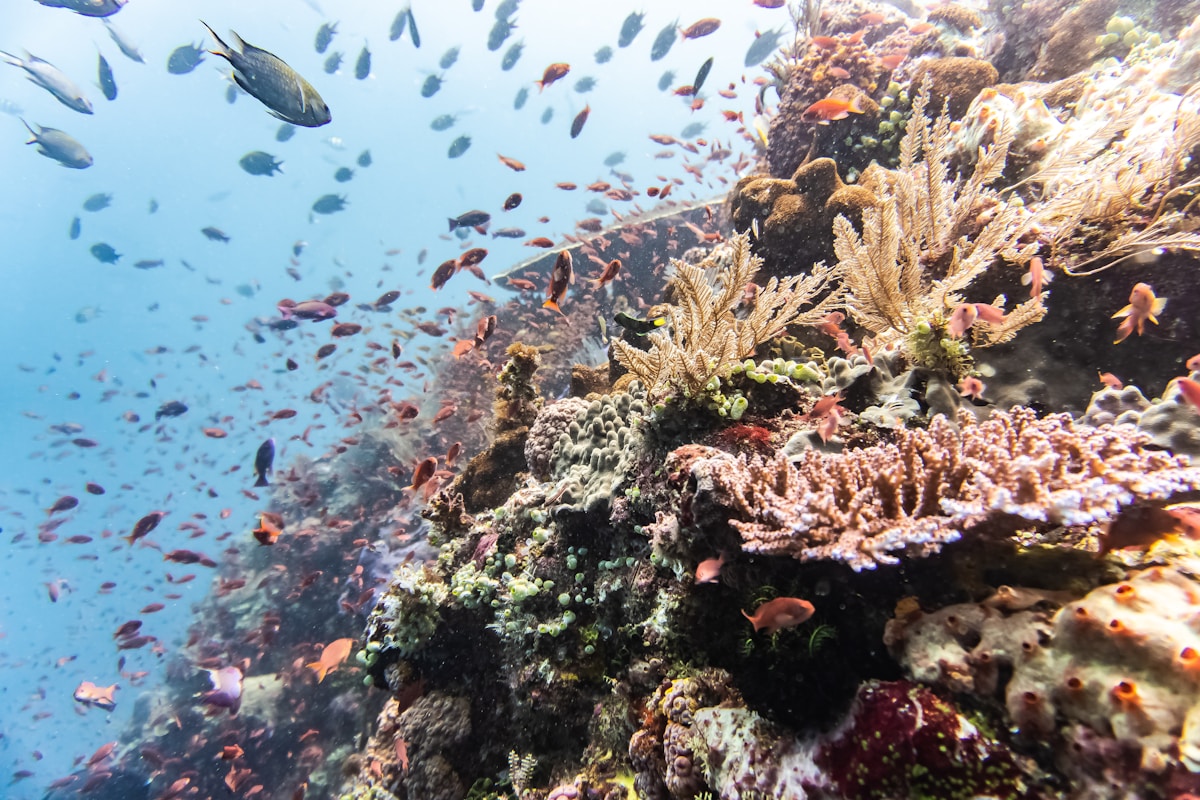
Wakatobi National Park, in Southeast Sulawesi, covers 1.39 million hectares of ocean and sits at the southern edge of the Coral Triangle. The name is an abbreviation of the four main islands: Wangi-Wangi, Kaledupa, Tomia, and Binongko. Divers who have seen Bali, Komodo, and the Gilis typically describe their first dive in Wakatobi as a different category of experience - the coral cover is exceptional, the water clarity is among the best in Indonesia, and the absence of mass tourism means sites are rarely crowded.
Water Conditions
Visibility at Wakatobi averages 20–40 metres, with 30m-plus common for much of the year. Water temperature holds at 26–30°C across all seasons. There are no significant thermoclines - the water column is uniformly warm from surface to depth. These conditions make Wakatobi unusual in the Indonesian context, where many other dive destinations have variable visibility and seasonal temperature drops.
The best season runs from April to December, outside the northwest monsoon that brings rougher seas and reduced visibility from approximately January to March. April, May, October, and November offer particularly good surface conditions combined with good visibility.
The Signature Dive Sites
Fan38
Fan38 is one of Wakatobi’s most celebrated sites and arguably its most photographed. The site takes its name from the extraordinary sea fan garden at approximately 38 metres - an expanse of large gorgonian sea fans that is among the largest concentrations in Indonesia. Fan size ranges from dinner-plate diameter to specimens spanning several metres across. The shallower sections of the reef above 20 metres offer healthy hard coral and strong fish populations. Current runs across the site at times and concentrates pelagics above the fan garden. Advanced Open Water recommended for the deeper section.
Horehe
A wall dive starting at approximately 15 metres and descending beyond recreational diving limits. The upper wall (15–30m) is heavily colonised with soft coral, sea fans, and crinoids. The deeper section to 40m is where large pelagic encounters - grey reef sharks, large trevally, occasional barracuda schools - are most likely. Visibility on the wall is consistently good. Current varies; the stronger the current, the better the pelagic activity above the wall edge. Advanced certification recommended.
Turkey Beach
A shallow coral garden running from approximately 3 to 18 metres. The shallower depth and relatively calm conditions make Turkey Beach well-suited to macro photography - the site has abundant nudibranchs, flatworms, ghost pipefish, and occasional frogfish on the rubble sections between coral heads. Less dramatic than Horehe or Fan38 in terms of scale but consistently rewarding for detail-focused divers and photographers. Open Water level.
Roma
Roma is a coral reef running from around 5 to 25 metres with a layout that produces reliable encounters with green and hawksbill turtles throughout the year. Whitetip reef sharks rest along the deeper sections and on the sandy patches between reef structures. The site has good fish diversity - schools of sweetlips, batfish, Napoleon wrasse, and various parrotfish species. A consistent site regardless of conditions elsewhere in the park. Open Water level for most sections.
The Zoo
The name is blunt but accurate. The Zoo is a reef known for its sheer density of marine life - the combination of coral structure, current, and proximity to deeper water creates a concentration of reef fish that can be overwhelming. Surgeonfish, fusiliers, anthias, and basslets move in schools large enough to block out the background reef. Larger species - grouper, humphead parrotfish, snappers - patrol the edges. The Zoo is a reliable choice when divers want volume of life rather than a specific encounter. All levels.
Teluk Maya (Maya Bay)
A shallow bay with a sandy floor and scattered coral bommies reaching up from 3 to 12 metres. Seahorses are found here with above-average frequency - ask your guide to look for them on the bommie bases and on patches of algae. Pipefish, mantis shrimps, and various flatheads are also consistently present. Another macro photographer’s site, complementary to Turkey Beach on a day focused on small subjects.
Dive Operations and Logistics
Wakatobi Dive Resort on Tomia Island is the primary dedicated diving resort in the park. It provides unlimited shore diving for guests, boat dives to all named sites, and a well-maintained equipment hire fleet. The house reef at Wakatobi Dive Resort is itself notable - accessible directly from the jetty at any hour, and productive enough that many guests spend as much time on the house reef as on boat dives.
For non-resort visitors, dive guides and boat charters are available through local operators on Wangi-Wangi, the main island. Costs for a two-tank boat dive with a local operator run approximately IDR 500,000–800,000 per person as of 2026, depending on site and boat.
Liveaboards represent the most efficient way to cover the full range of sites if you are not based at Wakatobi Dive Resort. Liveaboards depart from Bali (Benoa Harbour) and Ambon and typically run 7–10 day itineraries covering Wakatobi alongside Banda Sea, Komodo, or Sulawesi sites. Pricing varies by operator but starts from approximately USD 250–350 per day as of 2026 for a mid-range vessel with full-board and unlimited diving.
Certification Requirements
Most sites at Wakatobi are accessible to PADI Open Water divers. Turkey Beach, Roma, The Zoo, and Teluk Maya are all within the 18m Open Water limit at their primary depths, though some sections run deeper.
Horehe and Fan38 involve significant time below 20 metres and put you close to the 30m Advanced Open Water limit or below it. Advanced Open Water certification is recommended for these sites, and many operators will require it.
Night diving is available from Wakatobi Dive Resort and some local operators. The house reef produces excellent nocturnal encounters - Spanish dancer nudibranchs, hunting octopus, and various crustaceans emerge after dark.
Getting to Wakatobi
Wakatobi is not a casual add-on. The most common routing is Bali or Jakarta → Makassar (Sultan Hasanuddin Airport) → Bau-Bau (Baubau Betoambari Airport), followed by a speedboat across to Wangi-Wangi. Total travel time from Bali runs approximately 8–12 hours including connections and transfers.
Wakatobi Dive Resort operates its own charter flights from Bali direct to Tomia Island, available to resort guests - the most convenient option if budget allows.
The effort of getting there filters the crowds. Wakatobi sees a fraction of the diver traffic of Bali, Gili Trawangan, or even Komodo. Sites that would be crowded with boats in more accessible locations have, at Wakatobi, just your group.
Browse guided dive trips and liveaboards at Wakatobi - tours include full equipment, guides, and boat transport to the best sites. Dive accident insurance is essential in Indonesia - nearest recompression chambers can be hours away. EKTA policies include dive accident cover when added at checkout. Bookaway covers the main ferry routes between the islands - book in advance during peak season when boats fill quickly.
See Also
- Wakatobi island guide - the full overview: when to go, where to stay, and how to reach the islands
- Indonesia diving guide - comparing Wakatobi with Raja Ampat, Komodo, and Bali’s dive sites
- Indonesia liveaboard diving - liveaboard routes that combine Wakatobi with Banda Sea and Sulawesi
- Sulawesi island guide - the broader island context for Wakatobi and the Sulawesi dive triangle
- Sulawesi diving itinerary - planning a dedicated diving trip around Sulawesi and Wakatobi