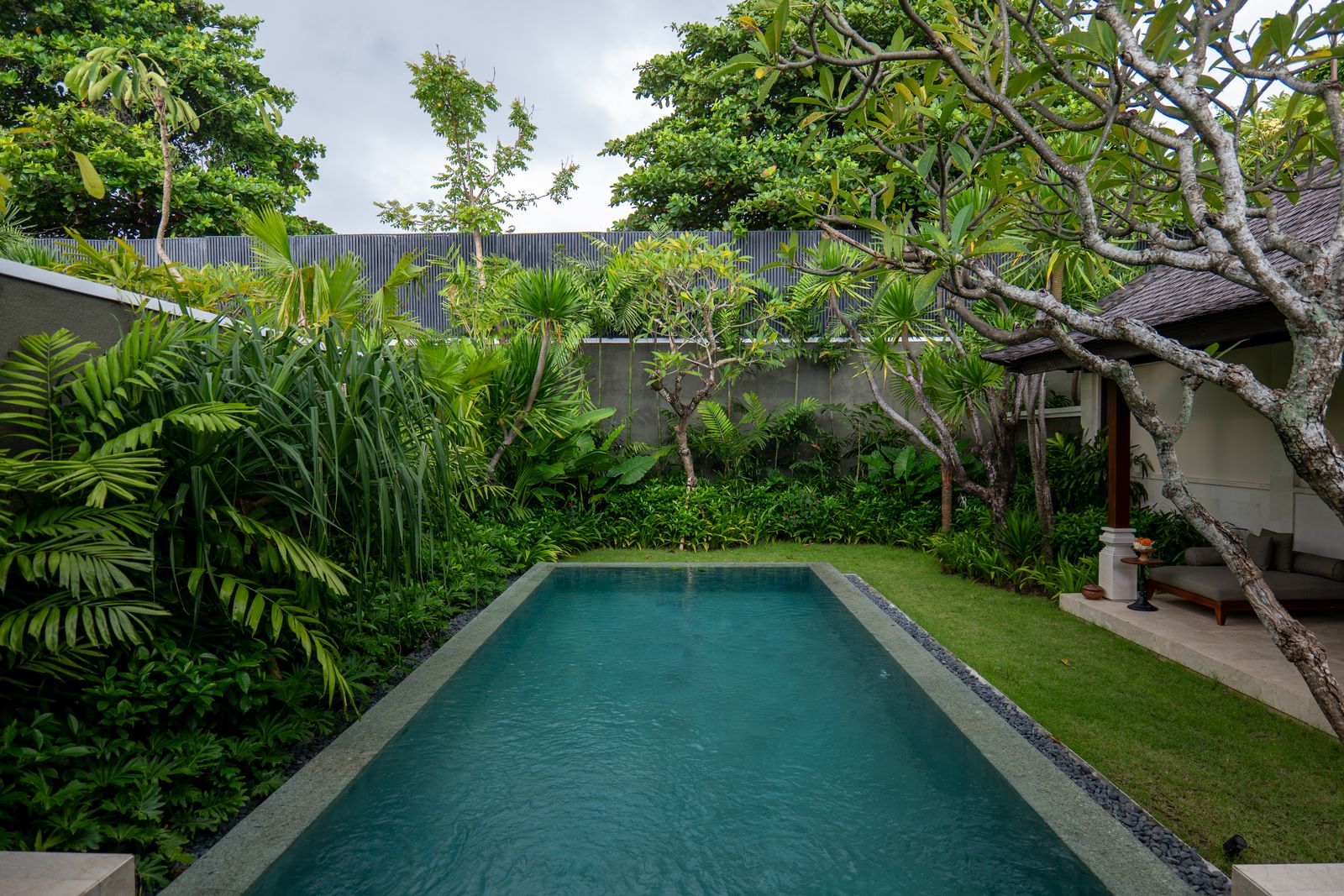
Bali consistently ranks among the world’s top retirement destinations, and for good reason. A private villa with a pool, year-round warmth, a rich local culture, and a monthly cost roughly half what you would spend in Western Europe or Australia: the numbers work. The main barrier used to be the visa. Indonesia’s Second Home Visa, introduced in 2022 and refined since, has changed that. Here is what you need to know in 2026.
The Indonesia Second Home Visa (E33)
The Second Home Visa, formally indexed as E33 and issued as a KITAS (temporary stay permit), is the main long-term residency option for foreign retirees and high-net-worth individuals. It does not require a local employer, a local company, or even a retirement age. You qualify on financial grounds alone.
Financial requirement
You must maintain a minimum balance of IDR 2,000,000,000 (approximately USD 126,000 as of 2026) in an Indonesian state bank such as Bank Mandiri, BNI or BRI. This is a deposit, not a fee: the money remains yours, earns interest, and can be withdrawn once the visa expires or is cancelled. Alternatively, you can qualify by owning Indonesian property with a minimum value of IDR 5,000,000,000 (approximately USD 315,000) held under Hak Pakai (right-of-use title), the ownership structure available to foreigners.
Duration and renewal
The visa is issued for either 5 years or 10 years with no intermediate renewals required. A 5-year visa can be extended once for a further 5 years. This is a significant improvement over older visa stacking arrangements that required quarterly or annual trips to immigration offices.
Government fees
The government visa stamp fee is approximately USD 150 for a new KITAS. This does not include legal/agent processing fees, biometrics, document legalisation or translation costs, which typically add USD 500 to 1,500 depending on the agent and complexity. Factor in a total budget of around USD 700 to 2,000 for the first application.
Family dependants
Spouse, children and parents can be added as dependants on a single Second Home Visa. Dependant permits match the validity of the primary visa (5 or 10 years) with no separate financial requirement. The qualifying deposit or property covers the entire family.
What you cannot do
The Second Home Visa is a residence permit, not a work permit. You cannot be employed by an Indonesian company, sell goods or services to Indonesian clients, or earn income from Indonesian-based activity. Remote work for a foreign employer or business is permitted.
Passport validity requirement
Your passport must have at least 36 months of remaining validity at the time of application. Clean immigration record required: prior deportation or serious violations in Indonesia will affect eligibility.
Cost of Living in Bali (2026)
Bali is not the cheapest destination in Southeast Asia, but the value proposition for retirees from high-income countries is strong. Here is a realistic breakdown for 2026.
Housing
The most significant variable. Annual lease agreements are standard and typically 10 to 17 percent cheaper than month-to-month rates. Expect:
- Budget one-bedroom apartment in Denpasar or outer Ubud: from USD 350 to 500 per month
- Two-bedroom villa with private pool in Sanur or Ubud: USD 600 to 900 per month
- Mid-range two-bedroom villa in Canggu: USD 900 to 1,400 per month
- Seminyak upper-end villa or serviced residence: USD 1,800 to 3,500 per month
Prices vary considerably by location, age of property and landlord. Working with a local property agent rather than online listing platforms typically yields lower prices.
Food
A full meal at a local warung (family restaurant) costs USD 1.50 to 3. Eating predominantly at local restaurants, a single person spends approximately USD 150 to 250 per month on food. An expat-oriented diet mixing local warungs with Western cafes and occasional restaurants runs USD 350 to 600 per month. Grocery delivery from local supermarkets is widely available in the main expat areas.
Transport
Most retirees in Bali use a combination of rented scooter (approximately USD 60 to 80 per month) and ride-hailing apps (Gojek, Grab). Monthly transport costs typically run USD 100 to 200, depending on how often you use private drivers.
Utilities and connectivity
Air-conditioning is the main variable. Expect electricity bills of USD 60 to 150 per month depending on villa size and usage. High-speed internet (50 to 200 Mbps fibre) costs approximately USD 25 to 40 per month in most established expat areas. Water and gas add another USD 20 to 40.
Total monthly budget summary
| Lifestyle | Single person | Couple |
|---|---|---|
| Modest (local-oriented, outer areas) | USD 900 to 1,200 | USD 1,400 to 1,800 |
| Comfortable (villa pool, mixed dining) | USD 1,500 to 2,200 | USD 2,350 to 3,450 |
| Upscale (Seminyak/Berawa, regular dining out) | USD 3,000 to 5,000+ | USD 4,000 to 7,000+ |
Bali is roughly 50 to 65 percent cheaper than Western Europe and 60 to 70 percent cheaper than Australia for a comparable lifestyle.
Best Areas to Retire in Bali
Sanur
Sanur is the traditional retiree neighbourhood and for good reason. The beach is calm (protected by a reef), the streets are flat and walkable, and the area has avoided the over-development of Kuta and the tourist crowds of Seminyak. A mature expat community, primarily Australian and Northern European, has been here for decades. BIMC Nusa Dua is 25 minutes away and Siloam Hospitals Bali is roughly the same distance. Sanur is generally quieter in the evening and better suited to retirees who want stability over nightlife.
Ubud
Bali’s cultural and creative capital sits 700 metres above sea level in the rice-field highlands, which means cooler temperatures (typically 24 to 28 degrees Celsius) and lower humidity than the coast. Ubud draws retirees who want yoga, wellness retreats, arts and craft markets, and proximity to traditional Balinese culture. The restaurant scene is strong and increasingly health-focused. Drawbacks: it is landlocked (around 40 minutes from the nearest decent beach), traffic through the central market area can be slow, and some infrastructure (roads, drainage) is older. Rents outside the immediate town centre are among the lowest in Bali.
Canggu
Canggu has evolved into one of Asia’s most popular expat hubs. It combines beach access, a dense network of cafes and coworking spaces, active nightlife and good restaurants. Active retirees who want to surf, cycle or stay connected to a younger international community tend to choose Canggu. It is noisier and more congested than Sanur or Ubud, and rents are higher. The area stretches from Canggu village through Berawa and Pererenan, with Pererenan being quieter and better value.
Seminyak
Seminyak is the most polished and expensive of the main expat areas. Boutique shopping, quality restaurants and beach clubs attract an upscale crowd. For retirees, Seminyak makes sense if nightlife and convenience are priorities over cost efficiency. Rents are among the highest in Bali outside of resort complexes.
Nusa Dua
Less discussed but worth considering for retirees who want proximity to the best private hospitals on the island (BIMC Nusa Dua is located here) and a quieter, more resort-like environment. The area is more spread out, less geared toward long-term expat life, but practical for those who prioritise healthcare access above everything else.
Healthcare for Retirees in Bali
Healthcare quality in Bali has improved considerably over the last decade but still has limits. For routine consultations, minor procedures and intermediate care, Bali is adequate. For serious cardiac events, complex surgery or specialist oncology, medical evacuation to Singapore or Australia is the standard.
Key hospitals:
- BIMC Hospital Kuta and Nusa Dua: The default choice for Western expats. 24/7 emergency department, English-speaking staff, direct billing with major international insurers. GP consultations from approximately USD 40 to 100.
- Siloam Hospitals Bali: JCI-accredited, typically 30 to 50 percent cheaper than BIMC for equivalent treatments.
- Kasih Ibu Hospital, Denpasar: A solid mid-range option well-regarded by long-term residents.
Health insurance
International health insurance is not optional for retirees in Bali. Coverage should include at minimum USD 500,000 per event, full inpatient and outpatient coverage, and medical evacuation (evacuation to Singapore alone costs USD 55,000 to 100,000 without coverage). Providers commonly used by expats in Bali include AXA International, Pacific Cross and Cigna Global. A comprehensive policy for a healthy adult aged 55 to 65 runs approximately USD 200 to 400 per month depending on age, plan level and provider. For shorter stays before committing to full residency, travel insurance for Indonesia covers medical emergencies and evacuation at a fraction of the annual expat premium.
The Application Process
The Second Home Visa is applied for through an official immigration sponsor (a licensed Indonesian entity that formally underwrites your application) or directly through the Indonesian Immigration Directorate for those who meet the criteria independently. Most expats use a reputable Bali-based legal or visa agent for the first application. Steps broadly are:
- Obtain a suitable entry visa (typically a visit visa or e-Visa on Arrival) to enter Indonesia
- Within 90 days of arrival, submit the Second Home Visa application through your sponsor or agent to Imigrasi (the Indonesian Immigration Directorate)
- Provide proof of qualifying funds: a statement from an Indonesian state bank showing the IDR 2 billion balance, or property title documentation
- Attend biometrics and complete police registration (STM) and civil registration (SKTT)
- Receive your KITAS card, which confirms your legal residence status
Processing time varies but typically runs four to eight weeks from complete document submission. The official immigration website is imigrasi.go.id.
Tax Position
Income sourced from outside Indonesia is not taxed by Indonesia under the Second Home Visa. You will not be assessed Indonesian income tax on foreign pensions, investment income, or remote work earnings from foreign employers. Indonesian-sourced income would be taxable. Always take independent tax advice for your home country obligations: some countries tax residents on worldwide income regardless of where they live.
Practical Realities
A few things that trip up first-time retirees in Bali:
Leasehold only: Foreigners cannot own freehold land in Indonesia. Villas are available on long leaseholds (typically 25 to 30 years, sometimes renewable). The Hak Pakai property ownership route that qualifies for the Second Home Visa applies to apartments (Strata Title) and, in some cases, to landed property via a long-term arrangement with Indonesian legal structures. Always use an established property lawyer for any property transaction.
Annual visa check-ins: Even with a 5 or 10-year KITAS, there may be annual reporting requirements at the local immigration office depending on your area. Confirm these with your agent at application time.
Currency: Daily life is priced in Indonesian rupiah (IDR). The exchange rate against USD, EUR and AUD fluctuates, which means your effective cost of living in home-currency terms varies. In 2026, USD 1 buys approximately IDR 15,800 to 16,200. Setting up a local bank account (many expats use Bank Central Asia) simplifies rent and utility payments.
Internet and connectivity: Fibre broadband is available in most established expat areas. In outer Ubud, connectivity can be patchy. Check infrastructure at any property before committing to a lease.
Bali’s combination of relatively low cost of living, long-term residency now available through the Second Home Visa, and a well-developed expat infrastructure makes it one of the more accessible retirement destinations in Southeast Asia. The financial deposit requirement is the main threshold: at approximately USD 126,000, it is meaningful but within reach for many retirees with property equity or retirement savings.
For entry-level visa research, the official Indonesian e-Visa portal is evisa.imigrasi.go.id. For on-the-ground guidance, local expat communities in Sanur and Ubud are active and helpful for first-time arrivals.
Search hotels in Bali on Booking.com
See Also
- Indonesia visa guide - tourist and longer-stay visa options including the e-Visa on Arrival and social visa
- Canggu digital nomad guide - coworking, cafes and community in Bali’s most active expat neighbourhood
- Ubud digital nomad guide - working remotely from Bali’s cultural heartland with cooler temperatures and wellness infrastructure
- Getting around Bali - scooters, ride-hailing and private drivers for daily life on the island
- Indonesia travel costs - baseline cost comparisons across cities and islands to contextualise Bali’s price position
Plan Your Trip
✈️ Book your flights to Indonesia 🛡️ Get travel insurance 📱 Stay connected with an eSIM 🚗 Rent a car