Search hotels in Lombok on Booking.com
Lombok is one of Southeast Asia’s most rewarding destinations for Muslim travellers - and increasingly for non-Muslim visitors who want to experience a predominantly Islamic culture in a tropical island setting. At approximately 85% Muslim, the island operates on different rhythms to neighbouring Bali, and those rhythms make for a genuinely different travel experience.
Why Lombok Stands Apart
Lombok sits east of Bali across the Lombok Strait, part of the Lesser Sunda Islands. Its population of around 3.7 million is dominated by the Sasak people, an ethnic group whose Islamic identity has been shaped over centuries since the religion arrived via trade routes from Java and the Malay world in the 15th and 16th centuries.
The practical differences from Bali are significant:
- Pork is essentially absent from Lombok’s food scene
- The call to prayer (adhan) sounds five times daily from hundreds of mosques across the island
- Alcohol is available in tourist areas but is not part of the mainstream culture
- Modesty in dress is expected outside beach areas
- Islamic festivals - particularly Ramadan and Lebaran - shape the island’s calendar visibly
For Muslim travellers, this translates into a level of baseline comfort that is harder to find on more tourist-homogenised Indonesian islands.
The Mosques of Lombok
Masjid Raya Islamic Centre NTB (Mataram)
The Islamic Centre Nusa Tenggara Barat mosque on Jalan Udayana in Mataram is the defining landmark of Lombok’s religious life. One of the largest mosques in Southeast Asia, it can accommodate approximately 100,000 worshippers for major prayers and is visible across central Mataram. The main structure combines Middle Eastern dome architecture with Sasak design elements - intricate local carving motifs appear on the interior columns and railings.
The mosque complex includes a large open plaza, a library, and Islamic educational facilities. Non-Muslim visitors are welcome to enter the outer plaza and view the exterior; entry to the prayer hall is generally permitted outside prayer times with appropriate dress (long clothing, head covering for women). Opening hours for the complex are approximately 8am to 5pm outside prayer times; Friday midday prayers draw the largest congregation.
Masjid Baiturrahman (Praya, Central Lombok)
Praya is the administrative centre of Central Lombok Regency and home to Masjid Baiturrahman, a significant district-level mosque on Jalan Gajah Mada. The town itself gives a good picture of everyday Sasak Muslim life away from tourist centres - markets, food stalls, and local commerce structured around prayer times.
Mosque Clusters in Mataram
Mataram’s Ampenan district (the old port town, now a neighbourhood within the greater Mataram municipality) has a cluster of older mosques reflecting the area’s role as a historic trading port. Masjid Nurul Islam near the Ampenan waterfront is a functional local mosque dating to the colonial era. The area’s mixed heritage - Malay, Arab, and Sasak traders - is visible in the architectural details.
The Cakranegara district of Mataram, historically the seat of Balinese Hindu rule on Lombok, has both mosques and the Hindu Pura Meru temple - an interesting reflection of Lombok’s layered history. Masjid Al-Muttaqin on Jalan Selaparang serves the Muslim community of Cakra.
Sasak Culture and Islam
The Sasak people’s Islamic practice carries distinct local characteristics. Wetu Telu is a traditional Sasak religious practice that blends Islam with pre-Islamic animist and Hindu elements - practitioners observe three of the five daily prayers rather than five, and maintain rituals around ancestral spirits and nature. Wetu Telu was historically practised widely but is now a minority tradition, concentrated in inland villages like Bayan in North Lombok, which is considered the heartland of this syncretic tradition.
The majority of Lombok’s Sasak people follow mainstream Sunni Islam (Wetu Lima - “five times” prayer), and the distinction between Wetu Telu and Wetu Lima communities shaped village politics through the 20th century.
Traditional Sasak Villages
Sade Village (Desa Sade), located near Rembitan on the road between Praya and Kuta Lombok, is the most accessible traditional Sasak village for visitors. Around 150 families live in traditional lumbung (rice barn) style houses with thatched roofs. Village guides (local women weave and explain the craft) speak basic English. The village is Muslim and observes daily prayers - visiting during prayer time means a quieter experience as residents attend the local musholla (prayer room). Entry: donations accepted, approximately IDR 15,000–25,000 (as of 2026).
Ende Village (Desa Ende), a few kilometres from Sade, is smaller and less visited. The Sasak architecture is well-preserved and the weaving cooperative produces songket fabric (silk with metallic thread) using traditional backstrap looms. Less commercialised than Sade.
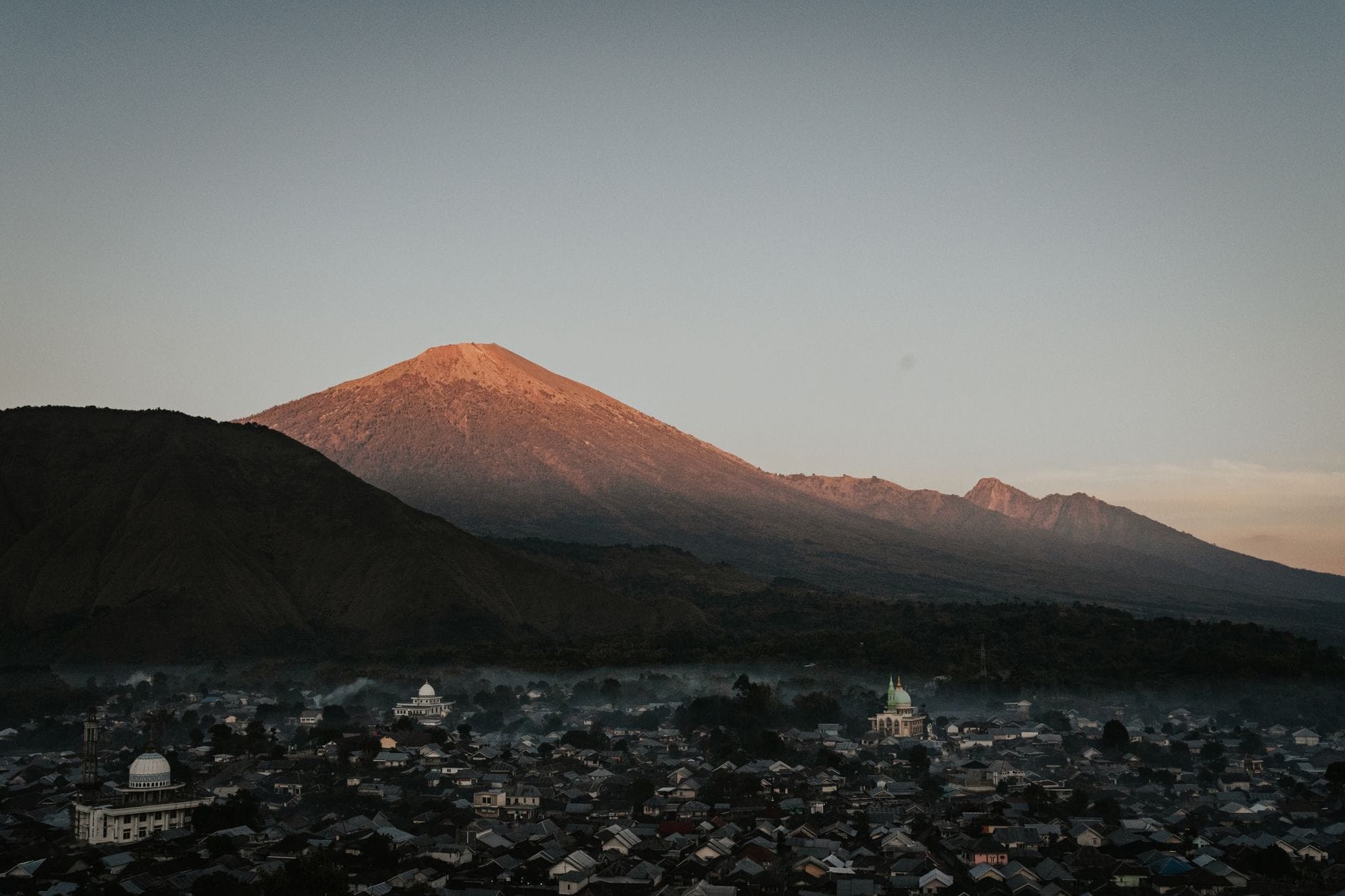
Bayan Village (Desa Bayan), in North Lombok near the base of Mount Rinjani, is the centre of Wetu Telu practice. The Masjid Kuno Bayan Beleq (Old Mosque of Bayan) is considered Lombok’s oldest mosque, believed to date to the 16th–17th century - a thatched-roof bamboo structure that is still used for specific ceremonial prayers. Access is on roads that improve gradually - budget 2–3 hours from Mataram.
Halal Food Across Lombok
Halal food is the default across Lombok. The island’s signature dishes:
Ayam Taliwang - a Sasak spiced grilled chicken rubbed with a paste of garlic, shrimp paste, lime, and chilli, then grilled over charcoal. Halal. Available at dedicated Ayam Taliwang restaurants throughout Mataram (the original Ayam Taliwang restaurant on Jalan Pagesangan, Mataram, has been operating for decades). From approximately IDR 35,000–80,000 per portion (as of 2026).
Plecing Kangkung - blanched water spinach served with a spicy tomato and shrimp paste sambal. A Sasak speciality and a common companion to Ayam Taliwang. Halal and found at most local restaurants.
Sate Pusut - Sasak-style sate made from minced beef or fish mixed with coconut and spices, grilled on lemongrass skewers. Halal. Found at traditional food markets and at night markets in Mataram.
Beberuk Terong - grilled or raw eggplant and long beans with a spiced coconut sambal. Vegetarian and halal.
For a full breakdown of halal dining options across the island, see our halal food Indonesia guide.
Prayer Facilities and Practical Facilities
Prayer facilities (musholla or masjid) are present in virtually every shopping centre, market, bus terminal, and public building across Lombok. The Lombok International Airport in Praya has dedicated prayer rooms for men and women near the departure gates, with wudhu (ablution) facilities. Prayer times shift daily with the sun - most mosque apps (Muslim Pro, Athan) work accurately in Lombok.
Getting Around Lombok
Lombok is served by Lombok International Airport (LOP) near Praya in Central Lombok. Connections from Bali take approximately 30 minutes; from Jakarta, around 1.5 hours. Fast boats from Padang Bai (Bali) arrive at Lembar port in South Lombok, roughly 90 minutes to 2 hours crossing. For the Gili Islands, fast boats depart from Amed and Padang Bai in Bali directly to the Gili jetty.
Within the island, Bluebird taxis operate from Mataram (book via app). Ojek (motorbike taxi) and rental scooters (approximately IDR 70,000–100,000/day as of 2026) are practical for the south coast and Kuta area. Scooters are not recommended for the mountain roads to North Lombok.
For the full picture on Lombok as a travel destination, including itinerary suggestions and where to stay, see our Lombok island guide.
Plan Your Trip
✈️ Book your flights to Indonesia 🛡️ Get travel insurance 📱 Stay connected with an eSIM 🚗 Rent a car