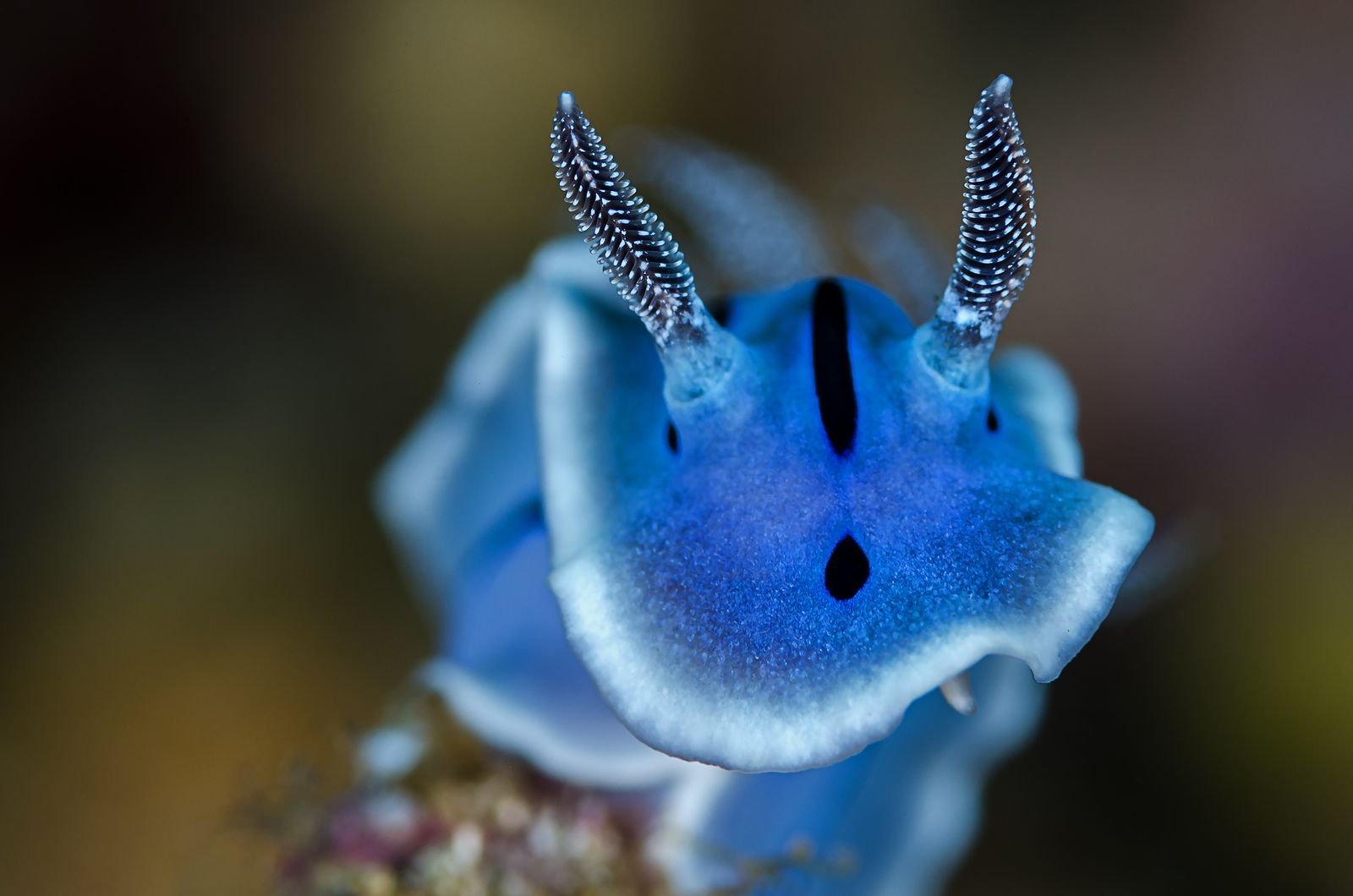
Lembeh Strait is the narrow channel between North Sulawesi and Lembeh Island, beside the port of Bitung, and it has built its reputation on creatures most divers have never seen. This is muck diving: black volcanic sand slopes, rubble, seagrass and the odd piece of debris, where guides find hairy frogfish, blue-ringed octopuses, mimic octopuses and flamboyant cuttlefish. It is a different kind of trip from Bunaken’s famous walls, only about two hours away. Read our Bunaken diving guide if you want both on one holiday, and see the Indonesia diving guide for the wider comparison.
What Muck Diving Is Like
Dives are shallow, typically 5 to 30 metres, and slow. The sites follow a sandy slope down into the strait, and the guide spends most of the dive pointing out camouflaged animals with a stick and a torch. Photographers love it, and a macro lens turns a 40-minute dive into an hour of subjects. Visibility is lower than on the walls, often 10 to 20 metres, and that is normal. Resorts usually do three dives a day plus a night dive.
Dive Sites and Critters
Hairball is a classic for hairy frogfish and octopuses among patches of debris.
Teluk Kembahu (TK) is a black sand slope known for mimic octopus and wonderpus sightings.
Police Pier is a popular night dive, with stargazers, bobtail squid and painted frogfish seen seasonally.
Critter Hunt is a muck site with possible blue-ringed octopus and ornate ghost pipefish.
Blue-ringed octopuses are venomous and must never be touched. Follow your guide and keep your hands to yourself, which also protects the animals. Site names and what lives where change as animals move, so ask your operator for current sightings.
How to Get to Lembeh
Fly into Manado (MDC). The drive to Bitung is roughly 1.5 to 2 hours depending on traffic; resorts normally arrange a pickup and a short boat transfer across the strait. Many divers use Manado as a base for the first or last night. If you do not want to switch hotels, day trips to Lembeh from Manado are possible but long, and we prefer staying at least three or four nights near the strait.
You can browse dive trips and tours near Manado to compare packages. For more on the island, see our Sulawesi island guide.
Lembeh Strait or Bunaken?
The two are complementary rather than competing. Bunaken offers vertical walls, turtles and big visibility; Lembeh offers macro life and a very different pace. Divers who want both usually spend three to four nights in Lembeh and two or three at Bunaken, flying in and out of Manado. If you only have a week, split it between the two rather than choosing one.
Etiquette and Photography Tips
Muck sites are fragile. Silt kicked up by fins ruins photos and smothers small animals, so keep fins off the bottom, use a pointer rather than your hands, and wait your turn at a subject. Guides will often ask photographers to avoid repositioning animals, and we agree: leaving an animal where it is keeps it there for the next diver. Bring a macro lens or a close-up wet lens if you shoot, and ask whether the resort has a camera room with rinse tanks and charging stations. Night dives bring out different animals, so plan at least one even if you normally skip them.
Costs and Season
Prices vary a lot by resort and package. Dive packages typically include accommodation, meals and two to three dives per day, and prices rise in peak months, so ask for a current quote. As of 2026 we have no single reliable per-dive price, so we do not quote one. Lembeh can be dived all year. Sources disagree on a single best window, but April to November is the usual advice for calmer conditions. Water temperature is about 27 to 29 degrees Celsius.
Where to Stay
Most divers stay at a dive resort on the strait, with a boat and house reef bundled in. For city nights, search hotels in Manado on Booking.com or read our where to stay in Manado guide. Budget travellers can compare Manado hostels.
Practical Notes
- Open Water certification is enough, though good buoyancy matters on silty bottoms.
- Bring or rent a torch for night dives and a 3 mm wetsuit.
- Medical help is limited, and the nearest recompression chamber is in Manado; carry dive accident cover such as VisitorsCoverage.
- Check entry rules and travel advice on the Indonesia tourism portal before you go.