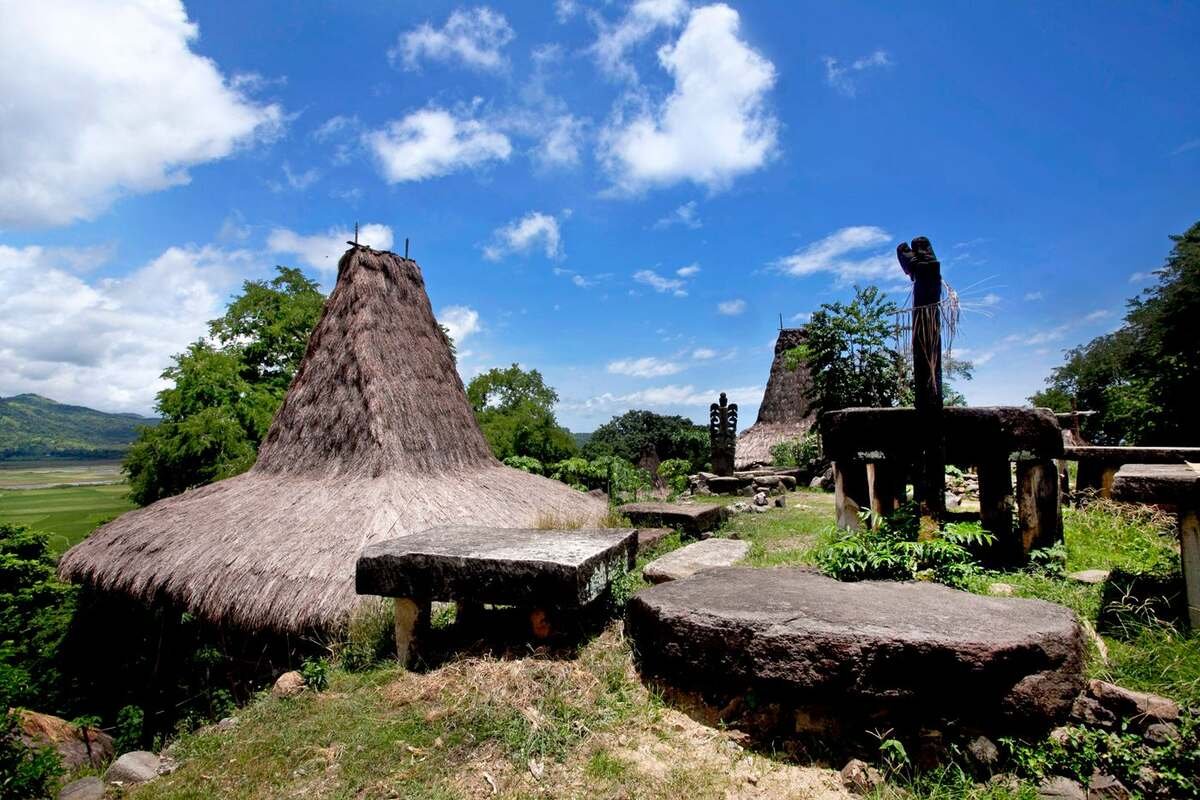
Sumba is one of Indonesia’s least-visited large islands - an island of megalithic stone tombs in front-yard gardens, ikat weavers using natural dyes unchanged for centuries, the extraordinary Pasola festival (ritual mounted combat between Sumbanese warriors), and a south coast that ranks among Asia’s best surf destinations. Unlike Bali or Lombok, Sumba has no mass-tourism infrastructure: the choice here is between a handful of international luxury resorts, a growing community of mid-range eco-lodges, and simple local guesthouses in the main towns.
South coast: surf and luxury resorts
The south coast - roughly from Nihiwatu (Hobawawi Beach) west to Mandorak - is the most scenically dramatic part of Sumba. Limestone cliffs, empty turquoise bays, and consistent swells on the reefs below have drawn surf travellers since the 1990s. The luxury resort market is concentrated here.
Luxury resorts (from roughly USD 135 per night)
-
NIHI Sumba (formerly Nihiwatu) - One of Indonesia’s most celebrated luxury resorts, on a private beach in Watukarere, West Sumba, with ocean-view villas, a kids’ club and a famous reef break. Rates are among the highest in Indonesia, from roughly USD 1,300 per night (check live rates). Not in most budgets - but worth mentioning as the benchmark against which other Sumba resorts are measured.
-
Lelewatu Resort Sumba - Clifftop resort in the Wanokaka area on the south-west coast, with sea-view villas, an outdoor pool and a fitness centre. Rates start well below NIHI, from roughly USD 150–350 per night (check live rates). A more accessible price point with equally dramatic positioning, and a focus on local Sumbanese culture.
-
Maringi Sumba by the Sumba Hospitality Foundation - Eco resort in Waikelo, about 10 km from Tambolaka airport, with bamboo architecture, a pool and a spa. Rates typically from around USD 135–270 per night (check live rates). Guests praise the staff and design; staff are trainees of the foundation’s hospitality programme, so service is warm rather than polished.
West Sumba: traditional villages and Pasola country
West Sumba centres on Waikabubak (the main town) and the surrounding highlands, which have the densest concentration of traditional Sumbanese villages. High-peaked rumah adat (clan houses), megalithic tombs, and ceremonial life visible on daily village walks characterise the area. The Pasola festival takes place in villages around Wanokaka and Lamboya in February–March.
-
Guesthouses and homestays in Waikabubak - Options are limited and simple: small hotels and homestays in the town centre, typically IDR 250,000–550,000 per night. Staff can usually arrange drivers and local guides for the surrounding traditional villages. Check recent reviews and confirm hot water and air conditioning before booking.
-
Eco-lodges near Waikabubak - A few small lodges outside town offer traditional Sumbanese architecture and community-tourism programming such as village visits and ikat demonstrations, typically IDR 600,000–1,000,000 per night. Ask each lodge what the cultural programme includes before booking.
East Sumba: Waingapu and ikat country
Waingapu is East Sumba’s largest town and the island’s main transport hub (flights from Bali, Kupang, and Denpasar). The surrounding villages are the primary source of Sumba’s famous ikat textiles - Prailu, Rende, and Pau are all within an hour of town. The east coast has some good beaches (Walakiri Beach for the mangrove sunset, Tarimbang Bay for surfing) accessible by vehicle.
-
Town hotels in Waingapu - Waingapu has a limited range of mid-range hotels and guesthouses, typically IDR 250,000–600,000 per night, convenient as a first-night base for visitors arriving by flight. Compare live rates and recent reviews.
-
Padadita Beach Hotel - Beachfront hotel near Waingapu with sea views and a pool, about 2.7 miles from the airport. Rates typically from around IDR 450,000–600,000 per night (check live rates). Guests rate it around 8.1 on Booking.com for its staff and clean rooms, a step up from the town hotels in ambience.
Compare prices and availability across all Sumba hotels - Search hotels in Sumba.
Which part of Sumba to choose
South coast resorts: For surf travellers, honeymooners, and those who have the budget for Nihiwatu or Lelewatu. Scenically the most dramatic part of the island.
West Sumba (Waikabubak): For traditional culture, megalithic villages, and the Pasola festival. Requires more flexibility and a good driver - reward is authentic Sumbanese cultural immersion.
East Sumba (Waingapu): For ikat shopping, east coast beach daytrips, and transit logistics. The least scenic base but the most practical for island-wide travel.
Four to five days allows a sensible loop: fly into Waingapu, drive west through traditional villages, base in Waikabubak for two nights, continue to the south coast, fly out from Tambolaka (near Waikabubak). Sumba rewards a slower pace.