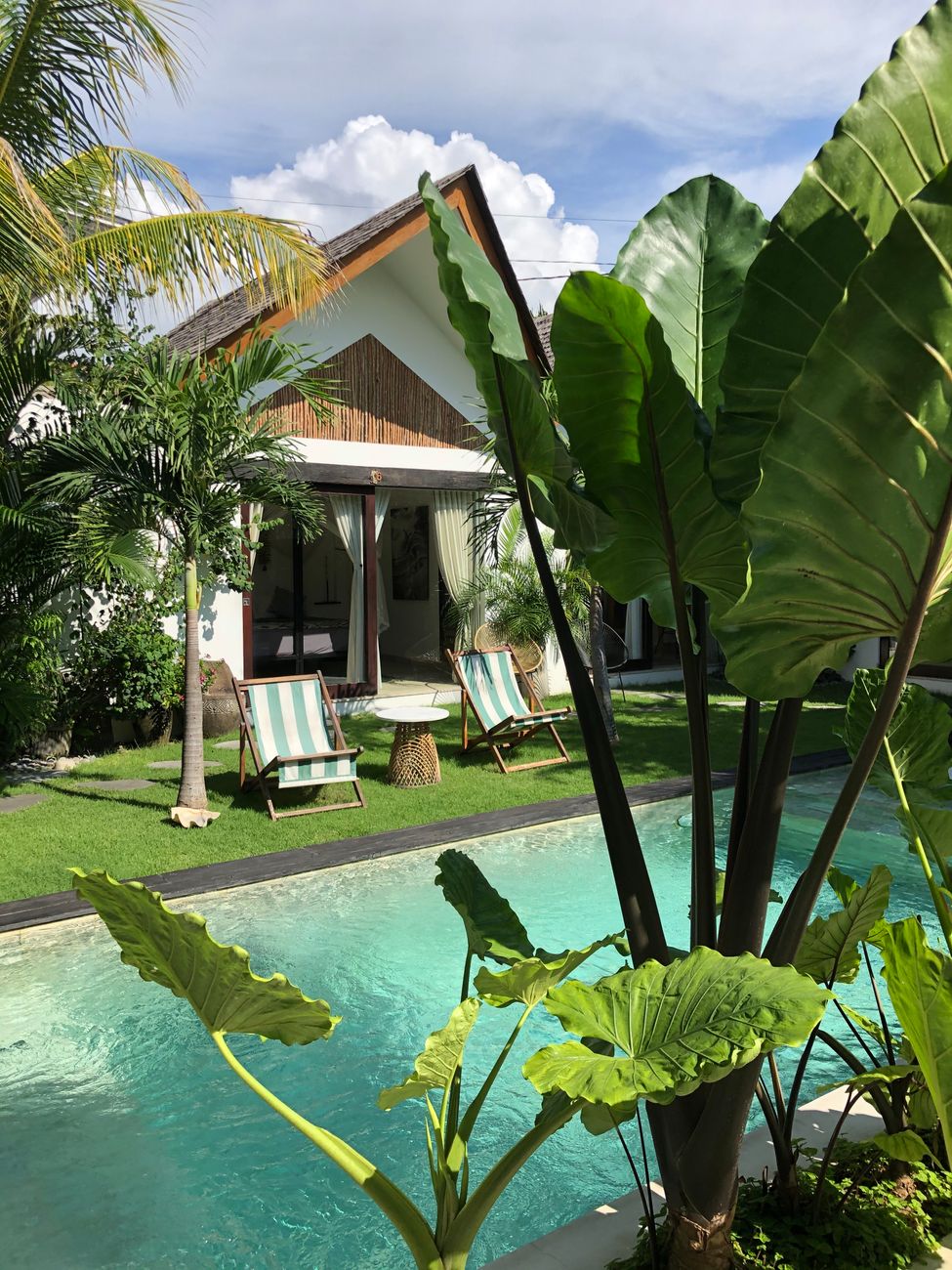
Bali works well as a month-long base, but the choice of neighbourhood shapes your entire experience - Canggu and Ubud are separated by only 40 kilometres yet feel like different islands. Understanding where to position yourself, what to expect from villa rentals, and what the real monthly costs look like before you arrive will save you both money and time.
This guide covers monthly rental rates by neighbourhood, the best-positioned named properties, visa options for stays of 30 days or more, and a practical breakdown of what a month in Bali actually costs.
Monthly rental rates by accommodation type
Bali’s rental market does not work like hotel pricing. Most monthly stays are arranged through local villa management companies or direct with owners, and rates move depending on season, lease length, and how early you book. Booking.com and Airbnb prices reflect a premium for the flexibility - direct agency bookings are almost always cheaper for stays of a month or more.
Approximate monthly rates as of 2026:
| Type | Budget | Mid-range | Upper |
|---|---|---|---|
| Private villa with pool (1-bed, monthly) | USD 500 | USD 900–1,800 | USD 3,000+ |
| Serviced apartment (monthly) | USD 400 | USD 700–1,200 | USD 2,000+ |
| Co-living space (monthly, all-in) | USD 450 | USD 750–1,100 | USD 1,800+ |
Rates above cover the accommodation itself. Add approximately USD 50–150 per month for electricity depending on air conditioning use, and USD 150–250 for groceries if you are self-catering consistently.
Canggu: the digital nomad hub
Canggu - spanning Canggu village, Berawa, Batu Bolong, and Echo Beach - is Bali’s most developed area for remote workers. The co-working infrastructure is the strongest on the island: Dojo Canggu (on the beach road) and Outpost (multiple Canggu locations) both offer daily and monthly passes, fast fibre connections, and community programming. The surf is accessible year-round from Echo Beach and Batu Bolong, and the café concentration along the main roads provides unlimited alternative workspaces.
Why Canggu works for a month:
- Internet reliability is the highest in Bali - most villas quote 50–100 Mbps; co-working spaces exceed that
- Grocery infrastructure including numerous western-facing shops (Bintang Supermarket, local warungs) supports self-catering
- The concentration of longer-term residents means villa agents specialise in monthly deals, and the market is competitive
- Scooter rental is easy and affordable; apps like Gojek and Grab cover the area
Monthly villa rates in Canggu (as of 2026): 1-bedroom private villa with pool ranges from approximately USD 750 to USD 2,000 depending on location, finishes, and pool size. Budget options in the Canggu back roads away from the beach run USD 600–900. Berawa and Batu Bolong positions with walking access to the beach command a premium.
- Uma Sapna Canggu - Boutique villa property in central Canggu offering monthly rates from approximately USD 900 per month as of 2026. Includes daily breakfast, cleaning, and pool maintenance. Strong Wi-Fi infrastructure, well-suited to working guests. Ask directly about extended-stay pricing when booking - monthly rates are not always published on the Booking.com listing.
For direct villa rentals, agencies including Bali Villas and KnowBali maintain active inventories of monthly properties across Canggu and can match budget to availability in real time.
Search long-stay accommodation in Canggu on Booking.com
Seminyak: upscale and social
Seminyak and its northern extension Petitenget sit above Kuta in both geography and price. The beach clubs (Ku De Ta, Potato Head) define the area’s identity - if that is your scene, Seminyak’s villa rental market offers excellent quality at a premium. If you intend to work full days, the social pull can work against focus; many long-stay visitors start in Seminyak and move to Canggu or Ubud after the first week once the novelty settles.
Monthly villa rates in Seminyak (as of 2026): 1-bedroom private villa with pool starts at approximately USD 800–1,000 in quieter back-street positions. Well-positioned villas within 500 metres of the beach or main dining strip run USD 1,500–3,000. The upper end of the Seminyak market - larger compound villas with staff - goes well above USD 3,000 per month.
- Katamama - Boutique luxury property in Seminyak’s Petitenget strip. Handcrafted suites with Indonesian artisan interiors and direct access to Potato Head beach club. Long-stay suites from approximately USD 2,500 per month as of 2026. Better suited to the luxury end of extended stay; not a serviced apartment in the functional sense but consistently excellent hospitality.
Ubud: culture, wellness, and cooler air
Ubud sits 700 metres above sea level in the central highlands, which means daytime temperatures run 3–5°C cooler than the coast. This alone makes it a serious long-stay alternative for anyone who finds coastal Bali too hot to work comfortably in the afternoon. The rice field views, morning mists, and access to yoga studios, cooking classes, and temple ceremonies give Ubud a character unlike anywhere else on the island.
The trade-off for remote workers: internet reliability is patchier than Canggu, and co-working space density is lower, though Outpost Ubud (on Jalan Raya Pengosekan) provides a reliable workspace option with fast fibre. Café working is common at spots along Jalan Hanoman and Jalan Dewi Sita.
Monthly villa rates in Ubud (as of 2026): 1-bedroom private villa with pool starts from approximately USD 500–700 in the outer Ubud villages (Tegallalang, Mas, Penestanan). Villas closer to central Ubud with better rice field positions run USD 800–2,000. Most Ubud villa rentals are arranged directly; the monthly supply is substantial and the market is not as competitive to find space as Canggu.
- Bisma Eight Ubud - Luxury resort property set on a jungle hillside above the Campuhan ridge. Villa suites with private plunge pools and panoramic forest views. Long-stay rates from approximately USD 3,500 per month as of 2026, with better value available through direct negotiation for stays exceeding three weeks. This is the premium-end Ubud experience; not a budget or mid-range option.
For mid-range Ubud villa rentals, expect to work through a local agency rather than Booking.com. Properties managed by Ubud-based agencies in Penestanan and Sayan - both within scooter distance of central Ubud - regularly list monthly 1-bedroom villas with pools at USD 700–1,200.
Search long-stay accommodation in Ubud on Booking.com
Sanur: the low-key eastern option
Sanur faces east, which means sunrise over the ocean and calm water all year (the reef protects the beach from south swell that makes Kuta and Seminyak waters rougher in wet season). The area has long been popular with longer-term European expats - the demographic is older than Canggu, the pace is slower, and the restaurant scene skews toward reliable local and mid-range international.
For month-long stays, Sanur is genuinely good value. The beach road (Jalan Danau Tamblingan) runs parallel to the beach and is one of Bali’s few properly walkable streets. Monthly condo and villa rentals typically run USD 500–1,800 for a 1-bedroom, with the lower end of that range reflecting older properties further from the beachfront.
Internet note: Sanur’s fibre rollout is less complete than Canggu. Some properties have strong broadband; others rely on Starlink or 4G backup routers. Confirm speeds before committing to a month-long lease.
Kuta and Legian: avoid for long stays
Kuta’s infrastructure - accommodation density, transport links, and airport proximity - makes it useful for a night before a flight. For a month-long stay it is a poor choice. The area is heavily touristed, the beach is the least attractive in south Bali, nightlife noise extends into early morning, and monthly villa inventory at competitive quality-to-price ratios is thinner than any other area covered here. Unless the absolute lowest possible accommodation cost is the deciding factor, the areas above offer better value when total monthly living costs are factored in.
Visa options for stays of 30 days or more
B211A Social/Cultural Visa: Issued at Indonesian embassies and consulates. Grants 60 days on arrival, extendable four times at 30 days each, giving up to six months in total. Each extension requires a trip to the Bali immigration office (or via a visa agent for a service fee of approximately USD 30–50 per extension). Total visa cost including extensions runs approximately USD 150–250 for six months.
E33G Digital Nomad Visa: Indonesia’s remote worker visa. Five-year, multiple-entry. Requires proof of USD 2,000 per month in income from a foreign employer or clients, plus supporting documentation. No Indonesian tax liability on foreign income. Application is handled through the immigration service; several Bali-based visa agencies specialise in E33G applications.
Visa-on-arrival (30 days, extendable once): Works for single 60-day trips. The simplest option if you are staying exactly one or two months and do not need to repeat the trip.
Practical logistics for a month in Bali
Transport: Scooter rental costs approximately IDR 700,000–900,000 per month (approximately USD 43–55 as of 2026) for a reliable automatic scooter from a local rental agency. Gojek and Grab cover south and central Bali adequately for occasional trips or airport runs. A car with driver for day trips costs approximately USD 40–60 per day.
Internet backup: Even in Canggu, electricity outages occur - usually brief, sometimes a few hours. A local SIM card with a 50–100GB 4G data plan from Telkomsel or XL costs approximately USD 10–15 per month and provides a reliable mobile hotspot backup. Telkomsel consistently provides the best 4G coverage across the island.
Co-working: Dojo Canggu monthly membership runs approximately USD 150–200. Outpost Ubud and Outpost Canggu offer similar pricing. Most cafés in Canggu and Ubud welcome working guests without a time limit, and the café-as-office model is a genuine alternative for those who prefer variety over a fixed desk.
Grocery costs: Self-catering at local markets and warungs keeps food costs low - budget approximately USD 150–250 per month for groceries if you cook most meals. Eating out at local warungs adds approximately USD 3–6 per meal; cafés and western-leaning restaurants average USD 8–15 per meal.
Compare prices and availability across all Bali hotels - Search hotels in Bali.
Which Bali area suits a month-long stay?
Choose Canggu if: You are a remote worker, you surf, or you want the most reliable internet and the strongest social infrastructure. Accept that Canggu’s popularity means it is busier and less “authentically Bali” than it was five years ago.
Choose Seminyak if: Your priority is quality restaurants, beach clubs, and upmarket villa finishes, and budget is not the primary constraint.
Choose Ubud if: You want cooler temperatures, a cultural environment, and a slower pace. Best for writers, artists, yoga practitioners, and anyone who does not need daily surf access or a dense co-working scene.
Choose Sanur if: You want a genuinely relaxed beach lifestyle with a strong expat community, competitive monthly rates, and eastern sunrise beaches. A better fit for slow travellers than active remote workers.
For most first-time long-stay visitors, Canggu or Ubud is the right starting point - the two areas that have built the most complete infrastructure for month-long stays and offer the easiest transition from short-term tourist to temporary resident.