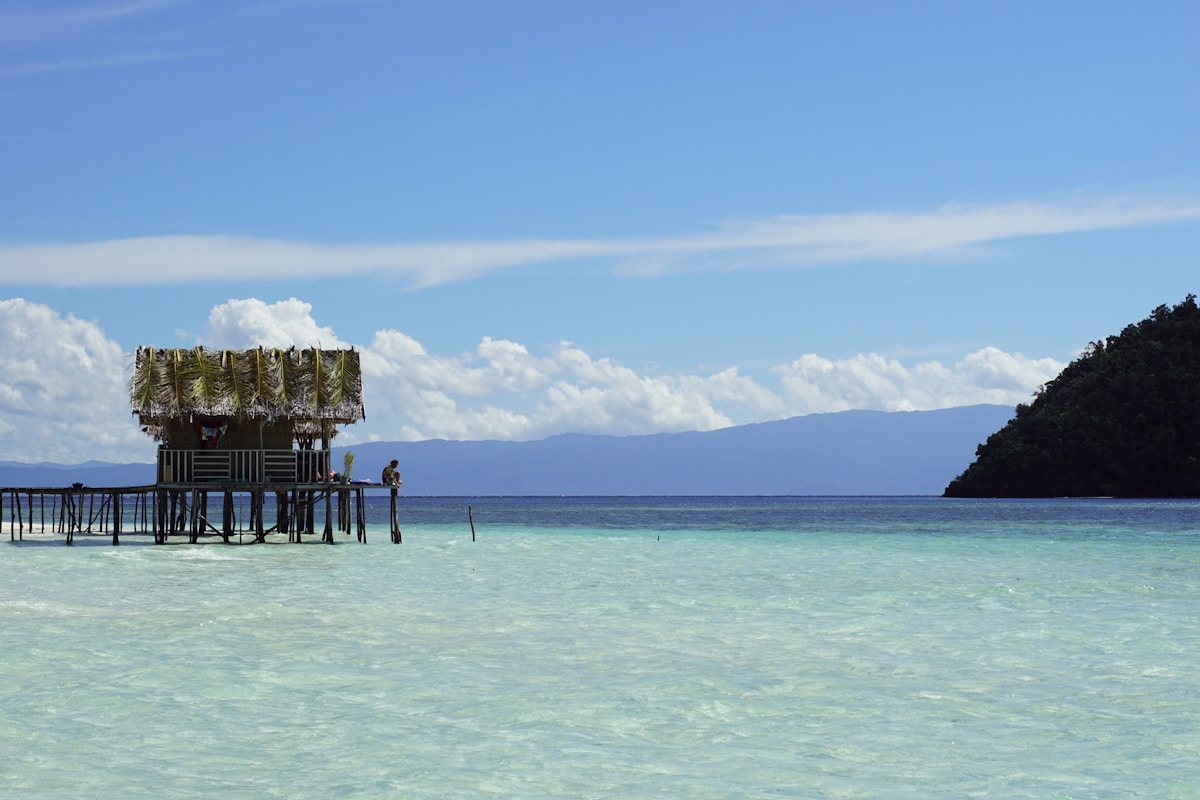
Raja Ampat’s accommodation situation is unlike anywhere else in Indonesia. There are no Accor or Marriott properties, no guesthouse strips like Kuta or Tuk Tuk, no city-style mid-range hotels. What exists is a collection of dive resorts built by conservation-minded operators on small islands across a 40,000-square-kilometre marine park, supplemented by village homestays in the traditional Papuan communities scattered across the archipelago. The quality spectrum runs from bamboo bungalows with cold water and a shared composting toilet to genuinely world-class eco-lodges with overwater rooms and trained marine biologist guides.
The right choice depends almost entirely on budget and dive aspiration.
Liveaboards: The Highest-Access Option
For serious divers, a liveaboard is categorically the best way to experience Raja Ampat. No fixed-base resort can match the site access - the remote Wayag karst formations, the Dampier Strait, Batanta, and deep Misool are accessible only by spending nights on the water. Most Raja Ampat liveaboards operate 7–10 day itineraries departing from Sorong, covering both the northern and southern archipelago.
Budget liveaboards (approximately USD 130–200/person/night): Smaller boats with simpler cabins and fewer dives per day. Adequate for recreational divers who want liveaboard access without premium pricing.
Mid-range liveaboards (approximately USD 200–350/person/night): Kararu Dive Venture (German-managed, strong route knowledge of northern sites), NAD-Liveaboard, and MSY Seahorse run weekly departures from Sorong with en-suite cabins and experienced guides. These represent the best value tier for dedicated divers.
Luxury vessels (USD 400–700/person/night): Arenui, Seven Seas, and Rascal operate at boutique-hotel standards with private cabins, naturalist guides, and expert dive briefings. These book 6–12 months ahead for peak season (October–April). Confirm that any operator holds a valid Raja Ampat National Park permit before booking.
See the Raja Ampat diving guide for full liveaboard operator contacts and site itineraries.
Understanding the Raja Ampat Accommodation Model
Almost all accommodation in Raja Ampat charges per person with meals included - the logistics of remote island supply chains make à la carte dining impractical. The meal quality at the eco-resorts is excellent; at village homestays it’s fresh, simple, and local (fish, rice, vegetables from the garden, occasionally lobster caught that morning).
All accommodation requires advance booking - Raja Ampat has strict marine park entry permits (IDR 1,500,000/person, valid one year) and most resorts coordinate these for arriving guests.
Budget (IDR 300,000–600,000/Person/Night Including Meals)
Arborek Village Homestay
The most visited homestay location in Raja Ampat - Arborek’s tiny community of approximately 100 people hosts travellers in family homes adjacent to the reef they’ve protected through community marine management. Rooms are basic (shared bathroom in most cases, cold water) but the access - reef snorkelling from the jetty, morning bird calls from the forest, local fishing community life - is extraordinary.
From: Approximately IDR 300,000–450,000/person/night including meals | Location: Arborek Island, Dampier Strait
Sawandarek Village Homestay (Batanta Island)
A quieter alternative to Arborek - a traditional Papuan community with reef access from the village dock, turtle conservation, and a slightly more immersive local experience. Fewer day-trip boats, more fishing community rhythm.
From: Approximately IDR 300,000–400,000/person/night including meals | Location: Sawandarek, Batanta Island
Waisai Budget Guesthouses
For those arriving on the fast ferry from Sorong and needing a night before heading to their island resort, Waisai has several basic guesthouses (kamar kos and penginapan style) near the ferry terminal. Air-conditioning, en-suite, and breakfast at the better properties.
From: Approximately IDR 200,000–350,000/night | Location: Waisai town, Waigeo Island
Mid-Range Dive Resorts (USD 80–180/Person/Night)
Raja4Divers
On Mansuar Island, approximately 1.5 hours north of Waisai, Raja4Divers is one of the most respected independent dive resorts in the archipelago. Belgian-owned with European management standards, the resort runs twice-daily boat dives to the best northern sites - Cape Kri, Manta Sandy, Friwenbonda. Accommodation is in wooden bungalows with hot water and ceiling fans; the diving is exceptional.
From: Approximately USD 80–120/person/night; dive packages from additional USD 45/day | Location: Mansuar Island, northern Raja Ampat
Kri Eco Resort
On Kri Island adjacent to the world-record Cape Kri dive site, Kri Eco Resort offers the most cost-effective access to the northern Raja Ampat’s headline dive locations. The bungalows are simple - bamboo and wood, ceiling fans, cold water at the budget end - but the diving logistics are exceptional. The morning dive at Cape Kri before the day-trip boats arrive from Waisai justifies the island base.
From: Approximately USD 80–120/person/night including meals; dive packages extra | Location: Kri Island, northern Raja Ampat
Meridian Adventure Dive (Yenwaupnor Island)
A well-managed dive resort on a small island between Waigeo and the northern Dampier Strait sites, with consistent dive guiding, good food, and a strong environmental management programme. PADI certification courses available.
From: Approximately USD 100–140/person/night including meals | Location: Yenwaupnor Island, northern Raja Ampat
Sorido Bay Resort (Kri Island)
Bungalow accommodation in a forested setting with a private beach and dive packages available. The operation has a long track record and consistent reviews, and shares the Kri Island location with the headline Cape Kri dive site.
From: Approximately USD 120–200/person/night | Location: Kri Island, northern Raja Ampat
Premium Eco-Resorts (USD 200–500/Person/Night All-Inclusive)
Papua Paradise Eco Resort
On Birie Island (accessed from Sorong or Waisai), Papua Paradise is widely considered the benchmark eco-resort in Raja Ampat - over-water bungalows, PADI dive centre, marine biologist briefings, kayaking and snorkelling included, and food of a standard that surprises visitors expecting remote-island compromise. The marine conservation work (reef monitoring, turtle nesting patrol) is genuinely active rather than decorative.
From: Approximately USD 280–380/person/night all-inclusive | Location: Birie Island, northern Raja Ampat
Raja Ampat Biodiversity Eco Resort
On Waigeo Island’s inner coast facing the Dampier Strait, this German-managed resort has the most comprehensive marine conservation programme of any property in Raja Ampat - and a house reef that justifies staring into from the dock for hours at a time. The dive guiding combines local knowledge with scientific rigour. All-inclusive with daily boat dives, kayaking, and guided snorkel.
From: Approximately USD 250–350/person/night all-inclusive | Location: Waigeo Island coast, northern Raja Ampat
Misool Eco Resort (South Raja Ampat)
The flagship property in southern Raja Ampat - 16 years of no-take marine reserve around the resort has produced reef biomass that is scientifically documented as 25 times higher than comparable unprotected sites. The overwater bungalows, reef-based cuisine (much of the food is locally caught within the resort’s managed fishery), and dive access to Misool’s untouched walls make this one of the world’s best diving resorts. Accessible by liveaboard or by charter flight from Sorong.
From: Approximately USD 350–500/person/night all-inclusive | Location: Misool Island, south Raja Ampat
Liveaboard Diving (The Alternative to Island-Based Resorts)
For divers wanting to cover both northern and southern Raja Ampat, a liveaboard is the highest-mobility option and the only way to access the most remote dive sites in a single trip. You sleep on the boat, move to a new dive location every day or two, and cover 5–10 sites per day. The diving quality via liveaboard is categorically higher than any fixed-base resort - the best sites are scattered across a 300-kilometre stretch of ocean.
Budget liveaboards (approximately USD 130–200/night/person) cater to younger divers with smaller boats and simpler cabins. Mid-range operators (approximately USD 200–350/night/person) include Kararu, Damai, and others running seasonal itineraries from Sorong, with en-suite cabins and experienced dive guides. Luxury vessels (Arenui, Rascal, Seven Seas - USD 400–700/night/person) have private cabins comparable to boutique hotel rooms and expert naturalist guides; these book 6–12 months ahead for peak season.
Operators including SeaTrek, NAD-Liveaboard, and MSY Seahorse also run weekly departures from Sorong. Confirm that any operator holds a Raja Ampat National Park permit before booking.
From: Approximately USD 130–700/person/night | Itinerary length: 4–14 nights typical
See the Raja Ampat diving guide for liveaboard operator contacts and site itineraries.
When to Go
October to April is peak diving season, with calmer seas and the best visibility. May to September brings rougher conditions in the southern areas (around Misool particularly) but the north remains diveable. Liveaboard and eco-resort peak season bookings should be made 3–6 months ahead. For those combining Raja Ampat with other remote eastern destinations, the eastern Indonesia adventure itinerary covers routes linking Sorong, Komodo, and Flores.
Best homestay islands: Kri, Gam, Mansuar, Arborek, Yenbuba.
Practical Notes
Marine park entry permit: IDR 1,500,000/person, valid for one year. Most resorts arrange this on arrival. Self-organise at the Raja Ampat Tourism Office in Waisai if arriving independently.
Cash: ATMs in Waisai are the only cash source in Raja Ampat. Withdraw enough for your entire stay. Card payments work at a few upscale resorts; most properties are cash only.
Electricity: Solar and generator power at most resorts - charging devices is possible but may be limited to certain hours. Bring a power bank.
Browse tours and activities in Raja Ampat - a local guide makes a big difference for navigating temples, wildlife sites, and the less-visited corners of the island. Travel insurance for Indonesia is strongly recommended before any trip - emergency medical cover is especially important given the distances between islands.
More Raja Ampat Guides
- Raja Ampat travel guide - the full Raja Ampat overview: orientation, key attractions, restaurants, and getting there
- Things to do in Raja Ampat - the best activities and experiences in and around Raja Ampat
- Raja Ampat food guide - the best restaurants, street food, and warungs in Raja Ampat