Search hotels in Raja Ampat on Booking.com
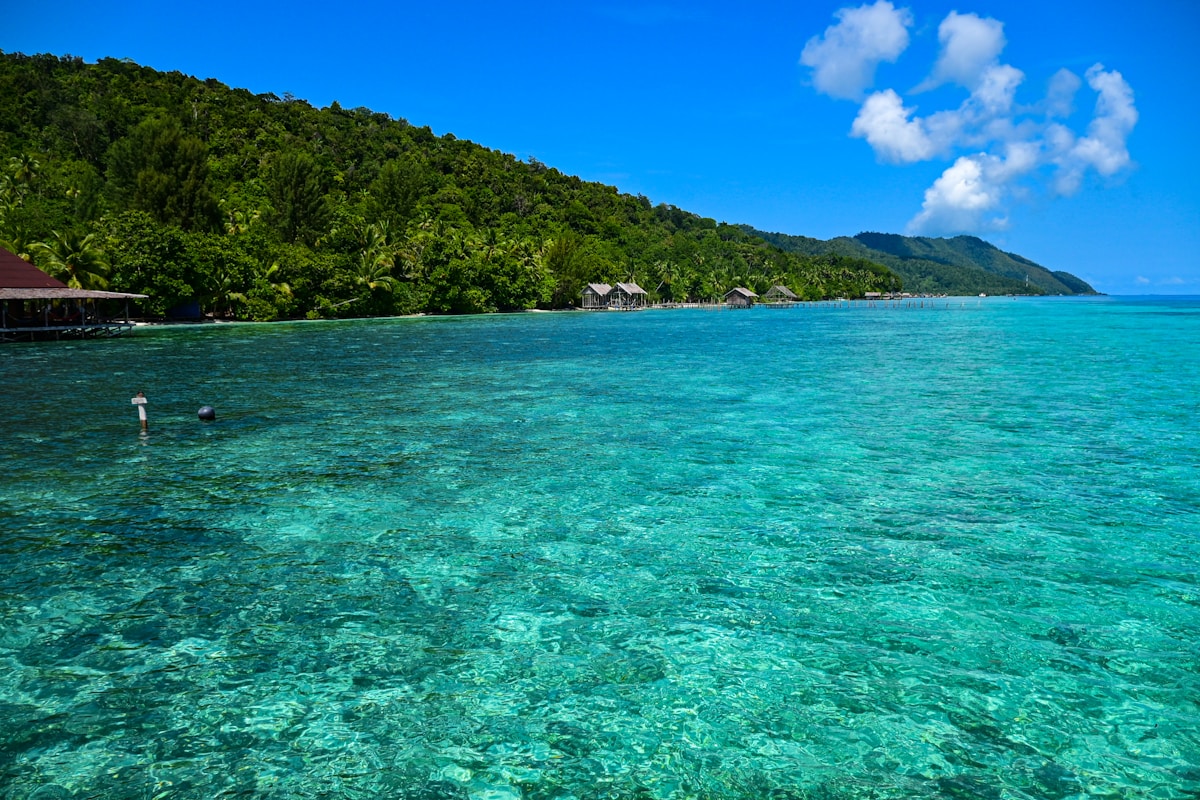
Raja Ampat - Four Kings in Indonesian - encompasses 1,500 islands scattered across 40,000 square kilometres of the Coral Triangle where the Pacific and Indian Oceans meet. Marine biologists consider it the most biodiverse marine habitat on earth: over 1,500 fish species and 537 coral species documented in a single archipelago. The land is as dramatic as the sea - karst limestone towers rising from flat water, jungle-covered, the kind of landscape that appears in travel photography and is assumed to be CGI-enhanced until you see it in person.
Getting here requires effort. That effort is the point.
1. Piaynemo Viewpoint
The Piaynemo (sometimes spelled Pianemo) viewpoint delivers the image most associated with Raja Ampat - a panorama of mushroom-shaped limestone karst islands rising from a lagoon of impossibly shallow turquoise water. The view is accessed via a wooden staircase (approximately 300 steps) climbing the karst face above the lagoon.
Entry fee: IDR 50,000 | Getting there: 1.5–2 hours by speedboat from Waisai | Included in: Most resort-arranged day trips; approximately IDR 1,000,000–1,500,000 per speedboat
The lagoon below the viewpoint has good snorkelling - the reef beneath the karst faces is sheltered and clear. Visit early morning (before 9am) to beat the boats from Waisai; the golden light on the karst islands at dawn is the best photographic condition. The wooden walkway from the boat dock to the viewpoint base costs an additional IDR 50,000 community levy in some visits - have cash in small denominations.
2. Wayag Islands
Wayag, at Raja Ampat’s northwestern extremity, is the most remote and most spectacular of the archipelago’s highlights. A cluster of tall karst islands rise from a shallow interconnected lagoon - the topography from above (accessible by climbing the karst at the tour operators’ usual stop) is even more dramatic than Piaynemo.
Getting there: 3–4 hours by speedboat from Waisai; approximately IDR 1,500,000–2,500,000 per boat charter as of 2026 | Climbing the karst: Free once you’ve paid the entry levy | Entry levy: IDR 50,000 per person
The journey to Wayag is itself part of the experience - open sea crossing, dolphins, flying fish. Most visitors do Wayag as a single long day (6–7 hours on the water) departing from Waisai or from a resort in the northern islands. Liveaboard boats spend a night at Wayag to enable calm-water morning photography.
3. Cape Kri Dive Site
Cape Kri, off the southern tip of Kri Island, holds the world record for the highest number of reef fish counted at a single dive site: 374 species in one dive, recorded by marine biologist Dr Gerald Allen in 2000. The site lives up to this statistic - a medium-current point dive where schools of barracuda, big-eye jacks, and trevally mass in open water while the reef below holds soft corals, sea fans, mantis shrimp, and more fish species than any comparable site in the world.
Access: By resort boat from Kri Eco Resort or Papua Paradise Eco Resort; typically included in dive package | Depth: 5–30+ metres | Current: Moderate to strong on incoming tide - experienced open-water divers and above
The adjacent sites - Chicken Reef and Sardine Reef - round out a Kri Island day of three dives without any repetition. These are not conservation sites frozen in time - they’re living reefs with active predator/prey dynamics. Go with a licensed operator who knows the tidal windows.
4. Arborek Village Snorkelling
Arborek is a small traditional village on a tiny island in the Dampier Strait - perhaps 100 residents - that has become one of Raja Ampat’s most visited snorkel spots because the reef drops off immediately from the wooden jetty to a depth of 1–5 metres. Schools of fish, giant clams, table corals, and the occasional reef shark are accessible within a 50-metre swim of the dock.
Village entry fee: IDR 50,000/person | Homestay options: Available; from approximately IDR 250,000–400,000/night including meals
Arborek has managed its reef community zone carefully and the results are visible - the jetty reef is markedly healthier than comparable sites that lack community management. The village also offers traditional Papuan weaving (noken bags) from resident craftspeople. Stay overnight for the most quiet experience; day-trip boats typically arrive between 10am and 2pm.
5. Friwen Wall Snorkelling
Friwen Kecil Island, 30 minutes by speedboat from Waisai, has a sheltered wall snorkel site - a vertical reef dropping from 2 metres to 20+ - and a forest walk through the island interior to a viewpoint. No dive equipment needed; mask, fins, and snorkel are sufficient for the best part of the experience.
Getting there: Charter speedboat from Waisai, approximately IDR 300,000–500,000 return | Entry: IDR 50,000 community fee
The shallow reef section at Friwen Wall is arguably more accessible than any other world-class snorkel site in Raja Ampat - you can float face-down over the coral from the moment you enter the water. Best in the morning before the afternoon current picks up.
6. Manta Sandy (Manta Ray Point)
Between Arborek and Manta Sandy, a shallow sandy flat that concentrates manta rays during the peak season from October to April, the Dampier Strait is the best location in Raja Ampat for reliable manta encounters. The mantas visit the cleaning station on the sandy bottom (5–15 metres) to have parasites removed by cleaner wrasse.
Access: Dive or snorkel from resort boats | Best months: October–April | Depth: 5–15 metres
The mantas here are reef mantas (Mobula alfredi) rather than the larger oceanic species - wingspans of 2–4 metres. They are not habituated to human contact in the same way as some feeding stations; approach quietly and let them go about their cleaning rather than chasing.
7. Sawandarek Village Jetty
Similar to Arborek but less visited, Sawandarek Village on Batanta Island has a jetty with direct reef access - coral gardens beginning within a few metres of the dock, with good fish diversity and the occasional wobbegong shark resting on the sandy bottom beneath the coral heads.
Getting there: 45 minutes by speedboat from Waisai | Entry: IDR 50,000
The village is also a community-managed turtle conservation area - on the right season (nesting May–August), rangers can point out active nests on the nearby beach. Respectful visits support the conservation levy.
8. Misool Island Reefs (South Raja Ampat)
Misool, 200km south of Sorong, is a separate ecosystem from the northern islands - Cenozoic limestone karst above water, pristine deepwater reefs below, and almost no infrastructure outside the handful of eco-resorts that have operated here since 2009. The reefs at Misool have been protected from fishing for 16 years and the biomass recovery is dramatic - reef sharks in the dozens, giant grouper, dogtooth tuna.
Access: Liveaboard from Sorong or Waisai (typical 7–10 day itineraries include Misool) or fly-in to Misool Explorer resort | Resort cost: From approximately USD 350–500/person/night all-inclusive
Misool is not a casual add-on - it requires planning and budget. For serious divers, it represents the best reef system in the Indo-Pacific. The Raja Ampat diving guide covers liveaboard operators, dive sites, and the northern vs. southern region comparison.
9. Batanta Island Trekking
Batanta, west of Salawati, has a trail through lowland tropical forest to waterfalls in the island interior. The forest here is part of the Arfak Range ecosystem - birds of paradise (including the Wilson’s bird-of-paradise, endemic to Raja Ampat) are present in the forest above village level.
Getting there: 1.5 hours by speedboat from Waisai | Guide: Local ranger required, approximately IDR 300,000 per group
Birdwatching in Batanta is at its best in the early morning hours. The Wilson’s bird-of-paradise has a uniquely restricted range - it is found only on Batanta and Waigeo islands within Raja Ampat - and is reliably seen by birders who hire a local guide to the known display trees.
10. Waisai Town Waterfront
Waisai is Raja Ampat’s administrative capital - a ferry terminal town with a handful of guesthouses, small restaurants, and a waterfront facing the Dampier Strait. It’s not a destination in itself but a useful orientation point: the market opens early, the pier is active with boat traffic, and the view across to Waigeo Island’s forested hills at dawn is a reasonable prelude to the days ahead.
Getting there: Fast ferry from Sorong (IDR 130,000, 2 hours), daily service | Accommodation: Budget guesthouses from IDR 200,000–350,000/night
Stock up on cash in Waisai - most dive resorts on outlying islands are cash-only and ATMs outside Waisai are non-existent. The Waisai market also sells basic food supplies if you’re planning a longer island stay.
Getting Around Raja Ampat
Raja Ampat has no road network between its islands. All transport between sites is by boat. Speedboat charters are the standard option - arranged through your resort or from the Waisai dock. Budget approximately IDR 1,000,000–2,000,000 per day for a chartered speedboat with driver. Slower wooden ketinting boats are cheaper but take significantly longer and are wet in any chop. Liveaboard diving boats provide the most efficient way to cover multiple site clusters without the cost and logistics of island-hopping by charter.
Browse tours and activities in Raja Ampat - a local guide makes a big difference for navigating temples, wildlife sites, and the less-visited corners of the island. Travel insurance for Indonesia is strongly recommended before any trip - emergency medical cover is especially important given the distances between islands.
More Raja Ampat Guides
- Raja Ampat travel guide - the full Raja Ampat overview: getting there, accommodation, and planning your trip
- Raja Ampat island guide - the archipelago’s biodiversity, diving overview, birds of paradise, and best time to visit
- Raja Ampat diving guide - the world’s most biodiverse marine environment: best dive sites and operators
- Raja Ampat accommodation guide - resort islands, jungle bungalows, and village homestay options
- Indonesia liveaboard diving - liveaboard options for covering Raja Ampat’s remote outer islands