Medan is Indonesia’s third-largest city and the commercial capital of Sumatra - a dense, traffic-heavy place that rewards those who push past the surface. Built on the tobacco plantation wealth of the colonial era, the city holds more architectural substance than its reputation suggests: a royal palace, a 19th-century Chinese merchant’s mansion, one of Sumatra’s finest mosques, and a food culture that draws from Batak, Malay, Acehnese, and Chinese traditions. It’s also the primary gateway to Bukit Lawang, Berastagi, and Lake Toba.
1. Maimun Palace
Built in 1888 by Sultan Ma’mun Al Rashid Perkasa Alamsyah, Maimun Palace is the seat of the Sultanate of Deli - the Malay kingdom that once controlled the tobacco trade that made Medan wealthy. The main audience hall, a striking yellow Moorish-Mughal hybrid, remains the palace’s most photographed room: gilded ceilings, European-style chandeliers, and Dutch colonial tile work around a throne that the sultan’s family still uses for ceremonial occasions.
Entry: IDR 10,000 | Hours: 8am–5pm daily
The complex is compact - most visitors spend 45–60 minutes. Traditional Malay dress (available to borrow at the entrance) adds context to the photographs. The palace sits in the Kampung Baru district, a short ojek ride from the city centre.
2. Masjid Raya Al-Mashun (Grand Mosque)
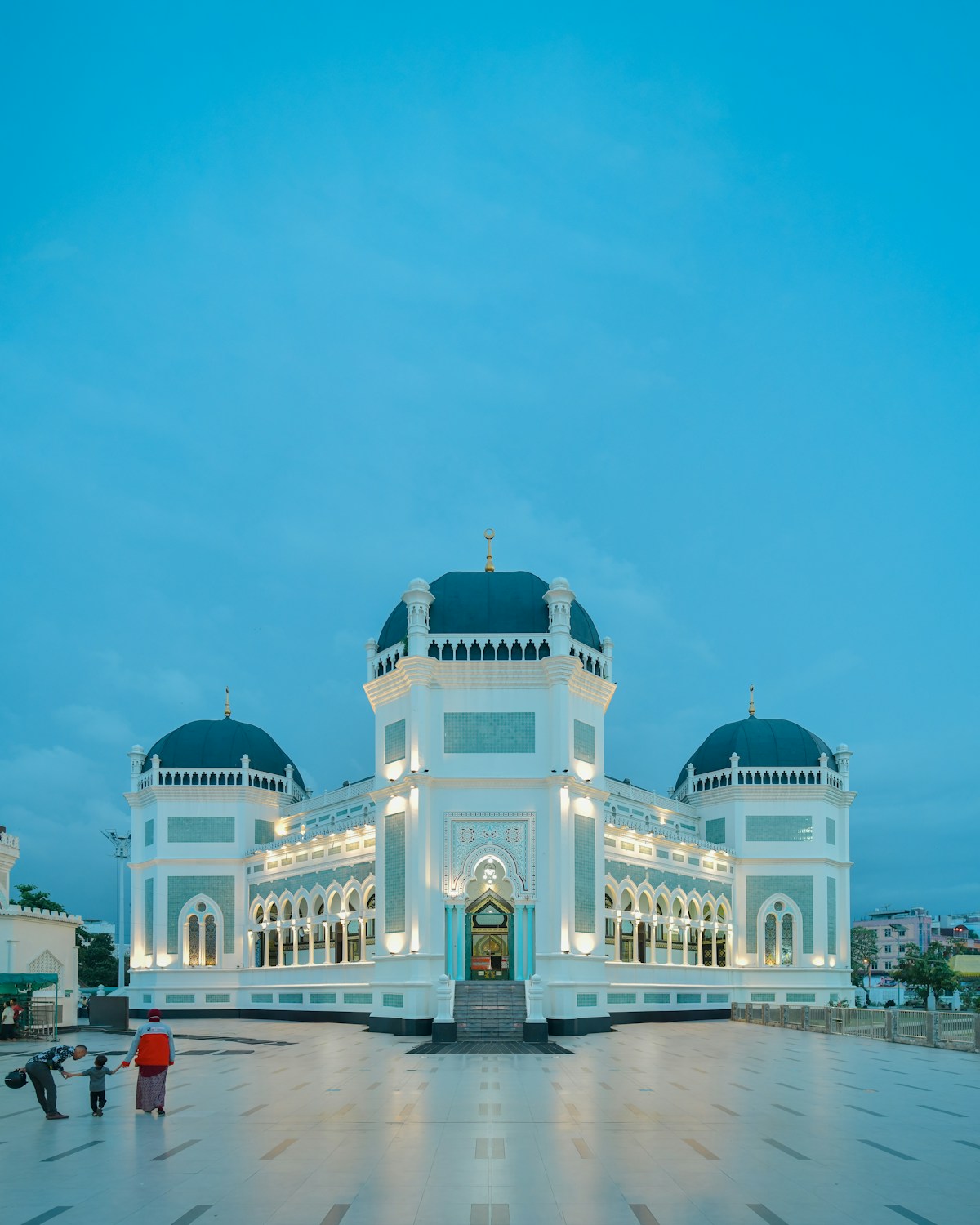
Completed in 1906 and funded jointly by Sultan Ma’mun Al Rashid and Chinese and Indian business communities, the Masjid Raya is Medan’s architectural centrepiece. The structure blends Moorish, Mughal, and Dutch colonial elements - octagonal prayer hall, dome in Moroccan green, Italian marble floors - in a way that feels genuinely coherent rather than eclectic.
Entry: Free | Dress code: Modest clothing required; sarongs available at entrance | Hours: Open to non-Muslim visitors outside prayer times
Arrive in the early morning when the light is softest and the courtyard is quiet. The mosque sits a 10-minute walk from Maimun Palace - both are worth combining into a single morning.
3. Tjong A Fie Mansion
Tjong A Fie was a Hakka Chinese merchant who arrived in Sumatra in the 1870s and became one of the wealthiest men in the Dutch East Indies - building the harbour, the roads, and much of early Medan while cultivating relationships with every major religious and cultural group in the city. His 1900 mansion on Jalan Ahmad Yani reflects that cosmopolitan ambition: Chinese shophouse architecture, European Baroque ceilings, British Indian tiles, Malay carved woodwork.
Entry: IDR 35,000 | Hours: 9am–5pm Tuesday–Sunday
The guided tour (included in entry) takes you through the principal rooms: the reception halls, the family shrine, the private quarters, and the colonial-era photographs that show what Medan looked like at its peak. One of North Sumatra’s best preserved heritage buildings.
4. Pasar Petisah
Medan’s central food and textile market is most alive in the early morning, when the fresh produce, durian sellers, and hot snack vendors converge. Pasar Petisah is where locals source ingredients for bika ambon and other Medan specialities, and where you can eat breakfast alongside them - bolo-bolo cakes, fried rice, soto Medan - from approximately IDR 15,000.
Entry: Free | Best time: 6am–10am for fresh produce and hot food
The market’s textile section is good for batik from across Sumatra. Sellers here stock Batak ulos weaving alongside standard Javanese batik - a useful distinction if you’re looking for North Sumatran crafts.
5. Vihara Gunung Timur (Temple of the Eastern Mountain)
The largest Chinese Buddhist temple complex in Sumatra, Vihara Gunung Timur was founded in 1962 and expanded significantly in the 1990s. The complex includes a main prayer hall, several secondary shrines, a pond with ceremonial turtles, and an atmosphere of concentrated incense smoke and devotion that distinguishes it from the more tourist-oriented temples found elsewhere.
Entry: Free | Hours: 6am–6pm daily
Visit during festival periods (Chinese New Year, Lantern Festival, Hungry Ghost Festival) for the most vivid experience - the temple becomes the centre of Medan’s Hokkien Chinese community celebrations.
6. Bukit Lawang Orangutan Trek (Day Trip)
Bukit Lawang, in the Gunung Leuser National Park 85km northwest of Medan, is one of two places in the world where wild Sumatran orangutans can be observed at relatively close range in their natural habitat. The animals here are semi-habituated - they were released from a rehabilitation centre and still return to the feeding platforms periodically, but spend most of their time in the forest canopy.
Trek price: Approximately IDR 350,000–600,000/person for a half-day guided forest walk as of 2026 | Travel time: 3 hours from Medan by shared minibus (from Pinang Baris terminal, IDR 30,000) or private car
All treks require a licensed guide - self-guided entry to the national park is not permitted. Longer multi-day jungle treks are available for those who want a deeper forest experience. The Bukit Lawang orangutan trek guide covers permit requirements and what to expect in detail.
7. Berastagi Highlands (Day Trip)
Two hours south of Medan, Berastagi sits at 1,300 metres in the Karo Batak highlands - significantly cooler than the city and surrounded by active volcanoes. The town is a base for climbing Gunung Sibayak (2,094m, approximately 4–5 hours return, IDR 25,000 entry) and the more challenging Gunung Sinabung, though Sinabung’s activity status must be checked before any approach.
Getting there: Shared bus from Pinang Baris terminal, approximately IDR 20,000, 2 hours | Entry to Sibayak trailhead: IDR 25,000
The Berastagi traditional market is an excellent source of passion fruit, strawberries, and marquisa (passionfruit juice) - all grown in the cooler highland conditions. The Karo Batak villages around Berastagi also offer some of the most traditional cultural experiences in North Sumatra.
8. Istana Maimon District Walk
The area immediately around Maimun Palace retains fragments of colonial Medan: Dutch East Indies warehouses converted to warehouses and workshops, Malay shophouses in Kampung Baru, and the Jalan Masjid Raya streetscape that connects the palace to the Grand Mosque. A 30–45 minute walk linking these points covers most of old Medan’s surviving heritage fabric.
Entry: Free | Best done: Morning before heat builds
The walk is most rewarding with a basic awareness of the tobacco plantation economy that funded all of it - the colonial warehouses were built to store raw tobacco bound for Rotterdam, and the mansions around them were built by the men who profited.
9. Crocodile Farm Asam Kumbang
An unusual attraction northwest of the city centre, the Asam Kumbang crocodile farm houses hundreds of Sumatran and saltwater crocodiles in a compound that functions as both a breeding facility and a tourist draw. The animals are enormous and the enclosures basic - it’s not a zoo in any modern welfare sense, but it draws local families in large numbers.
Entry: Approximately IDR 10,000–20,000 | Hours: 9am–5pm daily
Worth an hour if you have children or want something visually unlike anything in the city’s heritage circuit. Located approximately 6km from the city centre - take a Grab.
10. Lake Toba Overnight (Extended Day Trip)
Lake Toba is 4 hours south of Medan by road - most visitors use Medan as the arrival airport and continue directly to the lake rather than staying in the city. If your schedule allows, an overnight trip from Medan covers the main Samosir Island highlights (Tomok royal tombs, Tuk Tuk village, Simanindo cultural show) before returning via the lakeside road.
Getting there: Bus from Amplas terminal to Parapat, approximately IDR 40,000–60,000, 4 hours | Ferry to Samosir: IDR 15,000, 30 minutes from Parapat
Search hotels in Medan on Booking.com
The Lake Toba guide covers transport, accommodation, and the Batak cultural sites in detail.
Getting Around Medan
Medan’s traffic is notorious. Grab and Gojek are the most practical options for city movement - private motorcycle or car, on-demand, with the route mapped so you avoid driver-navigation disagreements. Becak (cycle rickshaws) operate in some older quarters but are slow in traffic. For day trips to Bukit Lawang and Berastagi, shared buses from the Pinang Baris terminal are the cheapest option; private car hire through your accommodation is more comfortable and adds approximately IDR 400,000–600,000 per day.
Browse tours and activities in Medan - a local guide makes a big difference for navigating temples, wildlife sites, and the less-visited corners of the island. Travel insurance for Indonesia is strongly recommended before any trip - emergency medical cover is especially important given the distances between islands.
Book via GetYourGuide
Prices are approximate starting rates from GetYourGuide Medan listings as of August 2026 - confirm current rates before booking.
| Tour | Duration | From |
|---|---|---|
| Medan: Maimoon Palace, Grand Mosque & Kesawan Heritage Walk | ~4 hours | ~$20 |
| Bukit Lawang Orangutan Trek Day Trip from Medan | ~8 hours | ~$55 |
| Berastagi: Volcano Viewpoint, Gundaling Hill & Karo Market | ~8 hours | ~$35 |
| Medan: Tjong A Fie Mansion & Chinatown District Food Walk | ~3 hours | ~$18 |
| Lake Toba Day Trip from Medan with Samosir Island Ferry | ~12 hours | ~$50 |
[Browse all Medan tours on GetYourGuide →](/go/tours-medan/)
More Medan Guides
- Medan travel guide - the full Medan overview: orientation, hotels, restaurants, and getting there
- Where to stay in Medan - city centre hotels, airport-area options, and budget guesthouses
- Medan food guide - soto Medan, mie Aceh, and the best street food in Sumatra’s capital
- Bukit Lawang orangutan trek - the best orangutan experience in Sumatra, 90 km northwest of Medan
- Lake Toba travel guide - the world’s largest volcanic lake, 4 hours south of Medan