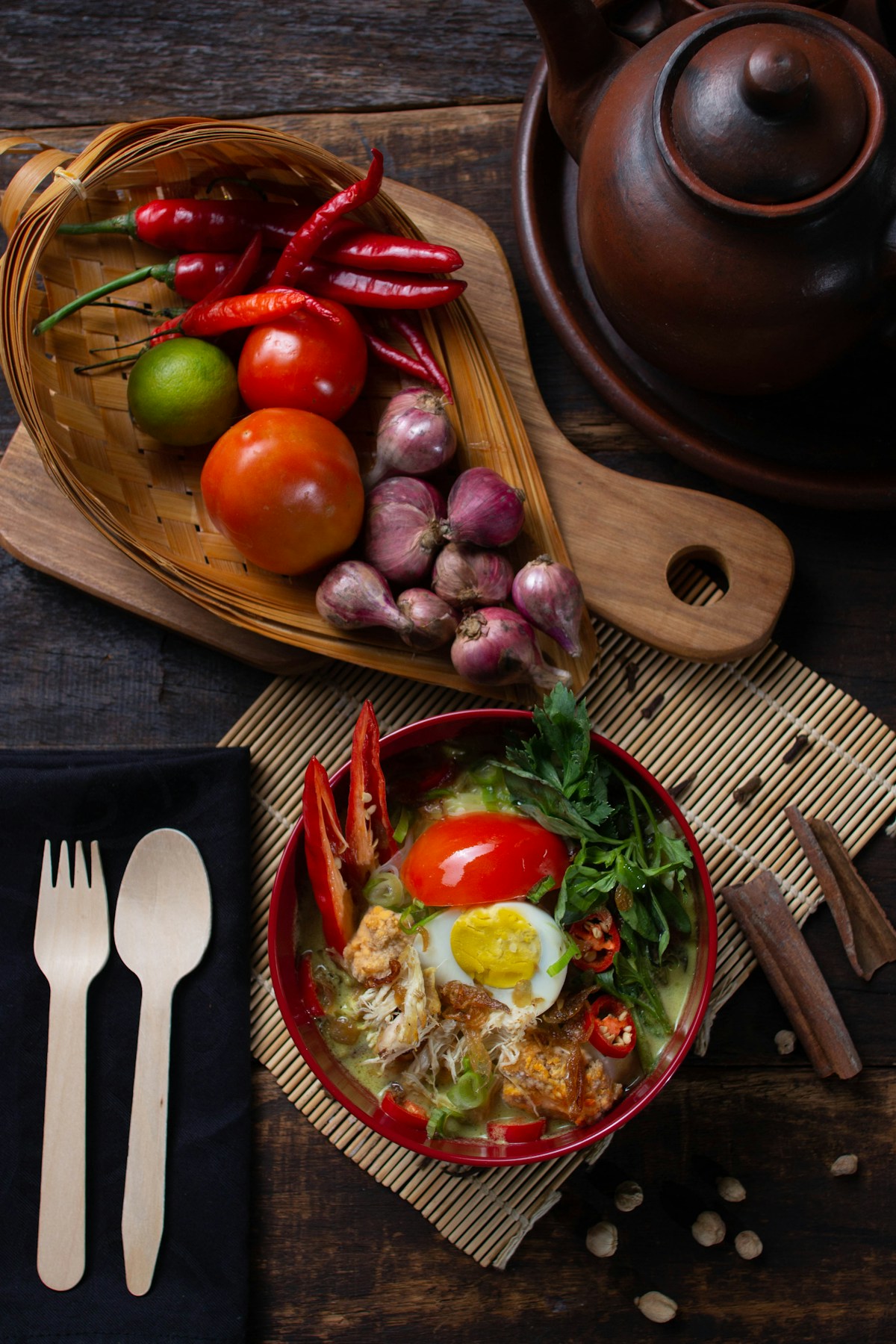
Medan is arguably the most interesting food city in Sumatra. It sits at the intersection of four distinct culinary traditions - Malay, Batak Toba, Acehnese, and Hokkien Chinese - and the result is a food scene that generates dishes found nowhere else in Indonesia. The soto here is different from Jakarta’s, the noodles are different from Javanese noodles, and the baked cakes on Jl Monginsidi have an entire street devoted to them. Spend a morning eating through Pasar Petisah and an evening at the Tip Top ice cream café and you’ll understand why food travellers put Medan on their itineraries independently of the tourist attractions.
1. Soto Medan
Medan’s signature soup: a coconut milk-based broth, deeply golden from turmeric, enriched with fresh coconut milk and seasoned with lemongrass, galangal, and kaffir lime leaves. Served with shredded chicken (or beef at some warungs), compressed rice cakes (ketupat), hard-boiled egg, fried shallots, and a squeeze of lime on the side.
Where to eat: Warung Soto Kesawan, Jl Sutomo (open 6am–3pm daily); Soto Sinar Pagi, Jl Jenderal Gatot Subroto (open 6am, sold out by 10am)
Price: Approximately IDR 20,000–30,000 per bowl
The difference from most Indonesian soto is the coconut milk - Medan’s version is richer and less watery than Central Java versions, and the spice profile is distinctly Malay rather than Javanese. Eat at a warung that makes it fresh in the morning rather than reheating from the day before.
2. Bika Ambon
Despite the name, bika ambon is a Medan creation - the “ambon” refers to a district in Medan, not the island city in Maluku. The cake is made from tapioca flour, coconut milk, palm sugar, eggs, and yeast, baked in rectangular tins that produce the characteristic honeycomb interior texture (from fermentation). Available in original (golden-yellow), durian, pandan, chocolate, and cheese variants.
Where to buy: Jl Monginsidi (Jalan Bika Ambon) - 20+ bakeries between Jl Juanda and Jl Sei Deli | Bika Ambon Zulaikha (No. 37) and Bika Ambon Ani (No. 76) are long-established
Price: Approximately IDR 40,000–80,000 per tin (serves 4–6)
The best time to visit Jl Monginsidi is mid-morning when the cakes are coming fresh from the oven. Ask to taste before buying - the texture should spring back when pressed, with a slight tacky quality from the tapioca. Avoid cakes that are dry or crumble when cut.
3. Mie Aceh
Brought south by Acehnese migrants, mie Aceh is a substantial dish - thick yellow wheat noodles in a heavily spiced soup or stir-fry (both versions exist, goreng being fried and kuah being soup). The broth uses beef or lamb and is seasoned with cardamom, star anise, cloves, and fresh chilli. Toppings include prawns, crab, or beef depending on the order.
Where to eat: Mie Aceh Titi, Jl Sei Deli (open 10am–10pm); Mie Aceh Iskandar Muda, Jl Iskandar Muda (open 11am–9pm)
Price: Approximately IDR 35,000–60,000 per portion depending on protein choice
Order mie Aceh goreng (fried) for a drier, more intensely spiced experience; mie Aceh kuah (soup) for the full broth. Most restaurants serve both - decide when you sit down.
4. Babi Panggang Karo
The Karo Batak people of the highlands around Berastagi are known for a style of whole-roasted pork that is distinct from any other regional version in Indonesia. The pig is marinated in a spice paste of andaliman pepper (the Sumatran equivalent of Sichuan pepper), shallots, garlic, and galangal, then slowly roasted over charcoal until the skin is crackly and the interior is deeply seasoned. Served with a sharp dipping sauce and rice.
Where to eat: Rumah Makan Babi Panggang Karo Horas, Jl Sei Batang Hari (open 10am–9pm); several similar restaurants on the same street
Price: Approximately IDR 60,000–100,000 per portion
Babi panggang Karo is pork - relevant to note that it is not served at Muslim-owned restaurants and the specialist Karo Batak restaurants that serve it tend to be in specific neighbourhoods. Your hotel can direct you to the nearest cluster.
5. Lontong Medan
Medan’s version of lontong - compressed rice in banana leaves - is served in a richer gravy than most Indonesian lontong, with a complex curry sauce containing coconut milk, sayur lodeh (mixed vegetable curry), rendang beef, serundeng (spiced grated coconut), and shrimp crackers on the side.
Where to eat: Pasar Petisah morning food stalls (open 6am–noon); stalls on Jl Putri Merak Jingga near the Maimun Palace area
Price: Approximately IDR 20,000–35,000
One of the most complete single-dish breakfasts available in Medan - nutritionally substantial, complex in flavour, and fast to eat. Available from dawn until the morning stalls close (typically noon).
6. Tip Top Restaurant
Established in 1929 on Jl Jenderal Ahmad Yani, the Tip Top is Medan’s most famous heritage restaurant - a Dutch colonial-era ice cream parlour that expanded into Indonesian, Chinese, and European food, and has been serving the same menu to successive generations of Medan families for nearly a century. The ice cream remains the draw.
Hours: 8am–10pm daily | Location: Jl Jenderal Ahmad Yani (near the Kesawan waterfront, colonial quarter)
Price: Ice cream from IDR 30,000; main dishes IDR 50,000–120,000
The atmosphere is part of the appeal: colonial marble floors, wooden ceiling fans, and old Medan photographs on the walls. The food is not sophisticated, but the Tip Top is worth a visit as a piece of living urban history - and the ice cream sundaes are genuinely good.
7. Durian (In Season)
Medan is one of Indonesia’s most acclaimed durian cities - the North Sumatran highland varieties (Monthong, Bawor, and the local Medan varieties) are considered by durian connoisseurs among the finest in the world. Durian stalls activate in force from April–June and September–November, the peak seasons.
Where to buy: Along Jl Sekip and the durian stalls on Jl Setia Budi (north Medan); Pasar Petisah durian section (morning)
Price: Approximately IDR 50,000–150,000 per fruit depending on variety and ripeness
The protocol: the vendor will open the fruit on the spot and offer a piece to taste. If you like it, buy the rest of the durian. The Monthong variety is creamy and mild; local Medan varieties are more pungent and more complex. Ask for paling wangi (most fragrant) if you want the full experience.
8. Dim Sum (Hokkien Chinese)
Medan’s Hokkien Chinese community has maintained dim sum culture here since the early 20th century - not as a weekend novelty but as a daily morning institution. The best dim sum houses open at 6am and fill with regulars by 7am: har gow, char siu bao, cheung fun, turnip cake, and egg tarts alongside Hokkien fried noodles.
Where to eat: Merdeka Walk (the outdoor dining complex on the old airport site) has several dim sum restaurants; also Jl Sutomo area near the Kesawan district
Price: Approximately IDR 7,000–15,000 per dim sum item; IDR 100,000–150,000 for a full dim sum breakfast for two
9. Nasi Padang (Rumah Makan Garuda)
Padang food - the Minangkabau cuisine from West Sumatra - is the most widely available restaurant food across Indonesia, and Medan has several excellent Padang restaurants. Rumah Makan Garuda on Jl Jenderal SM Raja is consistently cited as one of the city’s best for rendang (slow-cooked dry beef curry), gulai (coconut curry in various forms), and the full spread of Padang dishes served on the table simultaneously.
Hours: 8am–10pm daily | Location: Jl Jenderal SM Raja, south central Medan
Price: Approximately IDR 30,000–60,000 per person for a full plate
Order by indicating which dishes you want from the display on the table (or the counter). You pay only for what you eat - the system is traditional and slightly confusing on first encounter.
10. Kopi Tiam (Kopitiam) Coffee Culture
Medan’s Chinese kopitiam tradition produces strong, thick coffee brewed with condensed milk in a style that predates the Indonesian café boom by 80 years. The Kesawan district kopitiams - small, tiled, fan-cooled rooms with marble tabletops - serve kopi O (black), kopi susu (with condensed milk), and teh tarik (pulled tea) alongside roti bakar (toast with kaya coconut jam and butter).
Where to eat: Multiple kopitiams on Jl Ahmad Yani and Jl Sutomo in the Kesawan district | Open from 6am, busiest 7–9am
Price: Approximately IDR 10,000–18,000 per cup; roti bakar IDR 15,000–25,000
The best kopitiams are the ones that have been there for decades - identifiable by the wood and tile interior, the Hokkien dialect among the regulars, and the coffee that comes in glasses rather than paper cups.
Medan Food at a Glance
The best overall food itinerary for a single day in Medan: start at a kopitiam in Kesawan (7am), move to Pasar Petisah for lontong or soto (8–9am), visit Jl Monginsidi for bika ambon sampling (10am), lunch at a mie Aceh restaurant (noon), afternoon coffee and ice cream at Tip Top (3pm), and a babi panggang Karo dinner at Jl Sei Batang Hari (7pm). This circuit covers the full range of Medan’s culinary traditions in 12 hours.
Take a Guided Food Tour of Medan
Medan’s food circuit is legitimately one of the most complex in Indonesia - the city’s Batak, Acehnese, Malay, and Peranakan Chinese communities each have their own culinary traditions, and they sit within walking distance of each other in the Kesawan and Petisah districts. A guided food tour strings together a kopitiam breakfast, bika ambon tasting on Jl Monginsidi, mie Aceh at the right warung, and an evening of soto Medan without the dead ends. It’s the fastest way to eat across all four traditions in a day rather than discovering them piecemeal across a week.
Browse food tours and cooking experiences in Medan
More Medan Guides
- Medan travel guide - the full Medan overview: orientation, key attractions, hotels, and getting there
- Things to do in Medan - the best activities and experiences in and around Medan
- Where to stay in Medan - the best hotels and guesthouses by neighbourhood and budget