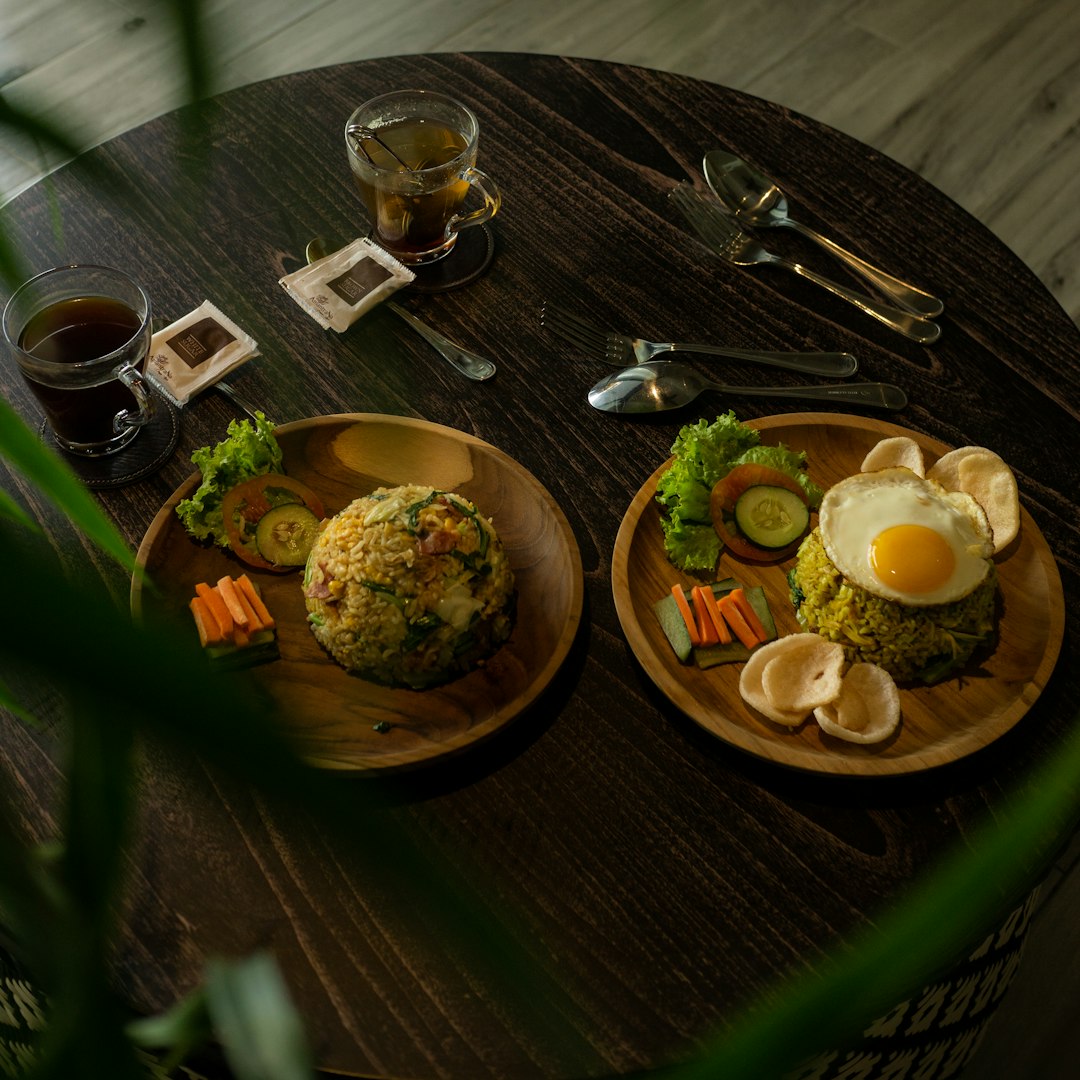
Bali is one of the better places to eat in Indonesia, which is saying something given how strong Indonesian food is overall. The island has its own distinct culinary tradition rooted in Hindu ritual food (Balinese Hindu is the dominant faith) that produces the most sophisticated ceremonial dishes in the archipelago. It also has a tourist dining scene that ranges from outstanding to mediocre, and knowing which warungs and restaurants are genuinely worth the money is the main challenge.
This guide covers what to eat, where to eat by area, and what to budget.
Essential Balinese Dishes
Babi Guling (Suckling Pig)
The centrepiece of Balinese ceremonial cooking. The whole pig is marinated in a paste of turmeric, ginger, chilli, galangal, and lemongrass, then spit-roasted over coconut husks for several hours. The result has crackling skin, dense spiced meat, and a deep coconut-smoke flavour. It is served with lawar (spiced meat and vegetable mix with fresh blood in the traditional version), steamed rice, and usually a small portion of sate lilit (minced fish or pork on lemongrass skewers).
Where to eat it:
- Ibu Oka, Ubud - the most famous name; expect queues by 10am and sell-out by noon. A plate with rice runs approximately IDR 60,000–80,000 as of 2026. Jalan Suweta, Ubud centre.
- Chandra Babi Guling, Gianyar - regarded by locals as the best version. Less touristy than Ibu Oka. Approximately IDR 40,000–60,000 per portion.
- Babi Guling Pak Malen, Seminyak - the most practical option for visitors staying in south Bali without wanting to travel to Ubud.
Nasi Campur
The everyday Balinese mixed plate - steamed rice surrounded by 4–8 small portions of various side dishes. Contents vary by warung and season: typically includes spiced shredded chicken or duck, tempeh, tofu, fried peanuts, sambal, and steamed vegetables. There is no fixed recipe - every warung has its own version.
Cost: IDR 20,000–50,000 at a local warung; IDR 50,000–100,000 at a tourist-oriented restaurant
Bebek Betutu (Smoked Duck)
Duck rubbed with a paste of Bali’s primary spice mix (base genep: galangal, turmeric, ginger, chilli, shrimp paste, candlenut), wrapped in banana leaves and palm leaves, then slow-cooked in smouldering rice hulls for 8–12 hours. The meat falls apart and is intensely fragrant. It is a ceremonial dish that requires pre-ordering at most restaurants - at least 24 hours’ notice.
Where to eat it:
- Bebek Tepi Sawah, Ubud - rice paddy setting, specialises in duck dishes; approximately IDR 150,000–200,000 for a full serving
- Murni’s Warung, Ubud - established 1974; reliable bebek betutu by pre-order
Sate Lilit
Bali’s distinct version of satay uses minced seafood or pork mixed with coconut and spices, moulded around lemongrass sticks and grilled over coconut husks. The lemongrass infuses the meat with fragrance during cooking. Unlike Java’s sate, Balinese sate lilit is not dipped in peanut sauce - the spice is already inside the meat.
Lawar
A mix of minced meat, vegetables, grated coconut, and spices. Traditional versions include fresh blood from pigs or turtles; tourist-facing versions typically use cooked chicken or jackfruit. It is a ceremonial dish found at most warung specialising in Balinese food.
Where to Eat by Area
Seminyak and Kerobokan
The highest density of serious restaurants in Bali outside Ubud. The kilometre or so along Jalan Kayu Aya (Eat Street) and its side streets has everything from IDR 30,000 warung meals to IDR 400,000/person tasting menu dinners.
Notable options:
- Naughty Nuri’s, Seminyak - famous for ribs and cocktails; mains IDR 100,000–200,000; arrive early or expect a wait
- Metis Restaurant - French-Balinese fusion in a garden setting; mains IDR 200,000–400,000; reliable for a special occasion dinner
- Sarong - pan-Asian tasting menus in the IDR 400,000–600,000/person range; one of Bali’s most consistent high-end options
- Warung Murah (small local warung, multiple locations) - nasi campur for IDR 25,000–35,000; basic but genuine
Canggu
Canggu has the most interesting cafe scene in Bali - specialty coffee, plant-based menus, grain bowls, and smoothie bars line every side street. It is not the place for traditional Balinese food but it is excellent for Western-style cafe dining and healthy eating.
- Shelter Coffee - specialty coffee roaster; IDR 35,000–65,000 for coffee drinks
- Sari Organik Cafe, Ubud direction from Canggu - worth the drive; farm-to-table; approximately IDR 80,000–150,000/person
- Old Man’s - beach bar food (burgers, tacos); IDR 80,000–150,000 for mains; reliable for a casual dinner
Ubud
Ubud is the best place in Bali to eat genuinely well across multiple categories - traditional Balinese, international, and plant-based. The restaurant density along Jalan Dewi Sita and Jalan Hanoman is the highest quality-per-metre in the island.
Notable options:
- Locavore - the most celebrated restaurant in Bali; modern Indonesian using all-local ingredients; tasting menus from IDR 850,000–1,200,000/person; reservations essential weeks ahead
- Room4Dessert - dessert-focused fine dining; IDR 400,000–600,000/person
- Warung Babi Guling Ibu Oka - the famous suckling pig spot; IDR 60,000–80,000; open mornings only
- Warung Sopa - traditional Balinese home cooking at tourist-friendly prices; IDR 50,000–100,000 per person for a full meal
- Alchemy - raw vegan restaurant; largest plant-based menu in Ubud; IDR 80,000–150,000/person
Sanur
Sanur has a quiet promenade cafe scene - generally reliable and reasonably priced without the premium of Seminyak or the trend-chasing of Canggu.
- Cafe Batu Jimbar - long-standing Balinese-international cafe; breakfasts from IDR 80,000
- Massimo Restaurant - Italian-run; genuine pasta; IDR 120,000–250,000 for mains
Street Food and Markets
Gianyar Night Market (Pasar Malam Gianyar): 25 km from Ubud; open evenings from approximately 5pm. The best street food market in Bali - babi guling, sate, lawar, jajan pasar (Balinese sweets), and fresh coconut at local prices. A full meal from multiple stalls costs IDR 30,000–60,000. Worth the drive from Ubud.
Badung Market, Denpasar: Bali’s main wholesale market; sells fresh produce, spices, and packaged goods at local prices. Interesting for a morning visit and good for buying spice mixes, vanilla, and coffee.
Seminyak Square area warungs: Side streets behind the main tourist strip have working-class warungs serving nasi campur and soto (soup) for IDR 20,000–35,000 - the same food as the tourist restaurants but without the markup.
Food Tours and Cooking Classes
A half-day cooking class is one of the better uses of time in Ubud - the hands-on market visit followed by cooking traditional dishes explains a lot about the cuisine in a way that eating alone does not.
Recommended operators:
- Paon Bali Cooking Class - IDR 300,000–400,000 per person; includes market visit and 5–6 dish menu; held at a family compound in Ubud
- Casa Luna Cooking School - longer format, more technique-focused; IDR 450,000–600,000 per person
For an organised food tour covering markets, street food, and a warung lunch, options are available through Bali culinary tours.
Budget Guide
| Setting | Cost per meal |
|---|---|
| Local warung (nasi campur, mi goreng) | IDR 20,000–50,000 |
| Mid-range tourist cafe | IDR 80,000–150,000 |
| Established restaurant (Seminyak/Ubud) | IDR 150,000–350,000 |
| Fine dining (Locavore, Metis, Sarong) | IDR 400,000–1,200,000 |
| Market / street food | IDR 10,000–30,000 per item |
Bali’s food scene rewards the willingness to eat away from main tourist strips. The best value is almost always one street back from wherever the touts are.
For more on plant-based eating specifically, see our vegan Bali guide. For cooking class options and food-focused activities, browse our Bali cooking tours.