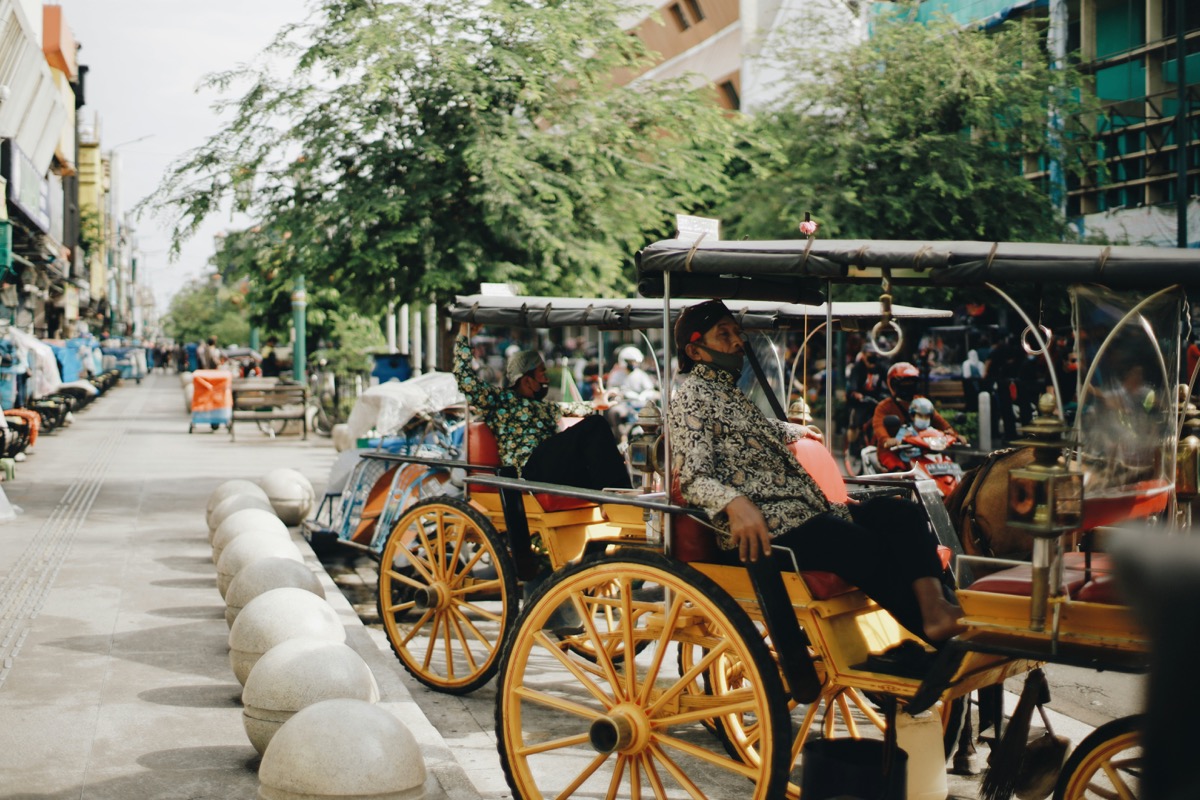
Yogyakarta - “Jogja” to everyone who spends more than a day here - sits at the cultural heart of Java. The Sultan’s palace has governed the city without interruption since 1755. The two greatest Hindu and Buddhist monument complexes in Southeast Asia are within 50 km. An active volcano overlooks the city from the north. And the batik and wayang kulit (shadow puppet) traditions are living crafts still practiced by family workshops in the city’s backstreets.
GetYourGuide lists over 400 experiences departing from Yogyakarta, and the commercial intent behind tourism searches here is genuinely high - Borobudur and Prambanan rank among Indonesia’s top three most-Googled tourist sites. Below are the tours that matter most, with detail on what each involves and how to book effectively.
Borobudur Sunrise Tour
Borobudur is the world’s largest Buddhist monument - a 9th-century stupa complex built from 2 million stone blocks, covering 2,500 square metres of base area, with 504 Buddha statues arranged across 9 terraces. The UNESCO site draws 4 million visitors annually. The crowd problem is real: from 8am onwards, tour buses arrive in convoys and the upper terraces become congested.
The sunrise experience is different. A special dawn access ticket (IDR 350,000, approximately USD 22 per person as of 2026) allows entry from 4:30am. You climb in darkness with a guide carrying a torch. By the time you reach the uppermost circular terraces - the rows of bell-shaped stupas each containing a seated Buddha - the sky is beginning to grey. Sunrise over the Kedu Plain, with Merapi volcano in the north and Merbabu to the northeast, is one of the best views in Java.
Standard tours depart Yogyakarta at 3:30–4am, reach Borobudur by 4:30–5am, spend 2–3 hours at the monument, and return for breakfast in a restaurant near the site. Most tour packages include the sunrise ticket, transport, a guide, and breakfast. Total cost: USD 40–65 per person for a shared tour, USD 70–100 private.
Booking critical: Sunrise tickets are allocated per slot and sell out. During July–August and December–January, book 2–3 weeks ahead. The tour operator should handle the ticket - if they ask you to book the sunrise ticket separately, confirm exactly which ticket type they mean (regular vs dawn access).
What to bring: A light layer (mornings at 267-metre elevation feel cold at 5am even in tropical Java), decent walking shoes (the stone steps are uneven), and a rain cover for bags in the wet season. Photography is unrestricted but tripods require a separate permit.
Prambanan Temple Complex Tour
Prambanan is an 850-year-old Hindu temple complex 17 km east of Yogyakarta - 240 individual temples dedicated primarily to the Trimurti (Brahma, Vishnu, and Shiva), with the three central towers rising 47 metres from the plain. It’s a UNESCO World Heritage Site and the finest example of Hindu temple architecture in Java.
Most guided tours visit Prambanan in the afternoon after a morning Borobudur sunrise. A combined Borobudur–Prambanan full-day tour is the most popular format in Yogyakarta and typically costs USD 50–80 per person including transport, both entrance fees, a guide, and lunch. The two sites are about 90 minutes apart by road.
Prambanan alone warrants 2–3 hours with a guide. The central compound contains the main Shiva temple (Candi Shiva Mahadeva) with relief panels depicting the Ramayana narrative - 240 panels running around the temple’s inner gallery. A good guide walks the Ramayana story chronologically as you move around the perimeter. Without explanation, the panels are visually impressive but contextually opaque.
The outer compound contains hundreds of smaller perwara temples, many still in ruins from a major earthquake in 2006 - some reconstruction is ongoing. The contrast between the fully restored central towers and the rubble field of outer temples tells its own story about the monument’s fragility.
Evening option: The Ramayana Ballet performance at the Prambanan open-air amphitheatre runs Tuesday, Thursday, and Saturday evenings from May to October. The performance uses the Prambanan complex as a backdrop - performers dance the Ramayana epic with the illuminated temples behind them. Tickets from IDR 150,000 (approximately USD 10). Tour operators can arrange evening transport from central Yogyakarta.
Mount Merapi Volcano Jeep Tour
Merapi - “Mountain of Fire” - is one of the world’s most active volcanoes. The 2010 eruption killed 353 people and buried dozens of villages on the southern slopes in pyroclastic flows. The landscape those flows created is still visible: a grey-brown debris field of volcanic boulders, toppled trees, and buried house foundations stretching down from the summit toward Kaliurang.
The jeep tour navigates this debris field on a fleet of 4WD jeeps modified from old military vehicles. You move through the evacuation zone and into the “cold lava” zone, stopping at abandoned buildings from 2010 - including the house of Mbah Marijan, Merapi’s spiritual guardian, who refused to evacuate and died in the eruption. The landscape has an eerie post-apocalyptic quality that visitors consistently describe as one of the most affecting experiences in Java.
Standard routes are:
- Short route (2 hours): Museum Sisa Hartaku (a house-turned-museum where the original family possessions melted in the lava flow), Petung River viewpoint for the valley and volcano. From USD 25 per person.
- Medium route (3–4 hours): Above plus Mbah Marijan’s house ruins, the bunker overlook, and Kinahrejo village. From USD 35 per person.
- Long route (5–6 hours): Adds the Turgo lava field and a higher viewpoint toward the summit. From USD 50 per person.
Tours depart from Kaliurang (about 25 km north of central Yogyakarta) or with hotel pickup from the city. Sunrise departures (4am) to reach the viewpoints at dawn are significantly better than midday tours - the summit is often cloud-covered by 10am.
Safety note: Jeep tours stay well below Merapi’s summit exclusion zone (currently the 5 km radius around the crater). Reputable operators check MAGMA Indonesia alert levels before each departure. If a tour operator guarantees summit access regardless of conditions, it is a red flag.
Batik Workshop
Yogyakarta is Indonesia’s premier centre for batik - hand-drawn wax-resist fabric art that UNESCO lists as an Intangible Cultural Heritage of Humanity. The city has dozens of family workshops where fourth and fifth-generation batik artisans still practice the traditional canting method: drawing molten wax through a small copper spout onto cotton or silk, then dyeing the fabric, stripping the wax, and repeating the process for each colour layer.
A batik workshop runs 2–3 hours and typically produces one piece to take home. You learn to use the canting tool, apply wax to a pre-sketched design (or design your own if the class allows), and dip the fabric in dye. The instructor demonstrates the full process including wax removal and finishing. Classes run in small groups of 4–10 people.
Where to book:
- Batik Winotosastro (established 1956, in the Pekalongan street district) - one of the city’s oldest functioning batik houses, running classes for travellers since the 1970s. Includes a tour of the production workshop to see professional artisans working full-scale pieces. From USD 20 per person.
- Batik Plentong (near Kraton) - focuses specifically on the fine-line canting technique used in royal Yogyakarta batik, which uses more restricted colour palettes (indigo, sogan brown, and cream) than the commercial tourist style. From USD 25 per person.
What you take home: The piece you make during the class, plus a certificate confirming the class completion. Expect the finished product to look beginner-level - traditional batik is a craft that takes years to master. The value is the process, not the result.
Kraton (Sultan’s Palace) and Old City Tour
The Kraton is the still-functioning palace of the Sultanate of Yogyakarta, home to Sultan Hamengkubuwana X and approximately 25,000 palace staff and dependants who live within the palace complex walls. The public section - the Keraton museum - covers the royal reception halls, regalia, gamelan orchestras, and wayang kulit (shadow puppet) collections.
A guided Kraton tour runs 1.5–2 hours and contextualises the complex better than the English-language signs alone. Guides explain the Javanese cosmological principles embedded in the palace architecture (the north-south axis aligned from the volcano to the sea), the political history of the sultanate from its founding during VOC rule, and the current Sultan’s unusual dual role as both traditional monarch and elected Governor of Yogyakarta Province.
The old city tour extends from the Kraton north along Malioboro Street - Yogyakarta’s historic commercial boulevard lined with batik shops, silverwork stalls, and street warungs - and south to the Tamansari Water Castle, a 1758 royal bathing complex of interconnected pools, underground passages, and a sunken mosque built into the city wall. A half-day tour covering all three sites costs USD 25–40 per person with a guide.
Timing note: Malioboro is most atmospheric in the evening when street vendors set up food stalls - but the Kraton closes at 2pm. Plan the Kraton visit for the morning and return to Malioboro after dark for food.
Planning Your Yogyakarta Tour Schedule
Classic 2-day combination:
- Day 1: Borobudur sunrise (depart 3:30am, back by 9am), then Merapi jeep tour in the afternoon (depart noon, back by 5pm), Malioboro evening food walk
- Day 2: Prambanan morning visit, batik workshop at lunch, Kraton afternoon, Ramayana Ballet at Prambanan in the evening (May–October)
Tour booking lead times:
- Borobudur sunrise: 2–3 weeks ahead in July–August, 3–5 days in low season
- Merapi jeep: 2–3 days ahead, same-day sometimes available in low season
- Batik workshop: same-day walk-in often possible at larger studios
- Prambanan Ramayana Ballet: 3–5 days ahead for guaranteed seating
Private vs shared: Shared tours in Yogyakarta are well-organised - the Borobudur dawn access groups are small by definition (limited tickets). Private tours make most sense for Merapi (more flexible route timing) and Prambanan (go at your own pace with a dedicated guide).
Yogyakarta rewards spending 3–4 days rather than a single whirlwind day from Bali. The combination of the two great temple complexes, the active volcano, and the living palace culture is genuinely unmatched in Java, and the tourist infrastructure is well developed enough that booking and moving between sites is straightforward.
For one-day excursions based in Yogyakarta - Borobudur, Prambanan, Merapi, or a combined circuit - browse day trips from Yogyakarta on GetYourGuide for curated options with transport and a guide included.