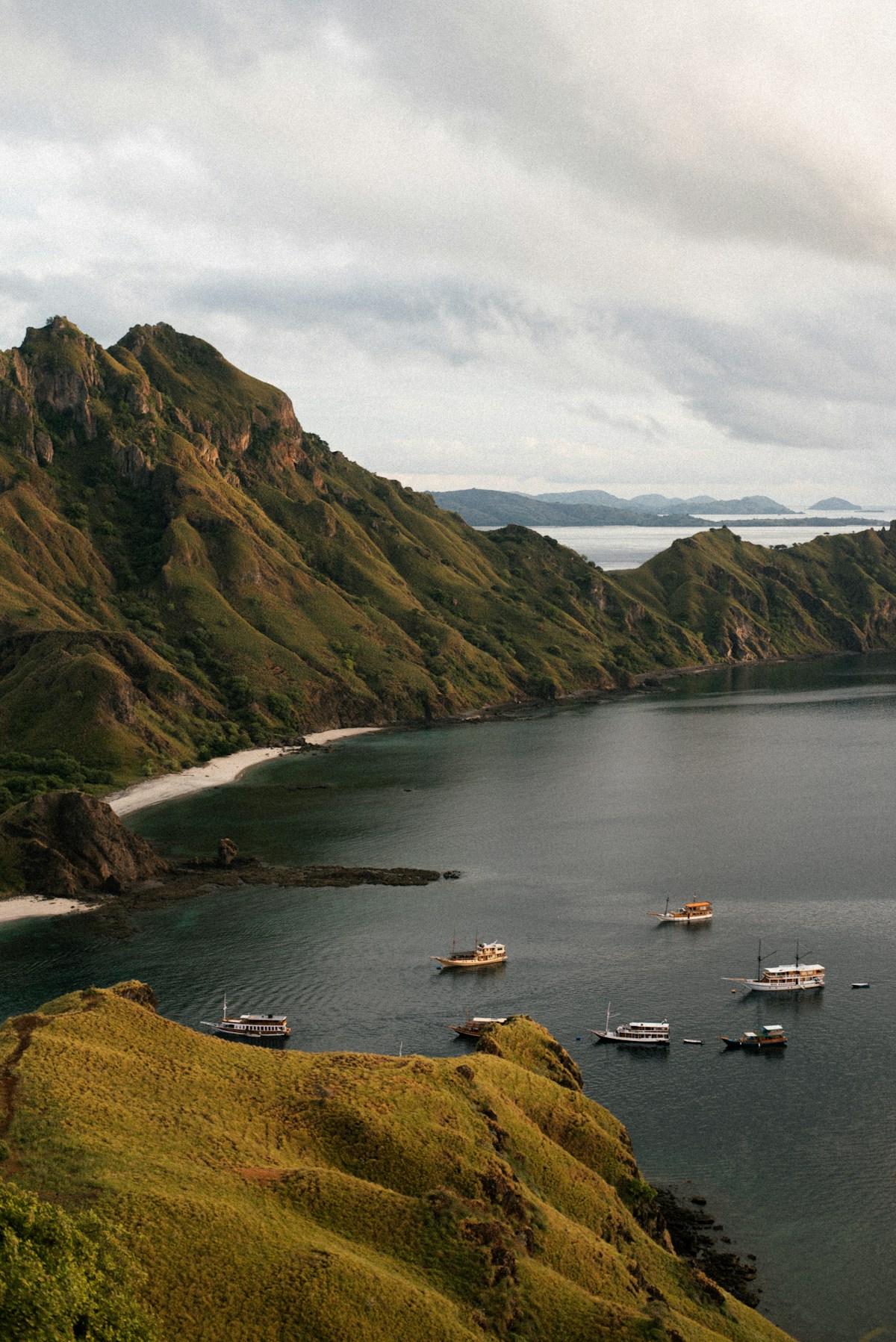
Labuan Bajo is a small fishing town on the western tip of Flores island that has spent the past decade becoming one of Indonesia’s most significant tourism gateways. Its singular purpose, in tourism terms, is access to Komodo National Park - a 1,733 km² protected marine and terrestrial area comprising 29 islands, including Komodo and Rinca, home to the world’s largest living lizard. GetYourGuide’s Labuan Bajo listings and Komodo National Park tours together cover the full range of day trips, liveaboards, and specialist dive packages. Below is a structured breakdown of the tours that matter most.
Komodo Dragon Trekking - Komodo Island and Rinca Island
The Komodo dragon (Varanus komodoensis) is the main reason most visitors come to this corner of Indonesia. The largest specimens reach 3 metres in length and 70 kg, can sprint at 20 km/h over short distances, and have a salivary and oral bacterial profile that makes their bite acutely dangerous. They are not aggressive toward humans in the way large predators typically are - but encounters are controlled by rangers for good reason.
Komodo Island (the larger, more famous of the two main trekking islands) has three trail options: the Short Trail (1 km, 45–60 minutes), the Medium Trail (2 km, 1.5 hours), and the Long Trail (5 km, 3–4 hours). The short and medium trails visit the valley and river mouth areas where dragons congregate near the park rangers’ station. The long trail crosses the island’s interior ridgeline - fewer dragons but good views from Gunung Api (525 m) across the park.
Rinca Island is closer to Labuan Bajo (approximately 2 hours by boat vs 3.5–4 hours to Komodo) and often regarded as better for dragon sightings - the ranger station at Loh Buaya sits in a valley frequented by large adults who shelter under the buildings in the heat. A typical morning on Rinca yields 5–10 dragon encounters, including family groups. Buffalo and deer (natural dragon prey) are also present in the open grasslands.
Most day trips combine either Komodo or Rinca with additional snorkelling and beach stops. A combined Komodo + Rinca day is possible but long (10–12 hours on the water). Many operators offer a two-day itinerary that splits the two islands with a sunset stop at Padar on the first evening.
National park entrance fees: IDR 250,000 per person on weekdays, IDR 400,000 on weekends (approximately USD 16–25). These are added to tour costs or included in package prices - verify before booking.
Padar Island Sunrise Hike
Padar Island sits between Komodo and Rinca and has no dragons - but it has the most-photographed viewpoint in the national park: a panoramic hilltop view of three bays with distinctly different sand colours (white, black, and pale pink), surrounded by dry savannah ridgelines that glow orange at sunrise.
The hike to the viewpoint involves 800 steps up a concrete-and-stone staircase - steep, exposed, and fully in the open. It takes 30–45 minutes to ascend. The view from the top is genuinely striking: a 360-degree panorama with Komodo island to the northwest and Flores’ mountains to the east.
Padar is included in most multi-day liveaboard itineraries and in dedicated Padar sunrise day trips from Labuan Bajo. Sunrise trips typically depart at 2–3am from Labuan Bajo, reaching Padar in time for the dawn ascent. Day trip prices from USD 40–60 per person. The overnight version - anchoring in Padar’s bay, watching the sunset, sleeping on the boat, and ascending at 5am - is significantly more atmospheric and worth the extra cost.
The island is also a good snorkelling site: Padar Bay’s western shore has coral gardens with reef fish and regular sea turtle sightings. Most tour boats anchor here after the sunrise hike.
Pink Beach Snorkelling
Pink Beach (Pantai Merah) on the east coast of Komodo Island is one of seven naturally pink beaches in the world - the colour comes from red organ pipe coral fragments mixed into the sand. The beach is accessible only by boat and is part of virtually every national park day trip itinerary.
The snorkelling off Pink Beach is among the park’s best for shallow-water reef health: staghorn, table, and brain corals in good condition, high fish density (parrotfish, rabbitfish, emperor angelfish, clownfish in anemones), and reasonable visibility in calm conditions. Depth ranges from 1–5 metres close to shore, dropping to 10–15 metres along the reef edge. Current is generally mild.
Equipment: Most tour boats provide basic snorkelling equipment (mask, snorkel, fins). Quality varies considerably - rented equipment from reputable operators is adequate; from lower-budget boats it can be poor. If you have your own mask, bring it.
Timing: Pink Beach is included in almost every national park boat trip, so midday (11am–1pm) can be crowded with multiple boats anchored simultaneously. Liveaboard trips that arrive in early morning or late afternoon have the beach to themselves.
Manta Ray Snorkelling - Manta Point and Manta Alley
Komodo National Park is one of the world’s most reliable locations for snorkelling with oceanic manta rays (Mobula birostris). The two main aggregation sites are:
Manta Point (Karang Makassar) - a cleaning station off Komodo Island’s north coast where mantas hover in shallow water (3–8 metres) while cleaner wrasses remove parasites. Mantas visit throughout the year but most reliably May–October. The experience - lying face down at the surface while 3–4 metre mantas glide directly underneath - is extraordinary.
Manta Alley (Alley Manta) - a deeper channel off the south coast of Komodo Island where mantas feed in currents that bring plankton upwelling. This site is reached only by liveaboard; it is too distant from Labuan Bajo for day trips. Visibility here is often lower but manta numbers can be higher (10–20 individuals on a single pass is not unusual).
Snorkelling with mantas is included in most Komodo day trips and all liveaboards. Diving with mantas at Manta Alley requires advanced open water certification - the currents can be strong. Liveaboard packages including Manta Alley dives run USD 250–450 per person for 2 nights.
Note on conduct: Komodo National Park regulations prohibit touching mantas, chasing them, or getting closer than 3 metres. Responsible operators brief all passengers before entering the water. If your guide enters the water first and signals stop, comply - mantas will leave if harassed.
Liveaboard Sailing in Komodo National Park
A 2-day, 2-night liveaboard is the most complete way to experience the park - and for divers, essentially mandatory. Day trip boats from Labuan Bajo reach Komodo, Rinca, Pink Beach, and Manta Point. Liveaboards additionally cover: Gili Lawa (a dive site with walls dropping to 40 metres and strong drift diving), Batu Bolong (a seamount with sharks and massive schools of reef fish), Crystal Rock (a pinnacle dive at the north end of the park), and Manta Alley in the far south.
Standard 2-night itinerary: Day 1 - depart Labuan Bajo mid-morning, Padar Island afternoon, sunset anchorage in Gili Lawa bay. Day 2 - Komodo Island morning (dragons + Pink Beach), Manta Point afternoon. Day 3 - Rinca Island morning, return to Labuan Bajo by noon.
Boat quality on liveaboards varies from basic wooden phinisi vessels (budget end, USD 120–180 per person) to well-equipped dive boats with proper cabins, hot showers, and nitrox filling (USD 300–450 per person). Read recent reviews carefully - the budget boats in Labuan Bajo have an inconsistent track record for maintenance and meal quality.
For non-divers, liveaboards still make sense: snorkelling in the park’s remote sites with less competition and the experience of waking anchored in a national park bay are both worthwhile.
Day Trips Versus Multi-Day - What Works Best
For first-time visitors wanting the highlights (dragons + Pink Beach + snorkelling): A well-organised 1-day shared boat trip covers this adequately and costs USD 40–80 per person. Depart 7am, return 5–6pm. Busy at peak sites but manageable.
For divers: A minimum 2-night liveaboard to access Batu Bolong, Crystal Rock, and Manta Alley. Day trip diving from Labuan Bajo reaches only the park’s western sites.
For photography or sunrise on Padar: An overnight stay on a boat - either a liveaboard or a simple anchoring trip - gives you Padar at 5am and the park’s bays in evening light. Far better than a 2am departure day trip that leaves you exhausted.
For budget travellers: Join a group day trip through one of the guesthouses in Labuan Bajo’s harbour area. Prices are lowest this way (USD 25–40 per person) but boats can be older and groups larger.
Practical Notes for Labuan Bajo Tours
Getting there: Labuan Bajo is served by Komodo Airport (LBJ), with direct flights from Bali (1 hour), Jakarta (2 hours), and Lombok. Merpati Airlines, Wings Air, and Citilink all operate the route. Book flights a week or two ahead - slots fill in July–August.
How many days: Two nights in Labuan Bajo is a tight minimum (1-day boat trip + travel day either side). Three nights is comfortable for a day trip plus an overnight liveaboard with Padar sunrise. Five nights allows a 3-day liveaboard and proper exploration of Flores’ interior (the Kelimutu volcanic lakes are 5 hours east by road).
Seasickness: The Flores Sea can be rough in the shoulder seasons (April, November). Liveaboard passages between Labuan Bajo and the far south of the park (Manta Alley) cross open water. If prone to seasickness, carry medication and choose boat tours with covered rear decks.
National park administration: The park introduced a new booking system in 2022 requiring pre-registration of visitor numbers per vessel. Reputable tour operators handle this automatically; if an operator says they can bypass the booking system, that is a red flag.
Komodo National Park is one of the genuine highlights of Indonesian travel - comparable to Borobudur or the Gili Islands as a must-see, and less overrun than either. The combination of dragons, manta rays, and spectacular island scenery in a single national park is unusual anywhere in the world. The key is choosing an operator who takes park regulations seriously and maintains their boat properly. GetYourGuide’s Labuan Bajo listings and Komodo-specific tours both show cancellation terms and verified operator reviews clearly - a useful starting point before comparing prices directly with Labuan Bajo harbour operators.