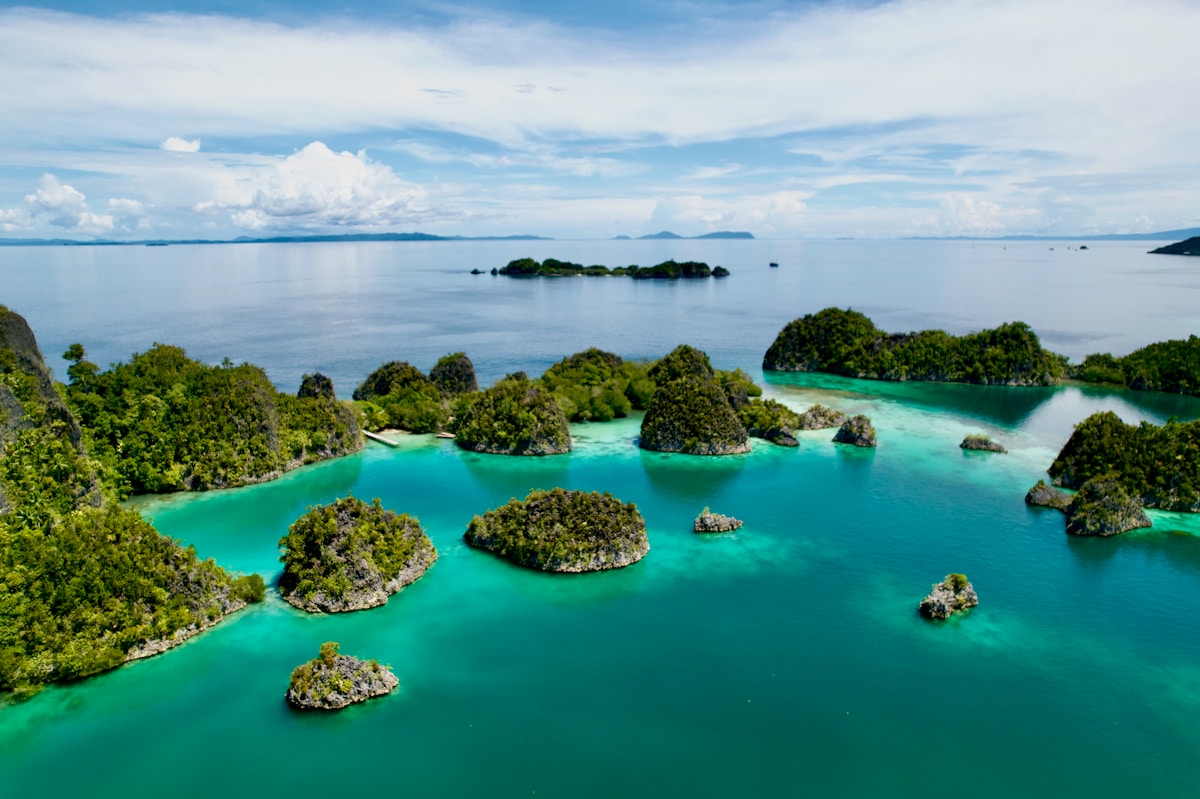
Raja Ampat sits at the heart of the Coral Triangle - the global epicentre of marine biodiversity - and consistently tops lists of the world’s best snorkelling destinations. The statistics are staggering: more coral species in a single reef than in the entire Caribbean, manta rays that arrive in predictable aggregations, walking sharks found nowhere else on earth. But the logistics deserve equal attention. Getting here requires a domestic flight to Sorong followed by a ferry, and the marine park permit is mandatory. Plan ahead, and Raja Ampat delivers an underwater experience that is genuinely unlike anywhere else.
Getting to Raja Ampat
The gateway city is Sorong, in West Papua, connected to Jakarta (from approximately IDR 1,200,000 one way), Bali (from IDR 900,000), Makassar, and Manado. Garuda Indonesia, Lion Air, and Batik Air all serve Sorong. Flights from Bali take around 3 hours.
From Sorong’s Jefman Airport, take a taxi to Sorong harbour (IDR 150,000–200,000 / USD 9–12). The Bahari Express and Marina Express fast ferries run multiple times daily to Waisai, the capital of Raja Ampat Regency, in approximately 2 hours. Tickets cost IDR 120,000–150,000 (USD 7–9) each way as of 2026. Book in advance during peak season (October–January).
From Waisai, resorts send speedboats to pick up guests - arrange this in advance. Budget guesthouses in Waisai start from IDR 250,000 (USD 15) per night; remote eco-resorts on outer islands run IDR 2,000,000–8,000,000 (USD 123–492) per night and typically include meals and a speedboat.
The Marine Conservation Permit
Every visitor entering Raja Ampat’s waters must purchase the SKTT environmental entry fee before snorkelling or diving. As of 2026, the cost is IDR 1,500,000 (approximately USD 92) per person, valid for 12 months. Children under 12 are exempt. The fee funds reef conservation, ranger patrols, and community development across the marine park.
Purchase points: Waisai harbour conservation desk, most resorts on arrival, and some liveaboard operators. Keep the permit card with you during all water activities - rangers patrol the park and spot checks are conducted.
Best Snorkelling Sites
Arborek Village House Reef
The jetty at Arborek village is one of the most accessible and rewarding snorkel sites in central Raja Ampat. Within 5 minutes of entering the water, you’re over table corals, barrel sponges, and lionfish. Arborek is also the best shore-based site for watching manta rays - they feed in the shallows off the village jetty between October and April, often in groups of 3–8. Entry to the village costs IDR 50,000 (USD 3) per person.
Manta Sandy
A dedicated manta ray cleaning station in the passage south of Mansuar Island. Mantas arrive to have parasites removed by cleaner wrasse and often linger for 30–60 minutes, circling slowly just below the surface. Best visited November–March. Experienced snorkellers can free-dive to 4–6 metres for closer views; the mantas are accustomed to people and will approach of their own accord.
Piaynemo Viewpoint & Surrounding Lagoons
The iconic Piaynemo karst formation - limestone mushroom islands rising from electric-blue lagoons - is as good underwater as it looks from above. The lagoon passages between islands shelter calm, warm water with excellent visibility. Soft coral density here is exceptional. The viewpoint hike (40 minutes, 400 steps) is worth combining with a snorkel in the bay below.
Cape Kri
One of the most species-rich shallow reefs in Raja Ampat, located near Kri Island. A single snorkel session here has been known to yield sightings of over 300 fish species - a world record count was made here by marine biologist Dr Gerry Allen. Current can be moderate; snorkel on the leeward side of the cape on stronger tide days.
Wayag (Remote North)
The postcard image of Raja Ampat - hundreds of mushroom-shaped limestone islands seen from a 45-minute hike to a viewpoint - sits in the far north, roughly 3–4 hours by speedboat from Waisai. The snorkelling around Wayag’s outer islands encounters pristine reef that sees minimal visitor pressure. Accessible only on liveaboards or expensive private charters.
Day Trip Operators from Waisai
Most resorts and guesthouses on Waisai and the surrounding islands offer guided snorkel day trips, typically visiting 3–4 sites in 6–7 hours. Prices as of 2026:
- Raja Ampat Dive Lodge (Kri Island) - full-day snorkel trip IDR 750,000–950,000 (USD 46–58) per person, including equipment and lunch; known for well-briefed guides and small group sizes (max 8)
- Papua Explorers Dive Resort (Gam Island) - snorkel packages IDR 850,000 per person per day; strong conservation focus, part of reef monitoring programmes
- Waisai Guesthouse operators - budget day trips from IDR 400,000–600,000 (USD 25–37) per person sharing a 10-person speedboat; less guided, more self-directed
- Sorong day tour packages - some Sorong-based operators sell Raja Ampat day trips at IDR 1,200,000–1,800,000 (USD 74–110) all-in, but the boat transfers eat into water time significantly
Equipment rental (mask, fins, snorkel) costs IDR 50,000–100,000 (USD 3–6) per day at most resorts. Bring your own if you prefer a specific fit - rented fins rarely fit perfectly. For additional operator options and package comparisons, browse Raja Ampat snorkelling tours on GetYourGuide.
Liveaboard Options
Liveaboards unlock the remote areas - Misool in the south (seahorses, pygmy seahorses, dramatic overhangs), Kawe Island in the north (undisturbed pristine reef), and the Dampier Strait passages (manta, whale shark encounters October–April). A typical Raja Ampat liveaboard runs 7–10 nights with 3–4 dives or snorkel sessions per day.
Price range as of 2026:
- Budget liveaboards: IDR 6,000,000–9,000,000 (USD 370–553) per person per week
- Mid-range: IDR 12,000,000–20,000,000 (USD 737–1,230) per person per week
- Premium (private boat charter): IDR 50,000,000–150,000,000 (USD 3,070–9,230) per week
Recommended Raja Ampat liveaboard operators with established safety records: Papua Diving Cruises, Tambora Liveaboard, and Coralia Liveaboard. Book 3–6 months ahead for peak season departures.
What to Pack
- High-SPF reef-safe sunscreen (chemical sunscreens damage coral; zinc oxide is acceptable)
- Rash guard or wetsuit (water temperature is 27–30°C but long sessions warrant protection from jellyfish)
- Underwater camera or GoPro with red filter (corrects colour loss below 5 metres)
- Motion sickness medication if you’re sensitive - speedboat transfers to outer islands can be rough in chop
- Cash in IDR - ATMs exist in Waisai but stock can run low in peak season; bring enough for your stay
Best Season
October to April is the dry season in Raja Ampat and delivers the best visibility, calmest seas, and highest manta ray activity. November to February is peak season for manta aggregations at Arborek and Manta Sandy. The wet season (May–September) sees rougher conditions on exposed sites, though some of the most remote reefs in sheltered bays remain excellent. July–August sees heavy rain and limited visibility in some areas but also coincides with whale shark encounters off Cenderawasih Bay (a separate 2-day side trip from Manokwari).