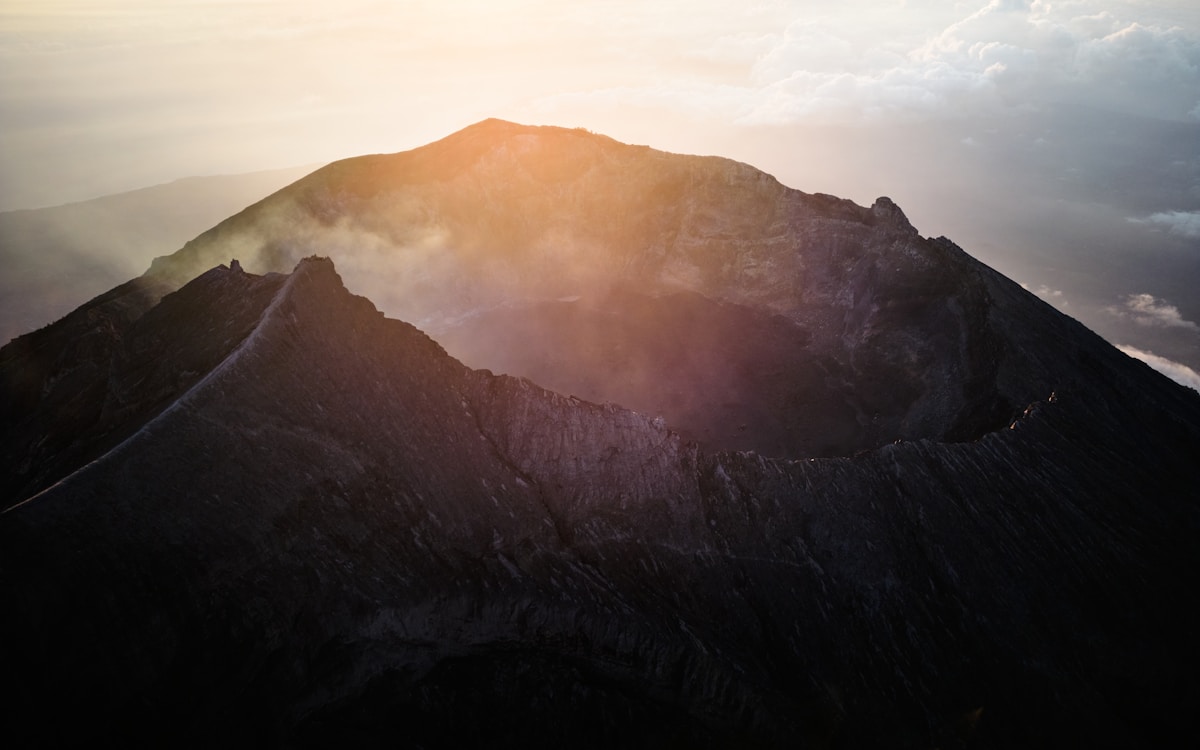
Mount Agung rises to 3,031 metres at Bali’s northeastern corner, dominating the island’s skyline and defining its spiritual geography. The Balinese orient their temples, beds, and the placement of buildings in relation to Agung - the mountain is Bali’s axis mundi, the dwelling of the supreme deity in the Hindu-Balinese worldview. Climbing it is therefore not just a physical challenge but an act that intersects with something deeply embedded in the island’s culture. Your guide will likely observe prayers at the trailhead. Maintain quiet and respectful behaviour throughout.
The trek is genuinely demanding. The final hour to the summit involves hands-and-feet scrambling over loose lava rock in the dark. But the view from the top - Bali spread below you, Lombok’s Rinjani visible across the strait, the shadow of the volcano cast westward in the pre-dawn light - justifies every step.
The Two Routes
Route 1: Via Pura Pasar Agung (Summit Route)
The standard route to Agung’s true summit departs from Pura Pasar Agung, a temple on the southern slope at approximately 1,700m elevation. This is accessed from the village of Selat in Karangasem Regency, reached via a 90-minute drive from Kuta or 60 minutes from Amed. Most guides pick up trekkers from their accommodation between midnight and 2am.
Elevation gain: approximately 1,350m over 6 km one way
Summit time: 3,031m (the true summit, Puncak Agung)
Typical trekking time: 4–5 hours ascent, 3–4 hours descent
The lower section passes through forest and scrub. Above 2,500m the vegetation thins to nothing and the trail crosses open lava fields. The final 200 metres below the summit rim involves technical scrambling - no ropes are needed but you’ll use both hands on the steeper sections. The crater rim is narrow and exposed.
Cost (via Pura Pasar Agung): IDR 700,000–1,000,000 (USD 43–61) per person with a shared group guide (2–6 people). Private guide: IDR 1,200,000–1,500,000 (USD 74–92). Prices as of 2026.
Route 2: Via Pura Besakih (Crater Rim Route)
The Pura Besakih route starts from Bali’s most important temple complex on the southwestern face of Agung at around 950m. This route is longer in distance and elevation gain (approximately 2,100m), historically ending at the outer crater rim rather than the true summit - though some guides now take fit parties to the summit from this direction, adding 1–2 hours.
The Besakih route is more culturally layered. Pura Besakih (“The Mother Temple”) itself is a complex of 23 separate temples spread across the southern flank of Agung - the most important temple in the Balinese Hindu calendar. You’ll pass shrines and offerings on the lower trail sections. This route is best for those combining the religious significance of Besakih with a moderate-to-strenuous highland hike; the true summit is better accessed via Pasar Agung if that is the primary goal.
Cost (via Pura Besakih): IDR 900,000–1,500,000 (USD 55–92) per person with a local guide, reflecting the longer distance. Many guides operating here are based in the Besakih temple villages of Menanga and Rendang.
Starting at 4am: Why the Early Departure Matters
The 1am–4am start time is not for drama - it’s a safety requirement. Mount Agung is an active volcano (most recently in major eruption 2017–2019) and volcanic gas activity increases as the sun heats the crater later in the morning. Reaching the summit at or around sunrise (6–6:30am) gives you a window of the best conditions: clear air, low wind, and minimal gas. It also gives you time to complete the descent before midday heat.
Additionally, the summit views are best in the early morning before cumulus cloud builds around the peak, which typically happens by 8–9am. Most trekkers who start after 3am find the summit socked in by the time they arrive.
Local Guides: Who to Use
A registered local guide is mandatory and non-negotiable. The guide will register the group with the national park office and accompany you for the full duration. Beyond the regulatory requirement, Agung’s upper routes are genuinely dangerous without someone who knows where the safe footing is on the lava rock sections.
Reputable guide operations:
- Agung Trekking (Selat village, Karangasem) - long-established operation, guides who have summited Agung hundreds of times, IDR 700,000–900,000 per person in groups; excellent safety record
- Puri Agung Trekking (Amed area) - popular with the Amed dive crowd combining a volcano day with snorkelling, packages from IDR 900,000 per person including hotel pickup
- Surya Agung Guide (Besakih) - specialises in the Besakih route, culturally focused guides who provide context on the temple complex, IDR 1,200,000–1,500,000 per person
- GreenBali Trekking (Ubud-based) - good for those staying in central Bali, transportation included, IDR 950,000–1,200,000 per person with pre-dawn pickup from Ubud
When booking independently, ask to confirm: (1) your guide’s SIMAKSI/park registration number, (2) whether the summit is currently accessible (Agung’s status shifts), and (3) what is included in the price (typically transport to trailhead, guide, ranger fees, but not meals or gear). You can also compare Mount Agung trek packages on GetYourGuide to find licensed operators with verified reviews.
The Spiritual Context
Agung is inseparable from Balinese Hinduism. The Balinese calendar’s most important ceremony, Eka Dasa Rudra, occurs at Pura Besakih every 100 years; the annual Pura Besakih Festival draws tens of thousands of worshippers from across Bali. The mountain last erupted significantly in 1963, an event that destroyed villages and coincided (controversially) with the Eka Dasa Rudra ceremony - an event still discussed in Balinese religious interpretation.
Your guide may pause at the trailhead to pray and make a small offering before ascending. Follow their lead and maintain quiet during these moments. Remove shoes when entering any temple structure you pass. The mountain is a living sacred space, not a hiking backdrop.
What to Pack
- Clothing: Base layer, mid-layer fleece, windproof outer shell; summit temperatures 8–12°C; gloves recommended above 2,500m
- Footwear: Trekking boots with ankle support (the lava rock sections punish flimsy shoes); trail runners acceptable for experienced hikers
- Headtorch: Essential - you will be on the mountain for 2–3 hours before dawn. Carry spare batteries.
- Water: 2.5–3 litres minimum (no water on the route); electrolyte tablets help
- Snacks: Energy bars, nuts, chocolate - a full meal before 1am is counterproductive; eat light
- Documents: Passport for ranger registration at the trailhead
- Camera: A camera that works in cold, dark conditions pays dividends at the summit
Cost Summary (2026)
| Option | Route | Cost per person |
|---|---|---|
| Group guided (2–6 pax) | Pura Pasar Agung (summit) | IDR 700,000–900,000 |
| Private guide | Pura Pasar Agung (summit) | IDR 1,200,000–1,500,000 |
| Group guided | Pura Besakih (crater rim) | IDR 900,000–1,200,000 |
| Private guided | Pura Besakih (full route) | IDR 1,300,000–1,500,000 |
Prices are approximate as of 2026 and include guide, ranger registration, and transport from the nearest village. Hotel pickup from Ubud, Sanur, or Kuta typically adds IDR 100,000–200,000.
Best Season
May to October (Bali’s dry season) delivers the clearest summit conditions. June, July, and August are peak trekking months - book guides 2–4 weeks in advance. The wet season (November–April) brings cloud, rain, and reduced visibility; the summit can be completely cloud-covered at the critical sunrise window. A wet-season attempt is not pointless but set realistic expectations about the view.
Current volcanic status always supersedes seasonal guidance - check Magma Indonesia before booking, regardless of time of year.