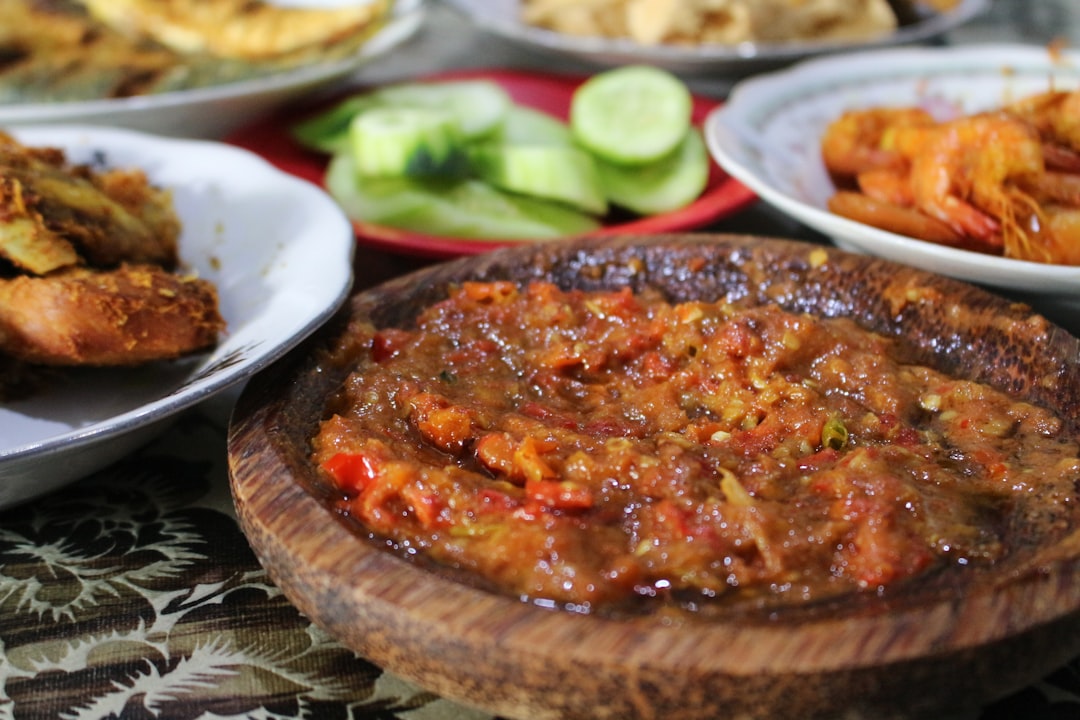
Lombok’s food culture is defined by Sasak cuisine - the cooking of the island’s indigenous Sasak people - and it is distinctly different from Balinese cooking. Where Balinese food uses complex spice pastes and slow-cooked meats, Sasak cuisine runs hotter and simpler: sambal-heavy dressings, charcoal-grilled meat, and fresh chilli in almost everything. Ayam taliwang is the dish that has put Lombok food on the map nationally, but the wider Sasak table is worth exploring.
Essential Dishes
Ayam Taliwang
Lombok’s most famous export to the Indonesian culinary canon. A young chicken (broiler or free-range) is split and flattened, marinated in a paste of red chilli, garlic, shrimp paste, candlenut, and palm sugar, then grilled over charcoal. The basting process is repeated several times during cooking, building a sticky, char-edged crust while the meat stays moist underneath. Most versions arrive at the table with the heat dialled somewhere between assertive and eye-watering.
Where to eat it:
- Ayam Taliwang Irama, Jalan Catur Warga, Mataram - one of the most respected traditional addresses; serves the dish with hand-pounded sambal terasi (IDR 45,000–65,000 for a full portion including rice and pelecing)
- Warung Taliwang Baru, Mataram - a slightly more accessible version near the city centre
- Most Kuta Lombok warungs on Jalan Raya Kuta serve a milder tourist version (IDR 55,000–80,000)
Pelecing Kangkung
Blanched water spinach (kangkung) served cold with a raw sambal of red chilli, bird’s eye chilli, shrimp paste, lime juice, and salt. The sambal is made fresh rather than cooked - it has a sharp, raw heat rather than the rounded warmth of a fried sambal. Served as a side dish with ayam taliwang or as a standalone vegetable dish. IDR 10,000–20,000 as a side.
The kantong version adds deep-fried tofu and tempeh to the kangkung base - slightly more filling and slightly less aggressively spiced.
Sate Rembiga
Lombok’s distinctive sate: beef marinated in palm sugar, coconut water, and chilli, then grilled on bamboo skewers. The palm sugar caramelises on the fire, giving the exterior a sweet-charred crust. Different from the peanut sauce sates common in Java and Bali - Lombok sate is served dry or with a chilli sambal rather than a sauce. IDR 25,000–45,000 for a portion (8–10 sticks) at traditional warungs.
Where to eat it: Rembiga village, 5 km north of Mataram, is the origin of the dish - a cluster of sate warungs operate along the main road from midday until sold out, typically by early evening.
Beberuk Terong
A Sasak salad of chargrilled baby aubergine (terong) mixed with raw shallots, chilli, tomato, shrimp paste, and coconut. The aubergine is grilled whole until the skin blisters, then combined with the raw dressing - the result has both smokiness and sharp fresh heat. IDR 15,000–25,000. A good vegetable option on Sasak menus alongside pelecing.
Nasi Balap Puyung
A rice dish originating from Puyung village, east of Praya. A scoop of white rice surrounded by shredded spiced chicken (ayam bumbu), fried tempeh, fried dried anchovies (ikan teri), and sambal. The combination is dry, intensely flavoured, and typically eaten for breakfast and lunch. IDR 15,000–25,000 from roadside stalls and simple warungs. Less widely available in tourist areas - look for it in Mataram markets.
Plecing Kobis
A crisper vegetable version of pelecing using shredded raw cabbage rather than blanched kangkung. The raw cabbage adds crunch that the kangkung version lacks; the sambal is identical. Common in traditional Sasak warungs where it serves as the cheaper daily vegetable side.
Seafood in Lombok
Lombok’s fishing economy is visible in the quality and variety of fresh seafood available, particularly along the Senggigi coast and near Bangsal Harbour.
Grilled fish: The default preparation - whole fish (snapper, barramundi, or tuna) grilled over charcoal and served with sambal matah (Balinese raw shallot and lemongrass sambal), lime, and steamed rice. IDR 60,000–180,000 depending on species and weight. A 500g snapper runs approximately IDR 80,000–100,000.
Lobster: Available at Senggigi beach restaurants, particularly at the row of seafood grills on the main beach road. Market-priced by weight - confirm price before ordering. Budget IDR 200,000–350,000 for a medium-sized Javan lobster in peak season.
Squid and prawns: The local squid (cumi cumi) is consistently available and cheaper than lobster - IDR 40,000–70,000 for a grilled portion. In Kuta Lombok, the evening market stalls near the beach grill fresh squid to order from IDR 35,000.
Where to Eat by Area
Kuta Lombok
The south coast’s main food strip is along and around Jalan Raya Kuta and the cluster of streets toward the beach.
- El Bazar - Mediterranean and Indonesian hybrid menu; good for a full sit-down dinner. IDR 60,000–130,000 per dish. Good cocktail list.
- Milk and Madu Kuta - A solid all-day cafe with Western breakfasts and Indonesian lunch plates. IDR 45,000–90,000. Popular with surfers and long-stay visitors.
- Laut Biru - Beachfront spot with fresh seafood and Sasak rice dishes. IDR 50,000–150,000. The grilled fish is consistently good.
- Local market stalls on the street running parallel to the beach (near the old market area): whole grilled fish, sate, and nasi campur from IDR 20,000–40,000. Opens evenings from around 5pm.
Senggigi
Senggigi has the most developed restaurant scene outside Mataram, with a full range from local warungs to tourist-facing seafood grills.
- Cafe Alberto - Italian restaurant with consistent pasta and pizza; reliable for a change from Indonesian food. IDR 60,000–130,000 per dish.
- Square - Upscale Senggigi restaurant with cocktails and a broader menu; IDR 80,000–160,000. The best option for a special evening meal.
- Warung Menega-style seafood grills along the Senggigi beach road - pick-your-fish style dining where you select from a displayed cold case. IDR 80,000–200,000 for a full fish dinner with sides.
- Sate warungs on Jalan Raya Senggigi near the market: grilled sate lilit and sate rembiga from IDR 25,000.
Mataram
Lombok’s capital has the most authentic Sasak food scene, aimed almost entirely at local customers rather than tourists.
- Rumah Makan Taliwang Irama, Jalan Catur Warga - the city’s most-referenced ayam taliwang address. Busy at lunch. IDR 40,000–65,000.
- Pasar Kebon Roek (Rembiga area) - Mataram’s central market with a busy food court section selling nasi campur, nasi balap, sate, and pelecing from IDR 10,000–25,000. Best at breakfast and lunch.
- Jalan Udayana evening hawker strip - street food stalls opening from 5pm selling martabak (stuffed pancake), bakso (meatball soup), and fresh juice. Budget IDR 10,000–30,000 per item.
Drinks
Kopi Lombok: Lombok grows coffee in the highland areas around Rinjani. The local product is typically a robusta-arabica blend, sold as ground coffee in market stalls (IDR 30,000–60,000/250g). Simple warungs serve kopi tubruk (unfiltered ground coffee in hot water) for IDR 5,000–10,000.
Fresh coconut (kelapa muda): Available at beach warungs throughout the south coast. IDR 10,000–20,000. The coconut water is a practical and cheap hydration option in the heat.
Jamu: Traditional Javanese-Sasak herbal drinks (turmeric, ginger, tamarind-based) are sold at some Mataram market stalls and traditional warungs. IDR 5,000–10,000 per cup. Not widely available in tourist areas.
Alcohol: Lombok is a majority-Muslim island and alcohol is less widely sold outside tourist areas. Senggigi and Kuta Lombok restaurants serving international visitors stock Bintang beer (IDR 40,000–65,000 per bottle). Mataram city has very few alcohol-serving establishments.
Practical Notes
Budget eating: A complete Sasak meal (ayam taliwang + pelecing + rice) at a traditional warung runs IDR 40,000–65,000 per person. Street food items - sate portions, nasi bungkus, fresh coconut - run IDR 10,000–30,000.
Mid-range meals: Tourist-facing restaurants in Kuta Lombok and Senggigi average IDR 60,000–130,000 for a main course, closer to IDR 150,000–250,000 for a full seafood dinner.
Vegetarian options: Pelecing kangkung, beberuk terong, and tempe dishes are vegetarian as standalone orders. Most warungs can make nasi goreng or nasi campur without meat on request. The vegan and vegetarian restaurant scene is thin compared to Bali - Kuta Lombok has a few cafes but options are limited outside of simple vegetable dishes.
Halal food: As a majority-Muslim island, nearly all local Sasak warungs and restaurants are halal by default. See our Lombok Muslim-friendly travel guide for more context on navigating the island as a Muslim visitor.
For broader Lombok orientation including transport, see our getting around Lombok guide or the Lombok island overview.
Take a Guided Food Tour of Lombok
Sasak cuisine is best understood through a guide - the ayam taliwang warungs that locals actually eat at are in Mataram rather than the tourist areas of Kuta Lombok or Senggigi, and the full Sasak table (pelecing kangkung, beberuk terong, sate rembiga) is rarely assembled in one place for visitors. A guided food tour of Mataram’s warung district, combined with a Lombok cooking class covering the spice paste base for ayam taliwang, covers the cuisine properly - and explains why Lombok food runs distinctly hotter than what you’ll find in Bali.