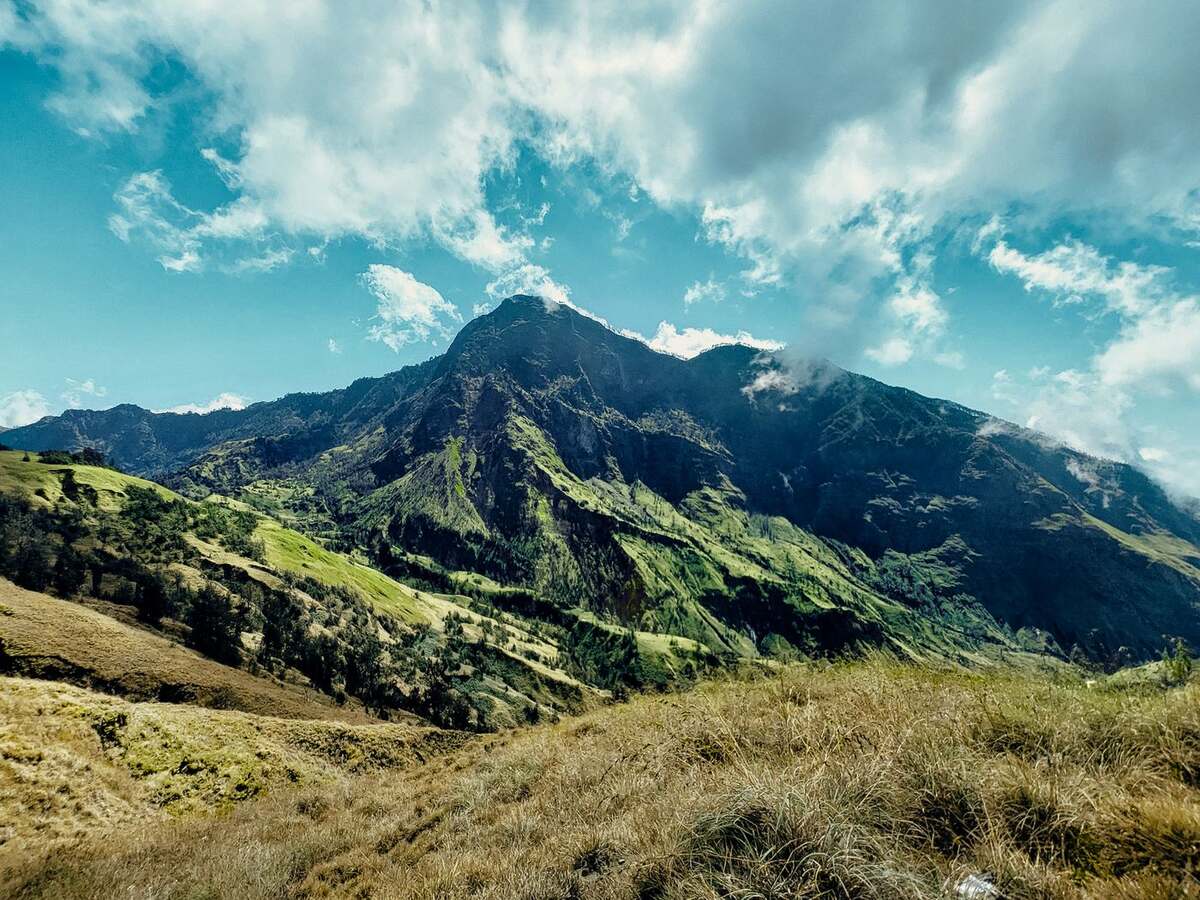
Mount Rinjani is Lombok’s defining landmark - a 3,726-metre stratovolcano with a vast crater lake, the semi-active Barujari cone at its centre, and a summit ridge that on clear days offers views across Bali, Sumbawa, and the Gili Islands. The two-day minimum trek to the crater rim is one of Southeast Asia’s most demanding standard hikes; the three-day crater lake route, with a descent to the steaming hot springs at the lake edge, is one of its most rewarding.
Accommodation before and after the trek is limited and basic - Rinjani draws serious trekkers, not resort visitors, and the guesthouses reflect that. This guide covers the main base villages and the alternatives for those who want to explore the mountain’s lower slopes and traditional villages without committing to the full summit trek.
Senaru: the north gate village
Senaru is a traditional Sasak village on Rinjani’s northern slope at 601 metres. It is the most popular starting point for the standard Rinjani trek, partly because of the spectacular descent into the crater from this side, and partly because the nearby Sindang Gile and Tiu Kelep waterfalls provide a worthwhile afternoon activity the day before your start.
Guesthouses and bungalows (IDR 150,000–650,000 / USD 9–40 per night)
Senaru’s accommodation is almost entirely family-run guesthouses in traditional Sasak compound settings - simple rooms, cold showers or river-fed water, and the hospitality that characterises village Indonesia.
-
Pondok Senaru Cottages - Traditional-style bungalows on Jalan Pariwisata in Senaru with an on-site restaurant, an outdoor pool and free parking. Guests say it is close to the Tiu Kelep and Sindang Gila waterfalls. Recent Booking.com listings start at roughly USD 27–39 (about IDR 430,000–620,000) per night, and guest scores are around 8. Ask staff about guide-porter packages when you book.
-
Balé Sebaya - Bungalows Café Nature - Bungalows in Senaru a few steps from Tiu Kelep Waterfall, with a garden, a restaurant and free parking. Recent listings start at roughly USD 32 (about IDR 520,000) per night, with guest scores of 8.8 or higher. Convenient for an afternoon at the falls before a trek start.
-
Family guesthouses and trekking-centre rooms in Senaru - Several small guesthouses and trekking-company lodgings in the village offer simple rooms from roughly IDR 150,000–350,000 per night, many with a garden or restaurant. Compare current rates and recent reviews on Booking.com.
Sembalun: the east gate village
Sembalun Lawang sits at 1,156 metres in a wide highland valley on Rinjani’s east side. At this altitude, nights are noticeably cooler than Senaru - bring a fleece regardless of the season. The village has a more remote feel than Senaru; the surrounding farmland and open ridgeline views give a different character.
The practical advantage of Sembalun for trekkers: the gate altitude means you gain the crater rim on day one in a shorter day, making it the preferred option for the 2-day summit route.
-
Rinjani Family Homestay - Homestay in Sembalun Lawang with a guest score of 9.6 from more than 140 reviews on Booking.com and an airport shuttle option. Recent listings start at roughly USD 18 (about IDR 290,000) per night. Ask the host about early trail breakfasts for 03:30 AM departures.
-
Mid-range homestays and lodges in Sembalun - A few higher-spec properties in Sembalun Lawang offer hot-water showers and better insulation, a relative luxury at this altitude. Booking.com puts the average homestay in Sembalun Lawang at roughly USD 30 (about IDR 480,000) per night. Good for those doing the 3-day route who want a comfortable night before and after the trek.
Tetebatu: the quiet alternative
Tetebatu, on Rinjani’s southern slope at approximately 700 metres, is a traditional agricultural village surrounded by rice paddies and coffee and tobacco plantations. It is not a trekking base - Tetebatu is accessed from the south and is too far from either gate for a practical trek start - but it is one of Lombok’s most peaceful village destinations for those who want the mountain landscape without the exertion.
The village has a handful of simple guesthouses and a well-regarded Saturday market. Waterfalls, monkey forest walks, and agricultural tourism (rice harvest, coffee and tobacco processing) are the main activities.
-
Pondok Tetebatu Cottages and Cafe - Cottage-style rooms in Tetebatu with a pool and a restaurant with a view of Mount Rinjani. Recent listings start at roughly USD 12–34 (about IDR 190,000–540,000) per night, with room types from Economy to Superior. A calm base for exploring the southern foothills.
-
Green Orry Inn Tetebatu - Inn with an outdoor pool, garden, terrace and free parking, with guest scores of about 8.0–8.3 from 180+ reviews on Booking.com. Rates vary widely by date, from roughly USD 20 to 50 (about IDR 320,000–800,000) per night.
Compare prices and availability across all Rinjani area hotels - Search hotels near Mount Rinjani.
Which base is right for you
Senaru: The most practical base for the standard 3-day/2-night Rinjani trek (Senaru up, Sembalun down). Closest to the best waterfalls on the mountain. Most guesthouses offer guide packages.
Sembalun: Better for the 2-day summit route - the altitude advantage makes day one more manageable. Cooler nights and more remote feel. Fewer restaurant options than Senaru.
Tetebatu: Not a trekking base - but one of Lombok’s most rewarding village stays for those combining Rinjani’s lower slopes with rice field walks and traditional Sasak culture.
Most trekkers spend one night in either Senaru or Sembalun before the trek and one night after - enough time to recover before continuing to Lombok’s beaches.