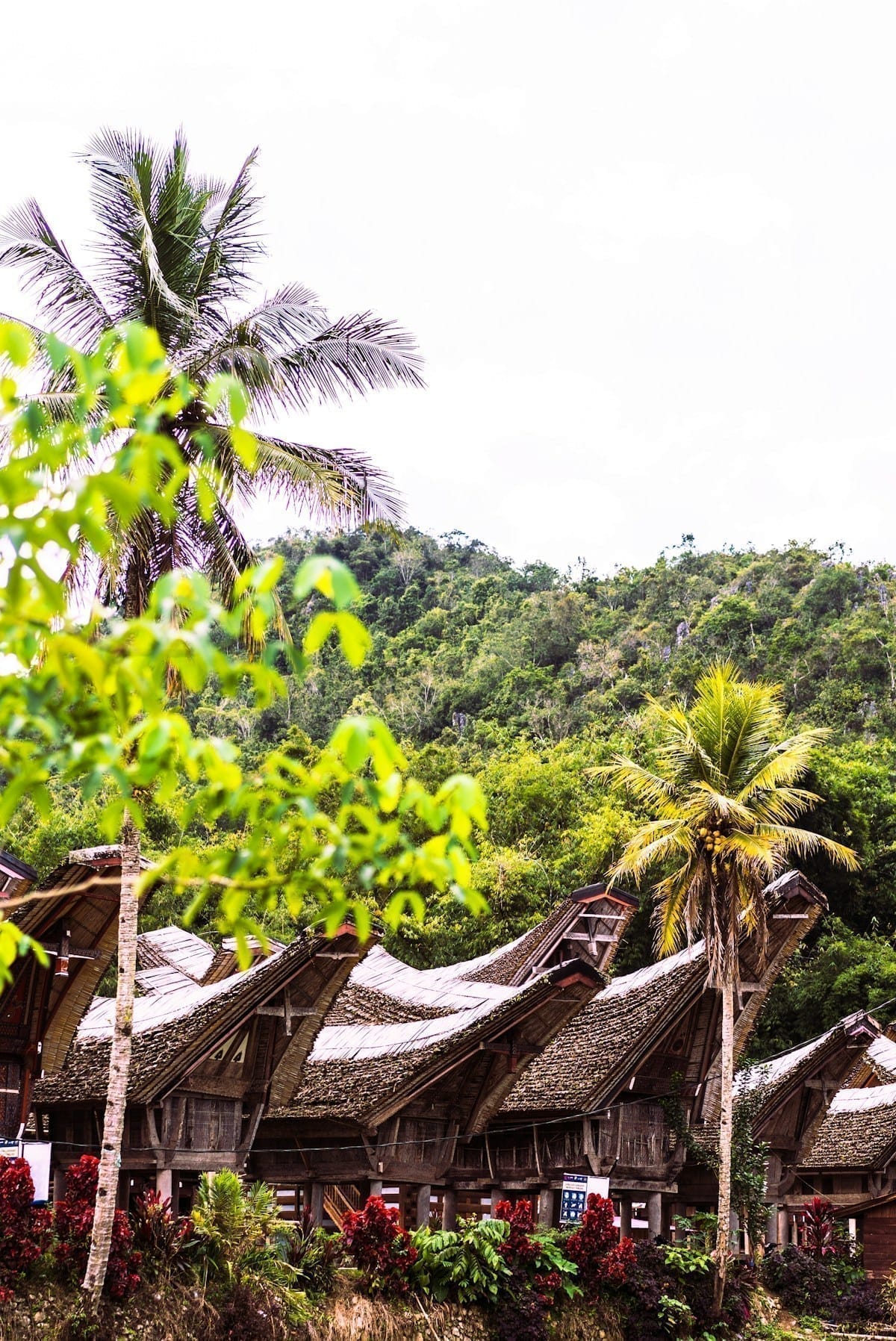
Tana Toraja is one of Indonesia’s most distinctive cultural regions - a highland area in South Sulawesi where an animist-influenced tradition called Aluk To Dolo governs elaborate funeral ceremonies, ancestral house architecture, and cliff-face burial sites. The region draws visitors primarily for its cultural and ceremonial calendar, particularly the Rambu Solo funeral rites that involve sacrifices, feasting, and the temporary re-housing of the deceased.
Rantepao, at 800 metres above sea level, is the main market town and the visitor base for the region. The surrounding landscape of rice paddies, eroded karst formations, and traditional tongkonan houses in the valley villages is among the most visually striking in Indonesia.
Rantepao Town: The Main Base
Rantepao is where most international visitors stay - a market town with a good selection of guesthouses and mid-range hotels, local restaurants, and proximity to the main sites.
Budget - Rantepao (IDR 100,000–350,000/night)
Wisma Maria I and Wisma Maria II - a pair of family guesthouses run by the same family, among the longest-established budget options in Rantepao. Simple rooms with fan or air conditioning. Rates approximately IDR 100,000–200,000/night. The guesthouses can arrange guides for funeral ceremonies and highland trekking, which is often the most reliable way to access local events.
Mentirotiku Hotel - clean mid-budget with 20 rooms in a central Rantepao location. Air-conditioned rooms from approximately IDR 150,000–280,000/night. No pool, but the restaurant serves a reliable Torajan-influenced menu including Pa’piong (meat cooked in bamboo) and fresh Robusta coffee from the highlands.
Mama Silvia’s Guesthouse - small family-run guesthouse south of the market. Rates approximately IDR 120,000–220,000/night. Known for informative breakfasts where the family shares context on any ceremonies happening in the area during your stay. A consistently well-reviewed budget option.
Mid-Range - Rantepao (IDR 300,000–900,000/night)
Toraja Heritage Hotel - the most complete mid-range property in the town: 60 rooms in a compound with a pool, a restaurant serving traditional Torajan dishes, and an extensive photo archive of local culture. Rates approximately IDR 400,000–800,000/night. The pool is one of very few in the Rantepao area; the cultural briefings available from the hotel’s in-house guide are worth using for first-time visitors.
Indra Toraja Hotel - 40 rooms with a garden and pool. Good mid-range service standard. Rates approximately IDR 350,000–650,000/night. Well positioned for the morning walk to the Rantepao market - one of the best local markets in Sulawesi for produce, weaving, and carved wooden panels.
Misiliana Hotel - 36 rooms in Torajan architectural style with carved wood details. Pool and restaurant. Rates approximately IDR 400,000–750,000/night. The design is more characteristic of the region than the standard hotel boxes; a popular choice for photography-focused visitors.
Highland Villages: Batutumonga and Sa’dan
The highland villages north of Rantepao - particularly Batutumonga (1,400 metres, overlooking the valley) and Sa’dan (known for weaving) - offer accommodation that is basic but atmospheric.
Budget - Highland Homestays (IDR 80,000–200,000/night)
Mentirotiku Batutumonga - affiliated with the Rantepao mid-range property but operated as a simpler highland lodge. Rates approximately IDR 150,000–300,000/night including simple meals. The view from Batutumonga across the Toraja valley at dawn is considered one of the best highland panoramas in Sulawesi.
Village Homestay (Sa’dan) - several families in Sa’dan weaving village open their homes to visitors. Arrangements through local guides. Rates approximately IDR 80,000–150,000/night including meals. The immersive experience of staying in a working weaving village with a traditional Torajan family is unmatched by any hotel.
Makale: The Southern Alternative
Makale, 25 km south of Rantepao, is less commonly used as a tourist base but has a few guesthouses and the benefit of a slightly different position for reaching southern Toraja ceremony sites.
Budget–Mid - Makale (IDR 150,000–400,000/night)
Hotel Merci Makale - clean mid-budget with 25 rooms. Rates approximately IDR 200,000–350,000/night. The main draw of Makale is the Saturday market, which is one of the largest in the region for ceremonial goods, woven cloth, and livestock.
Getting Here: Makassar to Toraja
There is no direct train service; the options are:
- Overnight bus from Makassar - the standard route. Buses depart from Terminal Daya in eastern Makassar (approximately 20 minutes from central Makassar by Grab). Operators including Litha & Co and Bintang Prima depart at approximately 4–6pm, arriving in Rantepao at 5–7am. Tickets approximately IDR 130,000–200,000 depending on seat class. Night buses have air conditioning and recline seating.
- Fly to Pongtiku Airport (TTR) - small domestic airport approximately 25 km from Rantepao with limited daily flights (Wings Air from Makassar). Flight is 45 minutes vs 8+ hours by bus. This option is significantly more expensive and has minimal schedule flexibility - flights sell out quickly, and cancellations due to mountain weather are not uncommon. The bus remains the most reliable option for most visitors.
- Self-drive or private car - some visitors hire a car and driver from Makassar for the full Toraja journey. Cost approximately IDR 700,000–1,000,000 for a one-way door-to-door transfer. Comfortable but significantly more expensive than the bus.
Getting Around Tana Toraja
Rantepao’s town centre is walkable - the market, main road, and most guesthouses are within 20 minutes on foot. For the ceremony sites, highland villages, and burial cliff viewpoints scattered across the region:
- Rented scooter - IDR 70,000–100,000/day. Most useful for independent travellers who want to reach smaller villages and ceremony sites without a guide.
- Hired ojek (motorbike taxi) - IDR 100,000–150,000 for a half-day. Many guesthouses have trusted ojek drivers.
- Private car and driver - IDR 400,000–600,000/day for a full Toraja circuit. Worth considering for the Ke’te Kesu cliff burial, Londa cave burial, and Batutumonga highland route.
Local guides are strongly recommended for ceremony visits - context dramatically improves the experience, and protocol around funeral attendance requires cultural sensitivity that guides provide.
For the full Toraja guide including ceremony calendar, burial site access, and cultural context, see our Toraja city overview. To pre-book Tana Toraja cultural tours and ceremony visits - including guided funeral ceremony access and burial site walks - arranging a local guide in advance makes a significant difference to the experience.
Ready to Plan Your Trip?
See our itineraries for inspiration:
- Sulawesi Diving Itinerary - 10 days in Bunaken and Tana Toraja
- Eastern Indonesia Itinerary - 14 days from Komodo to Raja Ampat