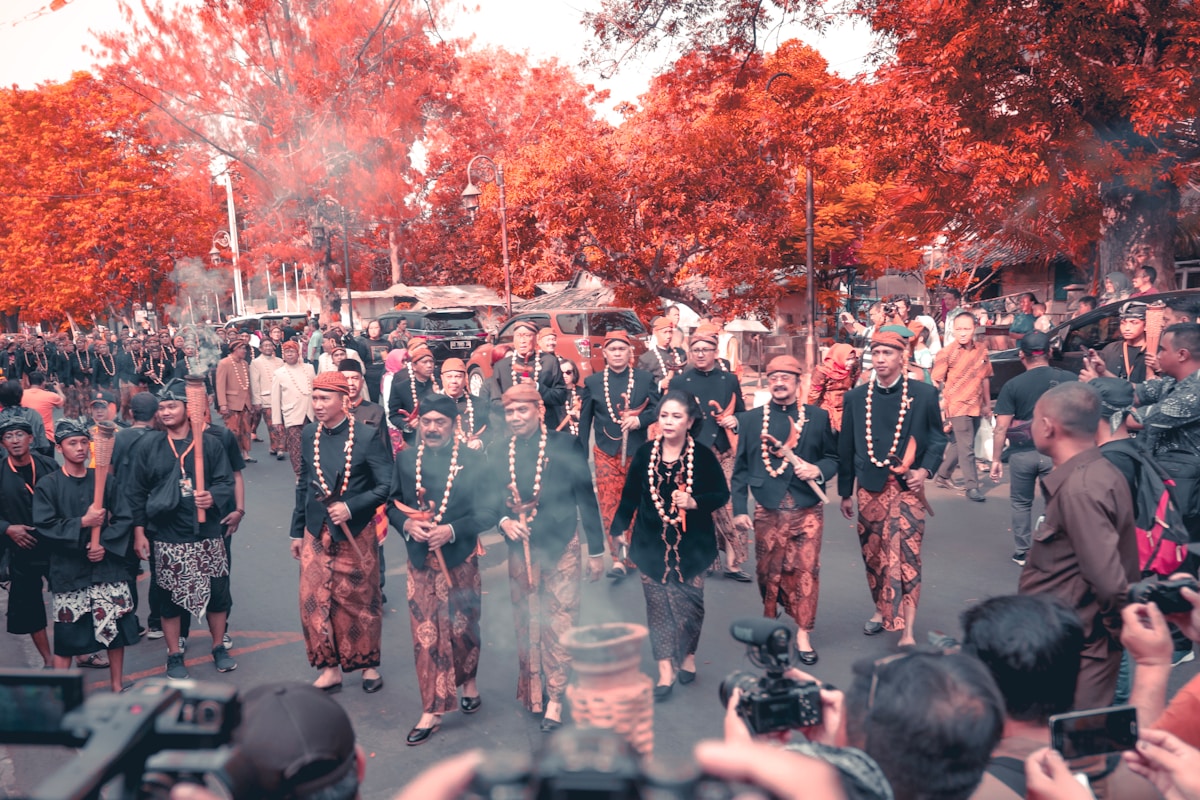
Solo - officially Surakarta - is Java’s other royal city, 65 kilometres east of Yogyakarta, and the place many Javanese cultural practitioners consider the truer heart of their tradition. Two royal courts coexist here: the Kasunanan (the senior sultanate) and the Mangkunegaran (a younger branch). Both maintain active gamelan orchestras, dance troupes, and batik workshops. Solo moves more slowly than Yogyakarta and sees fewer foreign tourists, which makes the cultural encounters feel less staged.
1. Kraton Kasunanan (Sultan’s Palace)
The Kasunanan palace was established in 1745 when the Mataram sultanate split into Yogyakarta and Surakarta. The open sections display royal regalia, ceremonial weapons, Dutch porcelain, and Javanese court costumes. Unlike Yogyakarta’s Kraton, much of Solo’s palace feels genuinely lived-in.
Entry: IDR 10,000 | Hours: 9am–2pm (Sat–Thu); 9am–11:30am (Friday) Gamelan rehearsal: Free - typically held on Wednesday and Saturday mornings in the outer pavilions
The Batik Museum within the Kraton compound displays historical royal batik with explanations of motif symbolism. Some patterns were once restricted to the royal family.
2. Pura Mangkunegaran
The Mangkunegaran is the junior royal palace - less imposing than the Kasunanan but better maintained and more accessible. The main pendopo (pavilion) is one of the largest in Java; the museum inside houses the Mangkunegaran’s treasures: jewellery, masks, kris daggers, and a beautiful collection of court dance costumes.
Entry: IDR 20,000 | Hours: 9am–2pm Monday–Saturday; 9am–1pm Sunday Dance practice: Wednesday and Saturday mornings - visitors can observe
3. Pasar Klewer Batik Market
Indonesia’s largest batik market - a three-storey building adjacent to the Kasunanan palace gates filled with hundreds of stalls selling batik from across Java. Pasar Klewer is where Solo’s batik reputation is made tangible: hundreds of metres of cloth in every pattern, from cheap print batik to expensive hand-drawn batik tulis.
Entry: Free | Hours: 9am–5pm daily (Friday 9am–12pm, 2pm–5pm) | Bargaining: Expected
Know what you want before entering - the sheer volume is overwhelming. For fine batik tulis, look for the hand-drawn wax lines rather than printed patterns. Price guidance: batik cap (stamped) from IDR 50,000/metre; batik tulis from IDR 200,000–2,000,000+/metre depending on complexity.
4. Batik Museum Solo (Museum Batik Danar Hadi)
A private museum within the grounds of House of Danar Hadi, one of Solo’s most prestigious batik producers, displaying over 10,000 batik pieces spanning the colonial era to contemporary production. The collection documents how batik motifs and techniques evolved across different cultural influences: Dutch, Chinese, Javanese court.
Entry: IDR 25,000 (includes factory tour) | Hours: 9am–3pm daily | Location: Jl Slamet Riyadi 261
5. Sangiran Early Man Site (UNESCO)
Thirty kilometres northwest of Solo, Sangiran is one of the world’s most important paleoanthropological sites - fossils of Homo erectus (Java Man) were discovered here in 1936. The site has yielded over 100 fossils and is a UNESCO World Heritage Site.
Entry: IDR 10,000 | Museum hours: 8am–4pm (closed Mondays) | Transport: Hire a car or take a shared angkot from Kartasura - 30km from Solo centre
The museum at Sangiran contains the original fossil casts alongside reconstructions and explanatory panels. The surrounding landscape - eroded badlands typical of the Solo River formation - gives a physical sense of the prehistoric environment.
6. Sriwedari Wayang & Ketoprak Performances
The Sriwedari amusement park in central Solo hosts regular wayang orang (dance drama based on Ramayana/Mahabharata epics with live actors rather than puppets) and ketoprak (historical Javanese drama) performances.
Entry: IDR 5,000–15,000 | Hours: Performances typically begin at 8pm | Location: Jl Slamet Riyadi
These are genuine local cultural events rather than tourist shows - audience participation, laughter, and interaction with performers are normal.
7. RHM Batik Workshop Experience
Solo has several batik workshops open to visitors for hands-on instruction. RHM Batik on Jalan Laweyan is one of the most established, offering 2–3 hour sessions covering the full hand-drawn process with take-home cloth.
Price: Approximately IDR 150,000–250,000/person for a 2-hour session as of 2026 | Location: Laweyan batik village, 3km west of city centre
Laweyan is one of Solo’s oldest batik-producing neighbourhoods - an entire district of producer-merchant houses dating to the 18th century, with batik workshops still operating behind heavy wooden doors.
8. Triwindu Antique Market
A weekend antique market in the shadow of the Mangkunegaran palace - wooden crates and canvas-covered tables piled with Dutch coins, kris daggers, Javanese puppets, colonial photographs, typewriters, and miscellaneous curiosities.
Entry: Free | Hours: Daily 8am–4pm, most active weekends | Location: Jl Diponegoro, adjacent to Mangkunegaran
Prices are negotiable; authentication is the buyer’s responsibility. The morning hours have the best stock before dealers from Yogyakarta make purchases.
9. Keraton Surakarta Night Tour
Selected evenings, the Kasunanan palace offers candlelit night tours with traditional music performances and guided access to normally restricted inner courts.
Price: Approximately IDR 150,000/person | Schedule: Check with palace ticket office - not daily
10. Candi Sukuh
An unusual 15th-century Hindu temple on the western slope of Mount Lawu, 36 kilometres east of Solo. Unlike Java’s more familiar temples, Sukuh has a stepped pyramid form reminiscent of Mayan architecture and explicit fertility sculptures - a late-period Javanese site that clearly diverged from the mainstream.
Entry: IDR 15,000 | Hours: 8am–4pm | Access: Hired car, approximately 1.5 hours from Solo
Getting Around Solo
Solo is compact and walkable in the centre. Batik (blue) becak (cycle rickshaws) are available near the Kraton and Pasar Klewer. Grab and Gojek operate in Solo. The Batik Solo Trans (BST) bus covers the main Jalan Slamet Riyadi corridor for IDR 4,500/ride.
Browse tours and activities in Solo - a local guide makes a big difference for navigating temples, wildlife sites, and the less-visited corners of the island. Travel insurance for Indonesia is strongly recommended before any trip - emergency medical cover is especially important given the distances between islands.
Book via GetYourGuide
Prices are approximate starting rates from GetYourGuide Solo listings as of August 2026 - confirm current rates before booking.
| Tour | Duration | From |
|---|---|---|
| Solo: Batik Workshop & Kraton Palace Cultural Tour | ~5 hours | ~$25 |
| Solo: Sangiran Early Man Site & City Heritage Tour | ~5 hours | ~$22 |
| Solo to Yogyakarta: Prambanan Sunrise & Borobudur Day Trip | ~10 hours | ~$45 |
| Solo: Candi Sukuh & Mount Lawu Temples Day Excursion | ~7 hours | ~$35 |
| Solo: Traditional Wayang Kulit Performance & Behind-the-Scenes | ~3 hours | ~$28 |
Browse all Solo tours on GetYourGuide →
More Solo Guides
- Solo travel guide - the full Solo overview: orientation, hotels, restaurants, and getting there
Search hotels in Solo on Booking.com
- Where to stay in Solo - heritage hotels, budget guesthouses, and options near Balapan station
- Solo food guide - nasi liwet, serabi, and the best street food in Surakarta
- Yogyakarta travel guide - Solo’s cultural twin, 65 km west: Borobudur, Prambanan, and the Kraton
- Batik Java guide - Solo is one of Java’s main batik centres: where to buy and how to choose