Solo Travel Guide: Batik, Royal Palaces & Javanese Culture
Solo's Kraton and Mangkunegaran royal courts, Pasar Klewer batik market, and nasi liwet street food make it Java's most Javanese city.
Guides for Solo
Search hotels in Solo on Booking.com
Solo - formally Surakarta - is the quieter of Java’s two royal cities. Where Yogyakarta has Borobudur and a well-developed tourist infrastructure, Solo’s appeal is more intimate: two functioning royal courts, the densest concentration of batik workshops in Indonesia, a traditional performing arts scene that genuinely operates independent of tourism, and a food culture that Javanese people across the country tend to cite when asked where to eat well. The city sits on the central Javanese plain roughly 65 km east of Yogyakarta, at low altitude and reliably hot, but with a pace and atmosphere that rewards the effort of getting there.
Solo was for a period a co-capital of the Mataram Sultanate before the Dutch brokered a division in 1755 that created the Yogyakarta Sultanate and the Surakarta Sunanate - the two royal courts that still operate today. The division left Solo with two courts rather than one: the Kraton Surakarta (the Sunanate) and the Pura Mangkunegaran (a junior court created by a later partition). Both are open to visitors and both maintain active cultural programmes.
Key Attractions
Kraton Surakarta (Sultan’s Palace) - The principal royal court of Surakarta, dating to 1745. The museum section is open Monday–Saturday, 9am–2pm; entry approximately IDR 15,000 plus a small camera fee. The complex includes pendopo (open pavilions) decorated with Dutch and Javanese architectural elements, galleries of ceremonial weapons, royal regalia, and traditional wayang (shadow puppet) collections. Gamelan practice sessions are often audible from within the complex. The Sunan’s household still occupies parts of the palace.
Pura Mangkunegaran Palace - The court of the Mangkunegaran principality, established in 1757, is in many ways more accessible to visitors than the Kraton. Entry approximately IDR 10,000 as of 2026. The main pendopo - one of the largest traditional wooden halls in Java - is renowned for its Javanese architecture and the ceiling painted with traditional motifs. The museum displays European and Javanese porcelain, ceremonial dance costumes, and weapons. Dance rehearsals take place on certain mornings; verify the schedule at the gate.
Triwindu Antique Market - An atmospheric two-storey market near Mangkunegaran Palace selling antique Javanese ceramics, wayang figures, batik stamps (cap), Dutch colonial furniture, silverware, and curios. Free to browse; bargaining is the norm. The ground floor concentrates the higher-quality antique dealers; the upper floor is more flea market in character. Best visited on a weekday morning.
Pasar Klewer - Java’s most famous textile market, a multi-storey complex adjacent to the Kraton walls selling batik fabric, batik-print clothing, and traditional Javanese textile products. Entry is free; this is a working commercial market, not a showroom. The range of batik styles and the sheer volume of fabric on display is unlike anything elsewhere in Java. Prices are competitive; fixed prices in some stalls, negotiable in others.
Sangiran Museum and Archaeological Site - A UNESCO World Heritage site approximately 15 km north of Solo, where the fossilised remains of Homo erectus (Java Man) were discovered in 1936 and have continued to be excavated. Entry approximately IDR 40,000; open 8am–4pm, closed Mondays. The museum is well-designed for an Indonesian regional institution, with casts and original fossils, geological models, and interpretive displays. The surrounding landscape of eroded Pliocene and Pleistocene sediment is unlike anything else in Central Java.
Batik Workshops (Laweyan District) - The Laweyan neighbourhood west of the city centre is a historic batik trading district where individual family-run workshops still produce handmade batik tulis (hand-drawn wax-resist batik) using techniques unchanged for generations. Several workshops are open to visitors for demonstrations and direct purchase. Entry is generally free; a piece of handmade batik tulis starts from approximately IDR 200,000 and can reach several million for complex designs.
Hotels
The Sunan Hotel (mid-range) - A well-maintained hotel on Jalan Ahmad Yani with a good pool, reliable air conditioning, and a central location between the Kraton and the main commercial area. From approximately USD 50 per night as of 2026.
Novotel Solo (mid-range) - On Jalan Slamet Riyadi, Solo’s main commercial boulevard, with consistent international-chain quality and a practical central position. From approximately USD 60 per night as of 2026.
Loji Hotel (boutique mid-range) - A characterful boutique property in a heritage building, with design elements drawn from Javanese and colonial aesthetics. From approximately USD 40 per night as of 2026. A better choice than the chains if atmosphere matters.
Restaurants
Omah Sinten Heritage Hotel & Restaurant - A beautifully restored Dutch-Javanese heritage building on Jalan Diponegoro, with a restaurant serving traditional Javanese cuisine in a setting of antiques, tropical gardens, and colonial furniture. Try the nasi liwet Solo (rice cooked in coconut milk with chicken, egg, and areh sauce) - the dish most associated with Solo. Approximately IDR 100,000–200,000 per person as of 2026.
Selat Solo Mbak Lies - The best-known restaurant for selat Solo, a dish unique to this city: braised beef medallions in a sweetened, herb-flavoured sauce influenced by Dutch cuisine, served with green beans, potatoes, boiled egg, and mayonnaise. The fusion character of the dish is a direct product of Surakarta’s colonial history. Approximately IDR 40,000–60,000 per bowl. A queue before noon is common; arrive early.
Warung Babi Panggang - A non-halal warung serving grilled and braised pork dishes in the Javanese tradition. Solo has a significant Chinese-Javanese community and a number of pork restaurants that are absent in many other Javanese cities. Approximately IDR 50,000–80,000 per person. Note: not suitable for halal dietary requirements.
Timlo Solo - Timlo is a clear chicken-and-vegetable broth soup unique to Solo, typically containing chicken pieces, liver sausage, boiled egg, and fried shallots. Warung Timlo Sastro at Pasar Gede is the most recommended address; a bowl costs approximately IDR 25,000–35,000. The market itself - Pasar Gede, a heritage Dutch-era covered market - is worth visiting for the morning produce vendors regardless.
Getting There and Getting Around
Adi Soemarmo Airport (SOC) handles a limited number of domestic routes; Jakarta is the primary connection.
By train from Yogyakarta - The most practical route: Prambanan Express trains depart frequently throughout the day and take approximately 1 hour; tickets approximately IDR 8,000–25,000 depending on class. Direct trains also connect Solo to Jakarta (approximately 8 hours), Surabaya (approximately 3–4 hours), and Malang.
Within the city - Grab and Gojek are reliable. The main Batik Solo Trans (BST) BRT network covers key arteries. Becak are available in the Kraton area; negotiate prices before boarding. The city is flat enough to cycle - several guesthouses rent bicycles for approximately IDR 30,000–50,000 per day.
Best Time to Visit
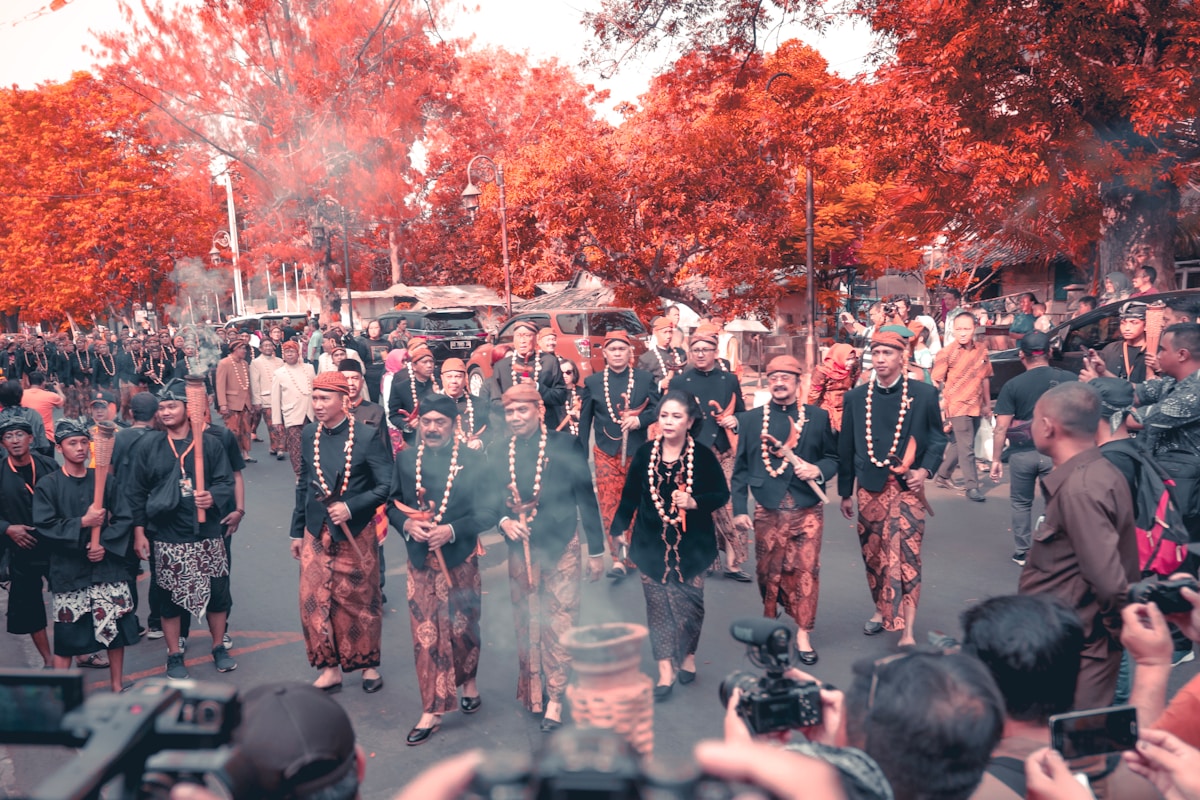
Solo has no distinct high season from a weather perspective - it is hot and occasionally rainy year-round. The most culturally rewarding time to visit is around significant Javanese ceremonial dates: Sekaten (a two-week celebration preceding Maulid Nabi, the Prophet’s birthday), when the royal gamelan sets from both courts are played publicly in the alun-alun; and the Maulid Nabi procession itself, when the royal households parade through the streets.
Practical Tips
Solo is significantly less expensive than Yogyakarta for almost everything - accommodation, food, and batik. If your interest is in traditional Javanese culture rather than the UNESCO temple complexes, Solo offers a more authentic and less commercially mediated experience. The city’s street food scene - particularly nasi liwet vendors who set up in the evenings - is genuinely excellent. For batik purchases, the Laweyan workshops offer more transparency on production method and better value on handmade pieces than the Malioboro tourist markets in Yogyakarta.
Browse tours and day trips in Solo - a half-day with a local guide is one of the most efficient ways to get oriented on arrival. For airport transfers into Solo, Kiwitaxi offers fixed-price pickups from the main airports - no surge pricing and the driver meets you at arrivals.
More Solo Guides
- Things to do in Solo - Kraton, Mangkunegaran, Sangiran fossil site, and batik workshops
- Where to stay in Solo - heritage hotels, budget guesthouses, and options near Balapan station
- Food guide to Solo - nasi liwet, serabi Solo, timlo soup, and the city’s best street food markets
- Yogyakarta travel guide - the cultural twin city: Borobudur, Prambanan, and the Sultan’s Palace
- Batik Java guide - Solo’s connection to Java’s most important textile tradition
- 1 week Java cultural itinerary - Solo as part of the full Javanese cultural route
- Java Bali 2-week itinerary - combining Solo and Yogyakarta with Bali on the classic island-crossing route
Book an experience
Top experiences in Solo
Explore the best tours and activities in Solo , with instant confirmation and free cancellation on most bookings.