Search hotels in Manado on Booking.com
Manado sits at the northern tip of Sulawesi, looking out across the Sulawesi Sea toward the Philippines. It’s a city of two identities: a modern provincial capital with a Christian majority and a food culture unlike anywhere else in Indonesia, and the gateway to two of the country’s most exceptional natural environments - Bunaken Marine Park and Tangkoko Nature Reserve. Most visitors use Manado as a base rather than a destination in itself, though the Minahasa highlands directly behind the city add another dimension entirely.
1. Bunaken National Marine Park
Bunaken is one of the defining dive sites in Southeast Asia. The marine park encompasses five islands - Bunaken, Manado Tua, Siladen, Mantehage, and Nain - and a mainland coastal section, but the action is concentrated on the wall dives off Bunaken Island itself. Twelve primary wall dive sites drop from the reef crest at 5–15 metres to depths of over 1,000 metres - vertical coral walls with 2,500 documented marine species including Napoleon wrasse, pygmy seahorses, giant trevally, and prolific reef shark.
Park entry fee: IDR 150,000/person/day | Dive sites: Accessible by resort boat from Bunaken Island, 30–45 minutes from Manado Marina | Snorkelling: Possible from the beach near Bunaken Village - the reef crest is 50 metres from shore
The Bunaken diving guide covers the top dive sites, resort recommendations, and dive operator contacts in detail. For those visiting specifically to dive Bunaken and the broader North Sulawesi sites, book a multi-night stay on Bunaken Island.
2. Tangkoko Nature Reserve
Ninety kilometres north of Manado, Tangkoko Batuangus Nature Reserve is the most reliable place in the world to observe Sulawesi’s black-crested macaques in the wild. These endemic primates - entirely black, with a striking hair crest - live in large troops and are relatively habituated to human presence in the areas closest to the ranger post.
Entry: IDR 100,000 | Guide fee: Approximately IDR 200,000–350,000 per group for a half-day trek as of 2026 | Hours: 6am–5pm | Getting there: Private car from Manado, 1.5 hours
The reserve also hosts the spectral tarsier - one of the world’s smallest primates, with enormous eyes and the ability to rotate its head nearly 360 degrees - in specific roosting trees near the ranger station. Night walks (approximately IDR 150,000 extra per group) are required to see tarsiers; reserve these in advance with the ranger post.
Bring long-sleeved clothing, insect repellent, and waterproof layers - the forest is tropical and unpredictable.
3. Tomohon and the Minahasa Highlands
Forty-five kilometres south of Manado, the city of Tomohon sits at 800 metres between two active volcanoes - Lokon to the northwest and Mahawu to the southeast. The Minahasa people here are predominantly Christian, and the town has a distinct atmosphere from the Muslim-majority cities that characterise most of Indonesia - church architecture, highland cuisine, and a flower cultivation industry that supplies much of Sulawesi.
Getting there: Shared bus from Terminal Karombasan, Manado, approximately IDR 10,000, 45 minutes
Tomohon’s Extreme Market (Pasar Tomohon, open daily from 6am) is notorious for selling a wider range of protein than any other market in Indonesia - dogs, bats, rats, and snakes alongside conventional fish, chicken, and pork. It is a working market for local Minahasa people rather than a tourist attraction, and reactions vary considerably. Visit with awareness of what you’re likely to see.
4. Lokon Volcano Trek
Mount Lokon (1,580m) is one of North Sulawesi’s most active volcanoes - it erupted as recently as 2015 - and is accessible via a trail starting at Kakaskasen village on Tomohon’s northern edge. The trek to the crater rim takes approximately 2–3 hours return.
Entry: IDR 25,000 | Guide: Required when the volcano is at elevated alert status (Level 2 or above); check with the Tomohon tourist office before attempting | Start point: Kakaskasen village, 30 minutes from Tomohon town
When Lokon is at its base alert level (Level 1), the crater rim views - an active sulphurous caldera, the Sulawesi Sea coast beyond, and Mount Mahawu across the valley - are extraordinary. Do not attempt when the volcano is at Level 2 (Waspada) or above.
5. Gunung Mahawu Crater
Mount Mahawu (1,311m), twin to Lokon across the Tomohon valley, is more consistently accessible and has a striking acid crater lake - green to yellow depending on sulphur content. The trail from the trailhead at Kakaskasen takes approximately 1.5–2 hours return.
Entry: IDR 20,000 | Hours: Open daily, best before noon to avoid afternoon cloud cover
Mahawu has been accessible during periods when Lokon is on elevated alert, making it a useful alternative. The crater lake itself is vivid - a complement to the Ijen crater lake in Java if you’ve done both.
6. Batu Angus (Black Rocks)
On the peninsula north of Manado airport, the Batu Angus lava field is the hardened remains of a 1955 Lokon eruption that reached the sea. The black basalt forms a dramatic coastal landscape - twisted, fractured rock extending into the water, with the Bunaken Islands visible offshore.
Entry: Free | Getting there: Grab or ojek from Manado, approximately 20–30 minutes
The site is undeveloped - no interpretation, minimal infrastructure - and photogenically raw. It’s a quick hour-long excursion before an afternoon dive departure or after an early morning flight lands.
7. Klenteng Ban Hin Kiong
The oldest Chinese temple in North Sulawesi, Ban Hin Kiong on Jalan Panjaitan dates to 1819 and reflects the Hokkien trading community that settled in Manado during the colonial era. The temple is small but atmospheric: red lanterns, incense coils, a quiet courtyard removed from the street noise.
Entry: Free (donation appreciated) | Hours: 6am–6pm daily
The temple sits in Manado’s old Chinatown district, where a few colonial-era shophouses survive alongside the newer development. A short walk from the waterfront.
8. Sam Ratulangi Museum
Named after North Sulawesi’s most prominent nationalist (a founding figure of the Indonesian republic), the Sam Ratulangi Museum on Jalan Supratman covers the history of the Minahasa region from prehistoric megalithic culture through the colonial period and independence.
Entry: IDR 5,000 | Hours: 8am–4pm Tuesday–Sunday
The museum’s collection includes Minahasa waruga (stone sarcophagi), traditional textiles, colonial-era documents, and exhibits on the natural history of North Sulawesi. Useful context before visiting Tangkoko or the Minahasa highlands.
9. Wori Village Island Hopping
Wori, 15km north of Manado on the coast, is the launching point for boat trips to the smaller islands of the Bunaken archipelago - including Mantehage Island (a mangrove-fringed island with a traditional village and good snorkelling) and Nain Island (the park’s most remote dive site). Local fishermen in Wori run informal boat charters.
Boat charter: Approximately IDR 300,000–500,000 for a half-day trip as of 2026, negotiated directly with village boatmen | Getting there: Shared angkot from Manado Terminal, 45 minutes
Mantehage’s mangrove channels are navigable by small boat at high tide - the birdlife (kingfishers, herons, hornbills) is exceptional for those who pause long enough to watch.
10. Manado Waterfront and Boulevard
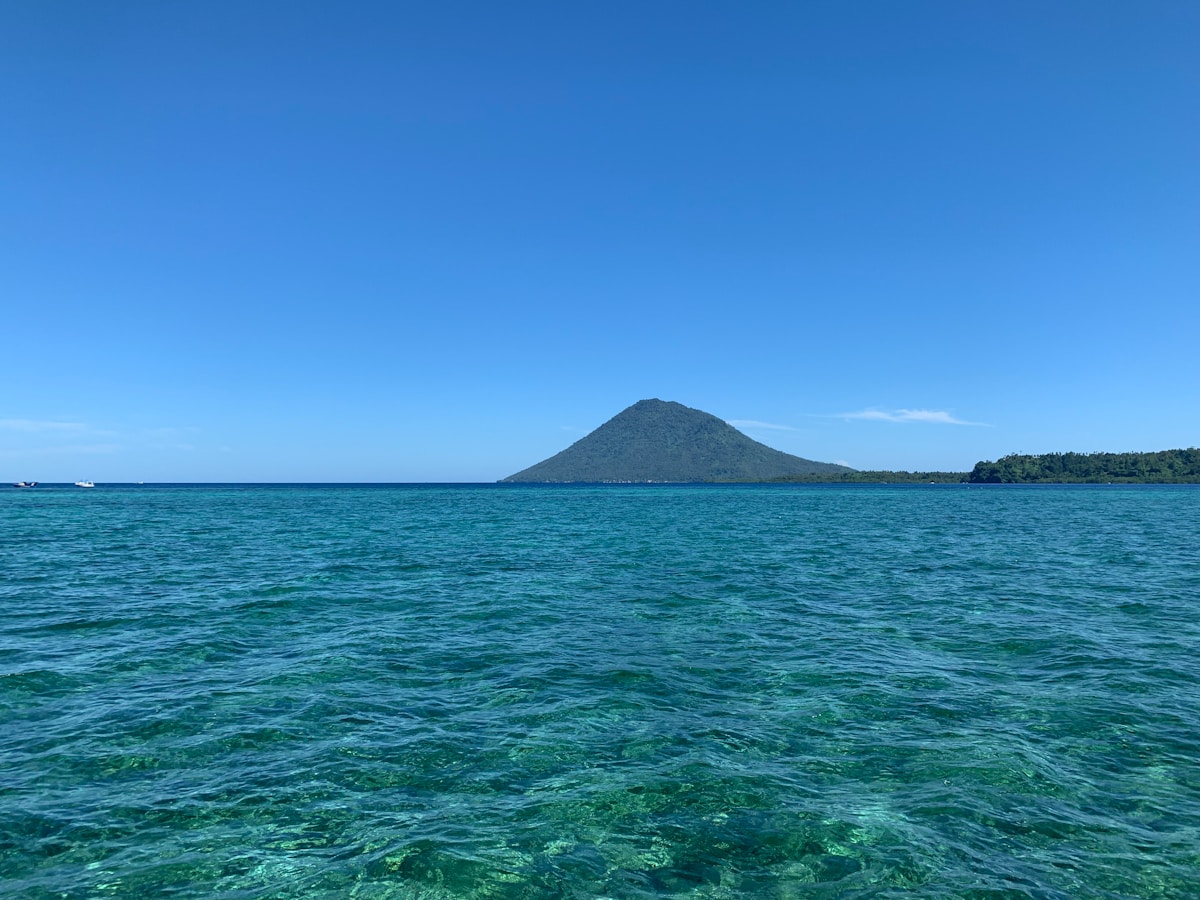
Manado’s main boulevard (Jl Pierre Tendean) runs along the waterfront facing the Sulawesi Sea, with views to Manado Tua Island and the Bunaken horizon beyond. In the evenings, the boulevard fills with food stalls serving tinutuan (Manado rice porridge) and cakalang fufu (smoked skipjack tuna) from portable carts.
Entry: Free | Best time: Late afternoon into evening
The waterfront is a good orientation walk on arrival - you can see the islands you’ll be diving tomorrow, watch the fishing fleet return, and get a first taste of Manado’s street food before settling in for dinner.
Getting Around Manado
Grab and Gojek operate extensively in Manado and are the most reliable city transport. For Tangkoko, hiring a private car from your hotel is the most practical option - approximately IDR 500,000–700,000 for the return trip including 3–4 hours waiting time. For Tomohon, shared buses from Terminal Karombasan are slow but cheap. For Bunaken Island, arrange boat transfers through your dive resort.
Browse tours and activities in Manado - a local guide makes a big difference for navigating temples, wildlife sites, and the less-visited corners of the island. Travel insurance for Indonesia is strongly recommended before any trip - emergency medical cover is especially important given the distances between islands.
More Manado Guides
- Manado travel guide - the full Manado overview: orientation, hotels, restaurants, and getting there
- Where to stay in Manado - city hotels, Bunaken island dive resorts, and budget options near the harbour
- Manado food guide - tinutuan, rica-rica, and the distinctive Manadonese cuisine
- Bunaken diving guide - the wall dives and coral gardens of Manado’s marine national park
- Sulawesi island guide - how Manado fits into a wider Sulawesi itinerary