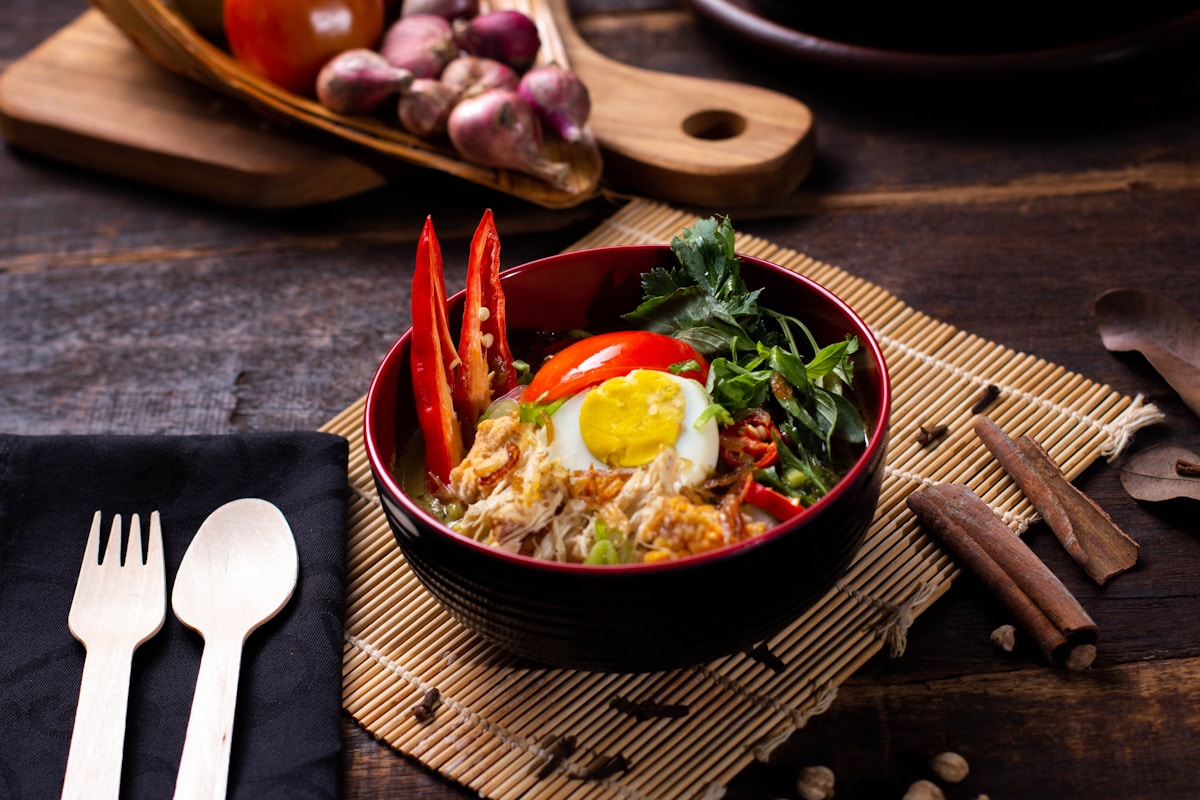
Manado’s food is unlike anything in the rest of Indonesia. The Minahasa people of North Sulawesi are predominantly Christian - which means pork features prominently - and their cuisine uses a heat level (from bird’s-eye chilli) and flavour combinations (smoked fish, raw herb relishes, fermented preparations) that have no close equivalent elsewhere in the archipelago. A meal in Manado is a genuine culinary education. If your palate can handle serious spice, this is some of the most distinctive cooking in Southeast Asia.
1. Tinutuan (Bubur Manado)
Manado’s most beloved breakfast and the dish most associated with the city nationally. A thick porridge made from rice cooked with corn kernels, sweet potato, pumpkin, cassava leaves, and various greens (kangkung, bayam) until the mixture becomes a thick, golden vegetable-rice mash. Not wallpaper paste - there’s real complexity from the corn sweetness and vegetable earthiness.
Served with: Cakalang fufu (smoked tuna), bakasang (fermented fish), fried anchovies (ikan asin), and sambal dabu-dabu - all the accompaniments are set on the table and taken as you eat
Where to eat: Warung tinutuan along Jl Pierre Tendean waterfront (open 6am–10am); Waroeng Tinutuan Kawanua, Jl Sudirman (open 6am–noon)
Price: Approximately IDR 20,000–30,000 for a full bowl with accompaniments
The etiquette: pile cakalang fufu, fried anchovies, and a spoonful of sambal onto the porridge, mix everything together, and eat. The combination of the mild, sweet porridge with the intensely smoky, salty tuna and the chilli heat is the dish - eating any component alone misses the point.
2. Cakalang Fufu (Smoked Skipjack Tuna)
The most important ingredient in Manado cooking, and a souvenir that food travellers bring home from North Sulawesi across the rest of Indonesia. Skipjack tuna (cakalang) is cleaned, split, mounted on bamboo frames, and cold-smoked over coconut husk for hours until the exterior is dry and mahogany-dark. The result is intensely flavoured - concentrated, smoky, with a firm, almost jerky-like texture.
Used in: Tinutuan accompaniment, cakalang rica-rica (with chilli), cakalang suwir (shredded with herbs), cakalang panada (Manado savoury pastry filling)
Where to buy as a souvenir: Pasar 45 (central market) and along Jl Babe Palar near the waterfront; approximately IDR 50,000–120,000 per fish depending on size
Cakalang fufu keeps for 1–2 weeks at room temperature and is vacuum-packable for transport. It’s the most flavourful portable food souvenir from North Sulawesi.
3. Rica-Rica
Rica is the Minahasan word for chilli - and rica-rica is the defining flavour principle of Manado cooking. A paste of bird’s-eye chilli, shallots, ginger, garlic, and lemongrass is fried first, then used as the base for cooking chicken, pork, fish, or frog depending on the restaurant. The result is a dry-ish, intensely spiced preparation where chilli heat is the primary note rather than a condiment.
Where to eat: Rumah Makan Tinoor, Jl Tinoor Raya, Tomohon area (open 10am–9pm); also at most Minahasa traditional restaurants across the city
Price: Approximately IDR 45,000–70,000 per portion with rice
Rica-rica ayam (chicken) is the most accessible version; rica-rica babi (pork) is the local preference; rica-rica tikus (rice-field rat) is an adventurous option at specialist warungs in the Minahasa interior.
4. Woku
A fragrant, herb-based preparation from the Minahasa tradition - whole fish or fish pieces cooked in a steamed parcel or open pan with lemongrass, pandan, daun kemangi (holy basil), ginger, turmeric, chilli, tomato, and lime leaves. The herbs provide the complexity; the tomato and lime leaves provide acidity; the chilli provides heat. Less intense than rica-rica, more aromatic.
Where to eat: Rumah Makan Woku Blanga on Jl Sam Ratulangi (open 10am–9pm); also widely available at traditional Minahasa restaurants across Manado
Price: Approximately IDR 50,000–80,000 per portion for fish woku with rice
Woku belanga (pan-cooked) and woku daun (leaf-wrapped and steamed) are two variants - the leaf-wrapped version traps the herb fragrance more effectively. Ask which is available when you order.
5. Brenebon
A pork and kidney bean soup from the Minahasa highlands - slow-braised pork ribs (or trotters) with red beans in a rich, lightly spiced broth. Derived from the Dutch-era brenebon (from the Dutch word for kidney bean, bruinboon), the dish reflects the colonial history of Christian North Sulawesi and its Calvinist Dutch missionaries more directly than almost any other Indonesian dish.
Where to eat: Warungs in Tomohon specialise in brenebon, particularly around the central market; in Manado, look for Minahasa traditional restaurants on Jl Pierre Tendean
Price: Approximately IDR 40,000–60,000 per bowl
Brenebon is typically a cooler-weather dish associated with the highlands - logical at Tomohon’s 800-metre elevation. In Manado’s coastal heat it’s available but slightly less omnipresent. Order with white rice.
6. Panada (Manado Stuffed Pastry)
A fried half-moon pastry filled with cakalang fufu, chilli, lemongrass, and kaffir lime leaf - a snack with Portuguese-influenced pastry technique (the name derives from the Portuguese empanada) adapted to Minahasan smoked fish ingredients. Crisp, golden, intensely flavoured.
Where to find: Pasar 45 snack stalls (morning); bakery counters throughout Manado; street vendors near the waterfront from midday
Price: Approximately IDR 5,000–8,000 per piece
Panada are best eaten immediately from the fryer - the pastry softens quickly. Buy 3–4 as a midday snack alongside a glass of fresh coconut water from a market stall. The cakalang filling inside should be moist and intensely savoury.
7. Dabu-Dabu (Manado Sambal)
Not a dish but a relish found on every table in Manado: raw bird’s-eye chilli, shallots, and tomato chopped fine with a squeeze of lime and a pinch of salt. No cooking involved. The result is fresher and more acidic than most sambal - it’s a condiment that cuts through the richness of smoked fish or grilled pork rather than adding another layer of fat.
Available: As a standard condiment at all Minahasa restaurants and most warungs in Manado
Price: Included free with most orders
The quality indicator is freshness - dabu-dabu made an hour before serving is the ideal. The tomato should still have texture, the chilli should have sharp heat rather than cooked-out softness. If it tastes dull, ask for a fresh batch.
8. Sate Rintek Wuuk (Pork Satay)
Pork satay in the Minahasa tradition - small cubes of pork, marinated in spices, threaded onto skewers and grilled over charcoal, typically served with a chilli-heavy sauce and rice. More rustic than Javanese or Balinese satay and considerably spicier.
Where to eat: Night market stalls near Pasar 45 (active from 5pm); Tomohon market area has specialist sate stalls
Price: Approximately IDR 25,000–40,000 for a portion of 8–10 skewers
A late afternoon snack rather than a main meal at most stalls - the satay is most active from 4–8pm when the market evening crowd arrives.
9. Bubur Tinutuan Variations
Tinutuan warung menus typically extend beyond the basic porridge to include additional Minahasa dishes: nasi kuning (turmeric rice with coconut milk), nasi jaha (sticky rice cooked in bamboo over fire - common at special occasions), and various cakalang preparations. A warung breakfast that includes both tinutuan and a side plate of nasi kuning with fried anchovies represents one of the most complete introductions to Minahasa food at minimal cost.
Where to eat: Warung tinutuan stalls along Jl Pierre Tendean waterfront (6am–10am)
Price: Full breakfast combination approximately IDR 35,000–50,000
10. The Tomohon Market Experience
The Tomohon daily market in the Minahasa highlands is as much a food experience as it is a cultural one. Alongside the conventional produce - tropical fruits, vegetables, corn - the market sells smoked bat (paniki), snake, and dog meat alongside more typical Indonesian proteins. The wet market section is graphic.
Hours: 5am–noon daily | Getting there: 45 minutes from Manado by shared bus (IDR 10,000)
This is not a tourist attraction in any conventional sense. The people selling and buying are Minahasan families provisioning for the week. The market is worth visiting for genuine engagement with North Sulawesi food culture - both its extraordinary range of smoked and fresh fish and the proteins that are rarely available elsewhere. Come before 8am for the fullest range of products and the most active atmosphere.
Manado Eating at a Glance
The essential Manado food day: tinutuan breakfast on Jl Pierre Tendean (6–7am), panada snack from Pasar 45 (morning), woku fish lunch at a Minahasa restaurant (noon), afternoon cakalang fufu browsing at the waterfront market, and a rica-rica dinner at a traditional warung (7pm). Book a Tomohon market visit for a morning before or after - add 3 hours to your schedule.
Take a Guided Minahasa Food Tour from Manado
Manado’s food culture is one of Indonesia’s most distinctive - and most misunderstood. A guided food experience that includes a Tomohon market visit, a tinutuan breakfast on Jl Pierre Tendean, and a cooking demonstration of woku spice paste in a Minahasan home covers ground that independent eating in tourist-facing restaurants simply doesn’t reach. The market context matters especially: understanding which proteins are traditional, which are ceremonial, and which are seasonal puts the Minahasan table in its proper cultural and geographic setting.
Browse food tours and cooking experiences in Manado
More Manado Guides
-
Manado travel guide - the full Manado overview: orientation, key attractions, hotels, and getting there
-
Things to do in Manado - the best activities and experiences in and around Manado
-
Where to stay in Manado - the best hotels and guesthouses by neighbourhood and budget