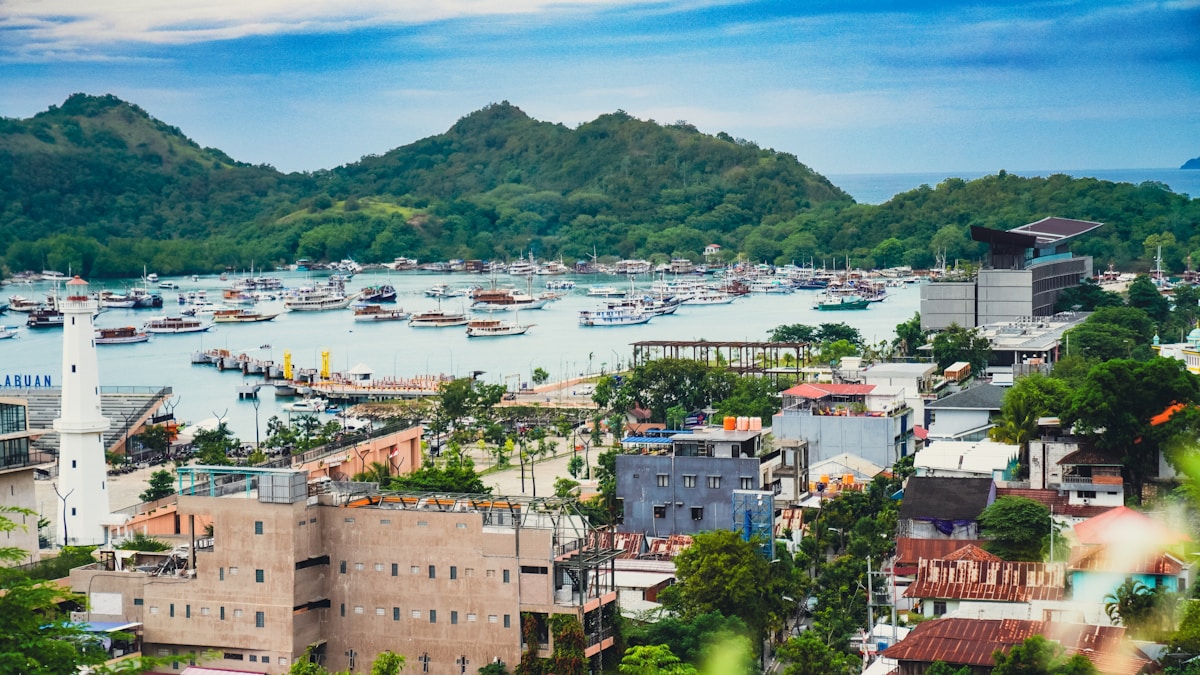
Makassar - officially Ujung Pandang until 1999, and still called that by older Sulawesi residents - is South Sulawesi’s capital and the dominant commercial city of eastern Indonesia. It sits at the southwestern tip of Sulawesi where the Makassar Strait meets the Flores Sea, and the sea is present everywhere in the city: in the working fishing harbours, in the sunset crowds along Pantai Losari, and in the seafood that dominates the city’s restaurants. As a travel base, Makassar punches above its tourist-circuit reputation.
1. Fort Rotterdam (Benteng Ujung Pandang)
Built by the Gowa Kingdom in 1545 and expanded by the Dutch East India Company (VOC) after their 1667 conquest of Makassar, Fort Rotterdam is one of the best-preserved Dutch colonial forts in Indonesia. The pentagonal walls, European-style bastions, and warehouses enclosing a central parade ground are in better condition than most comparable forts in Java or Maluku.
Entry: IDR 5,000 | Hours: 8am–6pm daily
The fort houses two museums: one covering South Sulawesi’s pre-colonial and colonial history, and one displaying Bugis-Makassarese royal regalia and ceremonial objects. The composer and national hero Prince Diponegoro was imprisoned and died here in 1855 - his cell in the north bastion is preserved and open to visitors.
2. Pantai Losari (Losari Beach)
Losari is Makassar’s seafront promenade - a 2km stretch running along the western edge of the city where the population gathers to watch the sunset over the Makassar Strait. The scene at dusk is one of South Sulawesi’s most iconic: families on benches, teenagers on motorbikes, street vendors selling pisang epe (pressed grilled banana with sweet sauce), sarabba (spiced ginger milk drink), and fried corn.
Entry: Free | Best time: 5–7pm for sunset
The promenade extends south from the Rotterdam waterfront toward the newer CPI (Centre Point of Indonesia) development, which includes the 99-dome mosque. For food, the temporary stalls along Losari are the most authentic option - sit down, order pisang epe and a plastic cup of sarabba, and watch the sky go orange over the strait.
3. Bantimurung Waterfall and Butterfly Park
Forty-five kilometres north of Makassar on the road toward Maros, Bantimurung is a karst gorge with a substantial waterfall emptying into a shallow pool, limestone cave systems, and a butterfly park. Alfred Russel Wallace visited in the 1850s and recorded the remarkable diversity of butterfly species here - the park is partly themed around his documentation of the local lepidoptera.
Entry: IDR 30,000 | Hours: 8am–5pm daily | Transport: Private car or ojek from Maros town (approximately 30 minutes)
The waterfall pool allows swimming - refreshing after Makassar’s heat. The caves beyond the main pool require a guide (available at the entrance, approximately IDR 50,000) and headlamps. Combined with the Leang-Leang prehistoric cave paintings site 15km further north (IDR 15,000; 8am–5pm), this makes a solid half-day excursion.
4. Paotere Harbour
Makassar’s traditional harbour, 3km north of Fort Rotterdam, is one of the last remaining working ports in Indonesia where the pinisi - the distinctive Bugis double-masted wooden schooner - dock in numbers. These vessels, built in the boatyards of Sulawesi’s southern peninsula and crewed by Bugis sailors, have carried cargo across the Indonesian archipelago for centuries.
Entry: IDR 5,000 | Best time: Early morning (6–9am) when the vessels are loading and unloading
The harbour is a working commercial port - you will see timber, construction materials, and goods being moved between the schooners and the dock by hand. Photography is welcome but ask before photographing individuals. The nearby fish auction (pasar ikan) runs parallel to the harbour and is active before 8am.
5. Masjid 99 Kubah (99 Domes Mosque)
Completed in 2022 on reclaimed land at the CPI development south of Losari, the 99-Dome Mosque is one of Indonesia’s most architecturally striking modern mosques. As the name suggests, the structure is topped by 99 domes in graduated sizes - the largest is 20 metres in diameter - finished in white and pale blue, visible from the waterfront.
Entry: Free (to non-Muslim visitors outside prayer times) | Location: CPI Makassar, Jl Metro Tanjung Bunga
Best viewed from the waterfront approach or from the footbridge over the entrance. The interior is open during visiting hours and the scale of the prayer hall - designed for 8,000 worshippers - is impressive. Dress modestly; sarongs available at the entrance.
6. Gowa Kingdom Museum (Sungguminasa)
Ten kilometres south of central Makassar, Sungguminasa was the seat of the Gowa Kingdom - the major Bugis-Makassarese political power before the Dutch conquest of 1667. The Balla Lompoa Museum here is housed in a traditional wooden raised palace and contains the royal regalia of the Gowa sultans: weapons, jewellery, the golden crown, and documents from the kingdom’s correspondence with VOC officials.
Entry: IDR 10,000 | Hours: 8am–4pm Tuesday–Sunday
The museum requires a guide to access the display rooms - guides are available at the entrance, no charge but a tip is appropriate. The nearby Sungguminasa Grand Mosque dates to the same period and is architecturally interesting in its early Bugis-Islamic style.
7. Spermonde Archipelago (Island Day Trip)
The Spermonde Archipelago - 120 islands ranging from inhabited fishing villages to uninhabited sandbanks - begins just off the Makassar waterfront. Samalona Island (45 minutes by speedboat, IDR 200,000–300,000 return), Kodingareng Keke (an island of white sand and turquoise water, 1 hour), and Barranglompo (inhabited island with a traditional Bugis community) are the most accessible.
Speedboat charter from Paotere Harbour: Approximately IDR 500,000–800,000 for a full-day charter to 2–3 islands as of 2026
Bring your own snorkelling gear if possible; equipment on the boats is basic. Some islands have entry fees of IDR 10,000–20,000 per person collected by village committees.
8. Leang-Leang Prehistoric Caves
Sixty kilometres north of Makassar, the Maros-Pangkep karst region contains cave art estimated at 45,000 years old - among the oldest known figurative painting on earth. The most accessible site is Leang-Leang (IDR 15,000; 8am–5pm), which has two cave mouths with hand stencils and wild pig paintings visible from a boardwalk.
Getting there: Private car from Makassar, approximately 1.5 hours | Entry: IDR 15,000
The prehistoric art is minimally presented - no elaborate interpretation centre, just a forest path and boardwalk to two cave openings. That directness is part of what makes it powerful. Combine with Bantimurung for a full day in the karst region.
9. Tana Toraja Day Trip (Overnight Recommended)
The Toraja highlands, 330km north of Makassar, are the cultural highlight of a South Sulawesi visit - a region of rice-paddy valleys, buffalo-horn-shaped traditional houses (tongkonan), elaborate multi-day funeral ceremonies, and cliff-face burial sites. The scale of Toraja culture is too large for a day trip; two to three nights in Rantepao is the minimum to see a traditional funeral and visit the major grave sites at Lemo, Londa, and Kete Kesu.
Getting there: Overnight bus from Terminal Daya, approximately IDR 100,000–150,000, 8–9 hours | Base: Rantepao town, with frequent guesthouse options from IDR 200,000/night
See the Toraja guide for full detail on funeral season, grave sites, and cultural protocol.
Search hotels in Makassar on Booking.com
10. Trans Studio Makassar
The largest indoor theme park in Sulawesi occupies a vast complex in the Panakukkang district. It’s designed for Indonesian families rather than international tourists - thrilling enough for children and teenagers, with rides, a waterpark section, and a shopping mall attached.
Entry: Approximately IDR 150,000–250,000 as of 2026 | Hours: 10am–9pm
Worth knowing about if you’re travelling with children who need a break from cultural tourism.
Getting Around Makassar
Grab and Gojek cover the city effectively - both apps work well and fares are reasonable. Angkot (shared minibuses) run fixed routes but are slow in traffic. For day trips to Bantimurung, Leang-Leang, and Sungguminasa, private car hire from your hotel is the most practical option at approximately IDR 400,000–600,000 per day including driver.
Browse tours and activities in Makassar - a local guide makes a big difference for navigating temples, wildlife sites, and the less-visited corners of the island. Travel insurance for Indonesia is strongly recommended before any trip - emergency medical cover is especially important given the distances between islands.
Book via GetYourGuide
Prices are approximate starting rates from GetYourGuide Makassar listings as of August 2026 - confirm current rates before booking.
| Tour | Duration | From |
|---|---|---|
| Makassar: Fort Rotterdam, City Museum & Losari Beach Tour | ~4 hours | ~$20 |
| Makassar: Bantimurung Waterfall & Butterfly Park Day Trip | ~6 hours | ~$28 |
| Makassar: Leang-Leang Prehistoric Cave Art & Karst Landscape | ~5 hours | ~$25 |
| South Sulawesi: Tana Toraja Cultural Tour from Makassar (2 Days) | ~2 days | ~$120 |
| Makassar: Spermonde Island Snorkelling & Samalona Beach Day Trip | ~7 hours | ~$35 |
[Browse all Makassar tours on GetYourGuide →](/go/tours-makassar/)
More Makassar and Sulawesi Guides
- Makassar travel guide - the full Makassar overview: orientation, hotels, restaurants, and getting there
- Where to stay in Makassar - waterfront hotels, mid-range options, and budget stays near the centre
- Makassar food guide - coto Makassar, konro, pallubasa, and the best Sulawesi dishes in the city
- Toraja travel guide - the highland funeral culture, cliff graves, and traditional villages, 8 hours north
- Sulawesi island guide - the full Sulawesi overview: Toraja, Bunaken, Wakatobi, and getting around