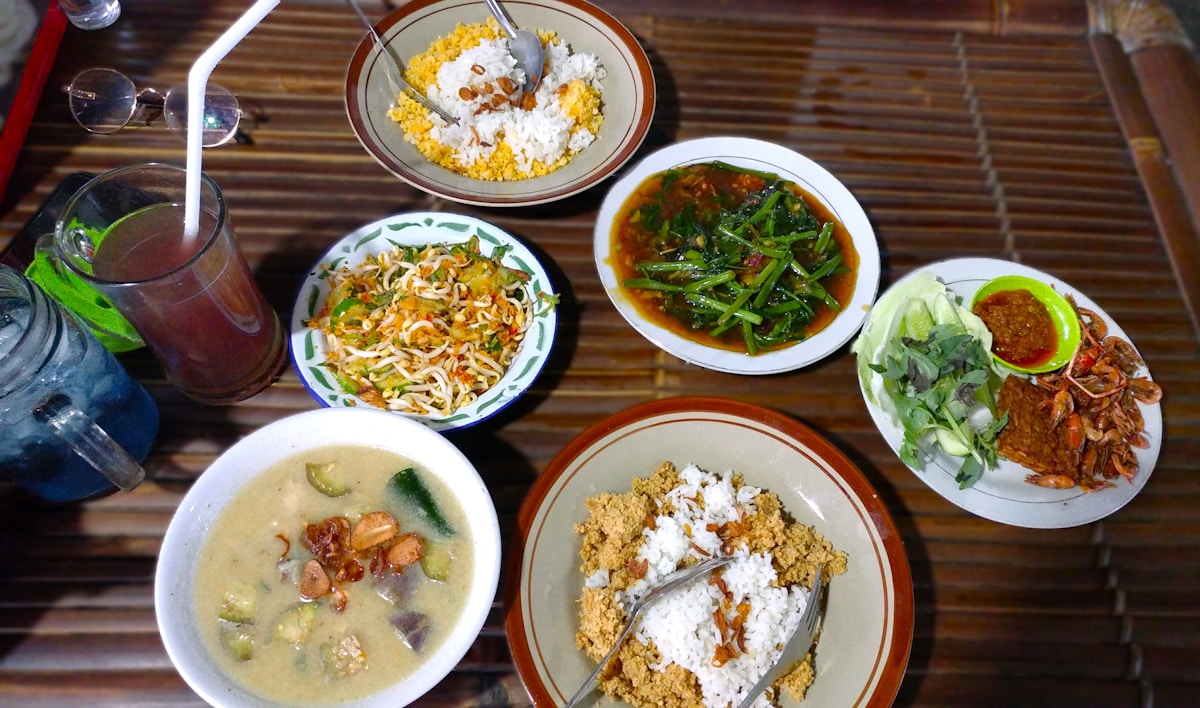
Makassar’s food culture centres on a handful of dishes so distinctive that they are reproduced across Indonesia but are invariably described as originating here. Coto Makassar, konro, and pallubasa are part of the Bugis-Makassarese culinary tradition - deeply spiced, protein-centred, and built around cooking techniques (prolonged simmering in bone broths, peanut-thickened soups) that have been refined over centuries of cattle-raising culture in South Sulawesi. Add the city’s access to fresh Sulawesi Sea seafood and the Losari waterfront pisang epe vendors, and Makassar warrants serious eating attention.
1. Coto Makassar
The benchmark dish of South Sulawesi cuisine: beef offal (lung, tripe, intestine, heart) simmered for hours in a dark broth made from roasted peanuts, beef bones, lemongrass, galangal, and a blend of Makassarese spices that varies slightly from warung to warung. Served in an earthenware bowl with ketupat (compressed rice cake squares) and fresh bird’s-eye chillies on the side.
Where to eat: Coto Nusantara, Jl Nusantara (open 7am–3pm, often sold out earlier on weekends); Coto Gagak, Jl Gagak (open 6am–noon)
Price: Approximately IDR 30,000–40,000 per bowl
The dish is traditionally a morning food - warung open at 6–7am and run until the pot is empty. The offal is not optional; it is the dish. If the flavour of slow-cooked organ meats is not to your taste, the bone broth version without offal (coto tanpa jeroan) is available at most places.
2. Konro (Beef Rib Soup)
Short beef ribs braised until the meat falls from the bone in a dark, black-tinged soup thickened with kluwek - the black nut (Pangium edule) that also characterises rawon soup in East Java. The kluwek gives konro its distinctive dark colour and a slightly bitter, complex depth that separates it from any other Indonesian rib soup. Served with white rice, sliced shallots, and fried shrimp crackers.
Where to eat: Warung Konro Karebosi, Jl Gunung Lompobatang (open 9am–9pm daily)
Price: Approximately IDR 60,000–80,000 for ribs with rice and sides
Warung Konro Karebosi has been operating on this site since 1968 and is considered the city’s defining konro experience. Arrive hungry - a full portion is substantial. The ribs are also sometimes served as konro bakar (grilled over charcoal) rather than braised - order whichever version the server recommends.
3. Pallubasa
Less internationally known than coto or konro but equally important to Makassar’s culinary identity, pallubasa is a soup of beef or buffalo offal in a coconut milk broth spiced with coriander and galangal, topped with a raw egg yolk that cooks in the hot soup as you stir.
Where to eat: Pallubasa Serigala, Jl Serigala (open 7am–3pm); Pallubasa Onta, Jl Onta Lama (open 7am–2pm)
Price: Approximately IDR 35,000–45,000 per bowl
Pallubasa Serigala is considered the most famous specialist - the restaurant has been in the same family and location for decades. Stir the egg yolk into the soup before eating; it enriches and slightly thickens the broth. Best eaten at the warung rather than from the takeaway counter - the atmosphere of the morning seating is part of the experience.
4. Pisang Epe (Losari Waterfront)
The street food most closely associated with the Makassar waterfront: unripe plantain bananas pressed flat, grilled over charcoal until caramelised on the outside and soft in the centre, then finished with a sauce of brown sugar, margarine, and pandan. Durian variant with fresh durian sauce is available in season.
Where to eat: Stalls along Pantai Losari promenade (open from approximately 3pm–10pm daily)
Price: Approximately IDR 10,000–15,000 for a serving of 3–4 pieces
Eating pisang epe while watching the sunset over the Makassar Strait from the Losari promenade wall is one of those informal rituals that defines the city for its residents. Don’t overthink it - just buy some, find a spot on the wall, and watch the sky change colour.
5. Mie Kering
Crispy fried noodles in a thick, savoury sauce of seafood (prawn, squid, or chicken), vegetables, and a cornstarch-thickened broth that softens the bottom of the crispy noodle nest as you eat. A Chinese-Makassarese hybrid dish that appears on the menus of the city’s Hokkien-heritage restaurants.
Where to eat: Restoran Ujung Pandang, Jl Irian (open 10am–10pm); also at Makassar Hokkien restaurants around Jl Sutomo
Price: Approximately IDR 45,000–65,000 per portion
Order the seafood version (mie kering seafood) for the most complete version. The noodles should be individually crispy when they arrive; the sauce is poured over at the table and you eat quickly while the texture contrast is at its best.
6. Sop Saudara
A beef-based soup originating from Pangkep, north of Makassar, now firmly part of the city’s warung repertoire - beef and tripe in a clear, well-seasoned broth with glass noodles, potato, and fried shallots. Lighter than coto or konro and more accessible to those uncertain about offal-heavy soups.
Where to eat: Sop Saudara Pangkep, Jl Gunung Lompobatang (near Konro Karebosi); multiple smaller warungs across the city
Price: Approximately IDR 30,000–45,000 per bowl
Often listed alongside coto and konro as the city’s trio of essential soups. The three represent a spectrum from the peanut-thickened richness of coto to the dark kluwek depth of konro to the cleaner, clearer profile of sop saudara.
7. Seafood at Paotere Harbour Area
The fishing community around Paotere Harbour has informal grilled seafood stalls in the late afternoon and evening - fresh catch from the boats, priced by weight, grilled over charcoal with simple chilli sauce. Lobster, red snapper, grouper, and squid are typical.
Where to eat: Stalls near the Paotere Harbour fish market, active from approximately 5pm | Also: Jl Penghibur seafood restaurants near Losari Beach (more polished, slightly higher prices)
Price: Approximately IDR 50,000–120,000 per portion depending on species; market rate for lobster varies
The harbour stalls are cheaper and more immediate than the Losari restaurants; the Losari strip is better for sitting, ordering beer (where available), and a longer dinner. Both are worthwhile depending on what you’re after.
8. Sarabba
A warm drink native to Makassar - ginger, coconut milk, palm sugar, and black pepper, heated and poured into a glass, optionally topped with an egg yolk. Consumed primarily as a street drink from the Losari vendors and as a closing drink after dinner at Bugis warungs.
Where to find: Losari Beach stalls (evening) and at most traditional Makassar warungs
Price: Approximately IDR 10,000–15,000 per glass
Sarabba is warming, mildly spiced, and slightly sweet - positioned somewhere between a ginger tea and a warm dessert. The ginger content makes it particularly useful after an evening of rich food. The egg yolk variant is an acquired taste.
9. Es Pisang Ijo
A cold dessert: green-tinged banana wrapped in pandan-coloured sticky rice flour, served with coconut milk porridge (bubur), shaved ice, and sweet syrup. The green colour comes from pandan juice in the outer coating; the banana inside is ripe and sweet.
Where to eat: Available at most Makassar dessert stalls and midday restaurants | Coto warungs typically serve es pisang ijo as a dessert option
Price: Approximately IDR 15,000–25,000 per serving
The contrast of textures - the sticky outer coating, the soft banana, the cold coconut porridge - makes es pisang ijo a particularly effective midday dessert in Makassar’s heat. Order it after coto as a counterpoint to the richness.
10. Kapurung
The traditional dish of the Luwu people from South Sulawesi’s inland highlands - a sago ball stew with pounded fish or chicken in a sour vegetable soup (using kenari nuts and various greens). More commonly found in interior South Sulawesi than in coastal Makassar, but available at specific Toraja and Luwu specialty restaurants in the city.
Where to eat: Rumah Makan Khas Luwu, various locations in the Panakukkang district; ask locals for current recommendations
Price: Approximately IDR 30,000–45,000 per portion
Kapurung has a texture and sourness that distinguishes it sharply from the city’s more familiar soups - the sago balls are chewy, the broth is tart. Worth trying once for the contrast with coto and konro.
Makassar Eating at a Glance
The essential Makassar food day: morning coto at Coto Nusantara (7am), midday konro at Warung Konro Karebosi (noon), late afternoon pisang epe at Losari Beach (5pm), and an evening of grilled seafood at the Paotere harbour stalls or Losari seafood restaurants (7pm). End with sarabba and es pisang ijo if you have room.
Take a Guided Food Tour of Makassar
Makassar’s food circuit - coto at dawn, konro at noon, pisang epe at sunset, grilled seafood in the evening - is best navigated on the first visit with someone who knows the city. The coto warungs that sell out before noon, the konro variations between Bugis and Makassarese traditions, and the Losari waterfront food vendors are spread across a city without a single tourist district. A guided food walk connects the culinary dots and gives context to South Sulawesi’s centuries of cattle-raising, sea-trading, and spice-route history that shaped dishes like sarabba and kapurung as much as coto.
Browse food tours and cooking experiences in Makassar
More Makassar Guides
-
Makassar travel guide - the full Makassar overview: orientation, key attractions, hotels, and getting there
-
Things to do in Makassar - the best activities and experiences in and around Makassar
-
Where to stay in Makassar - the best hotels and guesthouses by neighbourhood and budget