Bandung has a serious claim to being one of Indonesia’s best food cities. The Sundanese cuisine of West Java - lighter, fresher, and more herb-forward than the richer Javanese or Padang styles - is at its most concentrated here. The city also has a food culture built around street carts, local warung chains, and afternoon snacks that makes eating your way through a Bandung visit genuinely rewarding. Below is an introduction to what to eat and where to find it.
Sundanese Food Basics
Sundanese cooking is built around freshness: raw vegetables eaten as lalapan, fish and chicken grilled over charcoal, and sparing use of complex spice pastes compared to the West Sumatran traditions. The default accompaniment to most meals is sambal - a fresh or cooked chilli paste with enormous variation across households and warung.
Key dishes to understand before you order:
Lalapan - a plate of raw or lightly blanched vegetables served alongside grilled protein and sambal. Not a side dish: this is a fundamental part of the Sundanese meal. Typical vegetables include cucumber, basil, bitter melon, and string beans.
Karedok - a Sundanese peanut salad with raw long beans, bean sprouts, cucumber, and fresh basil, dressed in a spiced peanut sauce. Sharper and lighter than the Javanese gado-gado; the sauce uses raw rather than cooked garlic.
Nasi timbel - steamed rice wrapped and cooked in banana leaf, giving a subtle grassy fragrance. Served as a cone with side dishes. The quintessential Sundanese meal format: order nasi timbel and then build your plate with whatever’s on offer - fried tempeh, tofu, grilled fish, and lalapan.
Pepes ikan - fish (or other protein) mixed with herbs and spices, wrapped in banana leaf, and steamed or grilled. The cooking method imparts a soft, herb-infused quality quite different from pan-frying.
Warung Nasi Ampera
The most widely recognised Sundanese warung chain - a cafeteria-style operation found throughout Bandung and West Java. The format is straightforward: displayed dishes behind glass, you select what you want, it’s plated together with rice. The menu rotates daily around standard Sundanese dishes.
Price: Approximately IDR 30,000–60,000 per person for a full plate with rice and two to three sides (as of 2026)
Quality is consistent across branches without being exceptional. This is the reliable, cheap reference point for Sundanese food in Bandung. Useful for a first meal to calibrate what the cuisine tastes like before seeking out specialist spots.
Mie Kocok Mang Dadeng
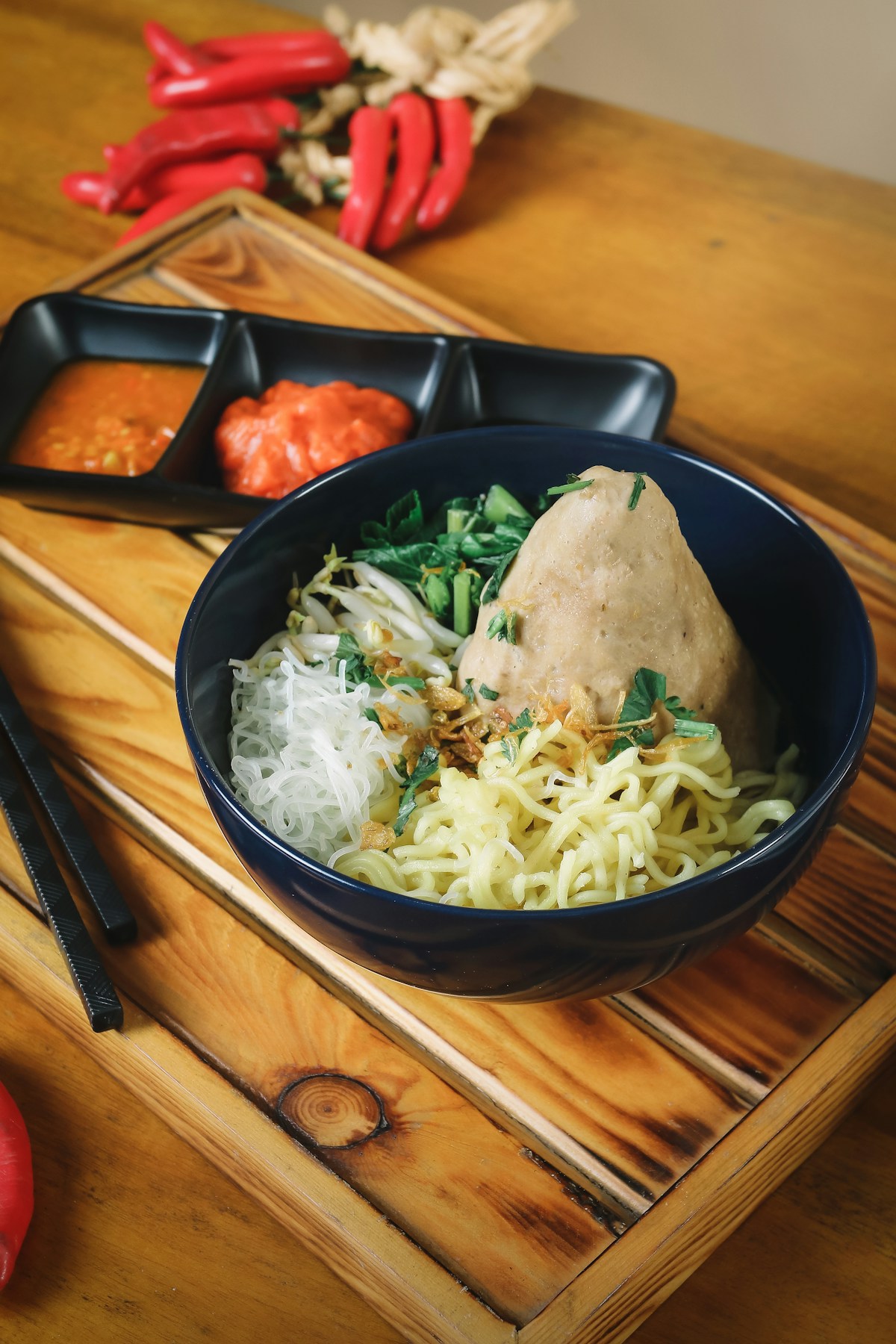
Mie kocok is a Bandung-specific noodle soup - thick yellow wheat noodles in a clear, beefy broth, topped with beef tendon, beansprouts, and crispy fried shallots. The name means “shaken noodles” - a reference to the preparation method where the noodles are blanched to order in a wire basket shaken in boiling water.
Mang Dadeng is one of the best-known mie kocok vendors in Bandung, operating from a permanent stall that has been a city institution for decades.
Price: Approximately IDR 25,000–40,000 per bowl (as of 2026)
The broth is the thing: slow-cooked, gently spiced, deeply savoury without being heavy. Eat it with a squeeze of lime and the house sambal. Busy from mid-morning through to lunch.
Batagor
Batagor - an acronym for bakso tahu goreng (fried tofu and meatball) - is Bandung’s most famous street food export. A fried dumpling of tofu and fish paste, served with a warm peanut sauce, sweet soy, lime juice, and sambal. Small, inexpensive, and addictive.
Price: From approximately IDR 15,000 for a small portion at street carts (as of 2026); sit-down batagor restaurants charge slightly more
Look for batagor carts around school areas, markets, and transport hubs from mid-morning onward. The version sold in restaurants is often identical in quality to the street version - go with whichever is most convenient.
Siomay is a related dish - steamed rather than fried, with a wider range of fillings including bitter melon and hard-boiled egg alongside the tofu - and usually sold alongside batagor by the same vendors.
Atmosphere Bandung Restaurant
A mid-to-upper range restaurant on Jalan Braga offering Indonesian and international dishes in a colonial-era building. Atmosphere is worth noting specifically for its location - one of the better dining experiences on Braga Street with views of the Art Deco streetscape and reasonable pricing for the setting.
Price: Approximately IDR 100,000–200,000 per person (as of 2026)
Not the most exciting food in Bandung, but a solid choice for a lunch stop during a Braga Street walk. The building itself - high ceilings, tiled floors, period fittings - is the main draw alongside the food.
Bolu Meranti and Oleh-Oleh (Take-Home Gifts)
Bandung’s food culture extends to oleh-oleh - gifts bought to take home. The city has an entire gift food economy. Bolu Meranti bakery is one of the most visited, known for its roll cakes in flavours from pandan to cheese.
Price: Approximately IDR 70,000–150,000 for a roll cake (as of 2026)
Lines are long; arrive before noon on weekdays for a shorter wait. The Cibaduyut and Jalan Cihampeals areas have competing oleh-oleh shops if Meranti is too crowded.
Sundanese Eating Customs
- Many traditional Sundanese restaurants use a lesehan format - eating on the floor on woven mats at low tables. This is standard, not informal.
- Meals are eaten with the right hand in traditional settings; cutlery is always available and widely used in modern restaurants.
- Sundanese food is mostly mild by Indonesian standards. Sambal is always on the side, not mixed in - you control the heat level.
Practical Notes
- Eating hours: Lunch (11am–2pm) is the main meal for warung culture; many speciality spots sell out by 2pm. Dinner culture is more restaurant-based.
- Cost: Bandung is significantly cheaper than Bali for food - a satisfying street food meal runs IDR 20,000–50,000; a sit-down lunch at a mid-range restaurant IDR 80,000–150,000 per person
- Weekend crowds: Jakarta day-trippers significantly increase restaurant queues on weekends, particularly at well-known spots. Weekday visits are notably more relaxed.
Take a Guided Food Tour of Bandung
Bandung’s Sundanese food scene rewards a local guide - the best batagor carts, the freshest nasi timbel spots, and the landmark mie kocok stalls are scattered across neighbourhoods that are hard to navigate without knowing where to look. A guided food walk typically covers Pasar Baru, the Dago Street food corridor, and at least one specialist warung, with context on each dish that turns eating into education. It’s also the fastest way to cover the full spectrum of Sundanese cuisine - from raw lalapan to the deep-fried snacks that made Bandung a weekend destination for Jakartans.
Browse food tours and cooking experiences in Bandung
More Bandung Guides
-
Bandung travel guide - the full Bandung overview: orientation, hotels, and getting there from Jakarta
-
Things to do in Bandung - Tangkuban Perahu, Kawah Putih, factory outlets, and the arts district
-
Where to stay in Bandung - boutique hotels, guesthouses near Dago, and weekend-getaway options
-
Javanese food guide - how Sundanese food (Bandung’s base cuisine) fits within the wider Javanese food tradition