Bandung Travel Guide: Volcanic Lakes, Factory Outlets
Bandung travel overview: highland climate, best areas, getting there from Jakarta, Sundanese food, and when to visit West Java's creative city.
Guides for Bandung
Bandung sits at approximately 768 metres above sea level in a large volcanic basin in West Java, surrounded by a ring of dormant and active volcanoes. The altitude keeps temperatures noticeably cooler than coastal Java - typically 19–27°C year-round - which has made the city a weekend escape for Jakarta residents since the Dutch colonial era, when it was developed as a hill station and administrative centre. Today Bandung is Indonesia’s third-largest city and the capital of West Java province, known in roughly equal measure for its creative industries, its factory outlet shopping, its cooler air, and its Sundanese cuisine - one of the most distinctive regional food traditions in the country.
Neighbourhoods and Orientation
Central Bandung clusters around the Alun-Alun Bandung (city square) and the adjacent Great Mosque. North of the centre, Dago is the main tourist and cafe strip, running up into the hillside suburbs where most of the factory outlets and view restaurants are located. The Braga Street area, a few blocks west of Alun-Alun, is a heritage colonial shopping street that has been revived as a café and restaurant district. West Bandung, toward Lembang, is the direction for volcanic crater visits.
Key Attractions
For a complete guide to Bandung’s volcanoes, cultural sites, and highland day trips, see our Bandung things to do guide.
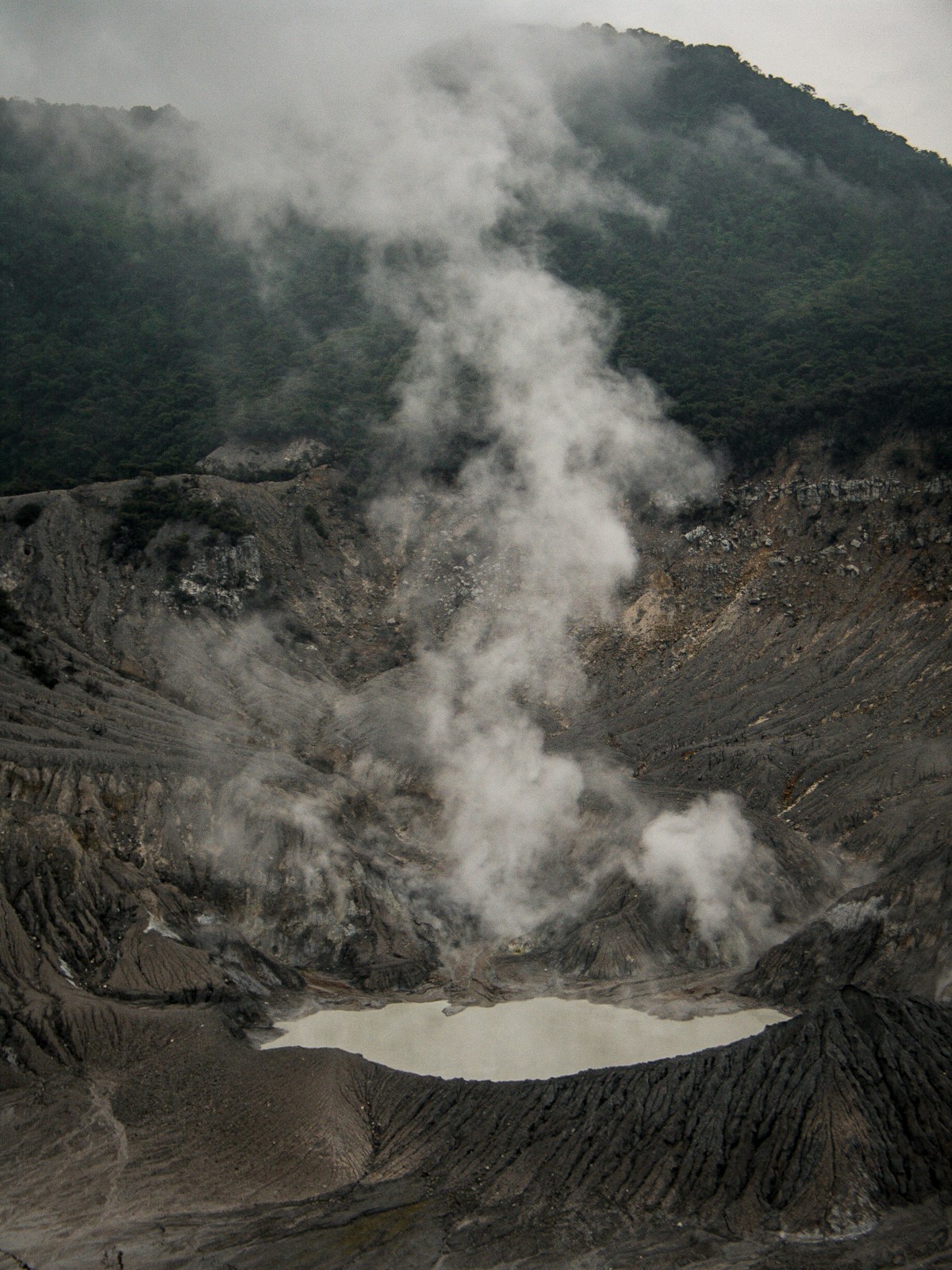
Tangkuban Perahu Volcano - An active stratovolcano approximately 28 km north of Bandung, named for its resemblance to an upturned prahu (boat) when viewed from the city. Visitors drive or ride to the crater rim and look down into the main Kawah Ratu crater, which emits sulphurous gas. Entry for foreign visitors approximately IDR 200,000 as of 2026, open 7am–5pm. The terrain around the main crater is walkable, and on clear days the views are extensive. The site is busiest on weekends; arrive before 9am to avoid coach parties. Check the volcanic activity status before visiting - the site occasionally closes during periods of elevated activity.
Kawah Putih (White Crater) - A striking turquoise-white acidic crater lake at approximately 2,430 metres altitude, roughly 50 km south of Bandung within the Ciwidey tea plantation highlands. Entry for foreign visitors approximately IDR 150,000 as of 2026, open 7am–5pm. The milky colouration results from sulphur compounds and changes hue with temperature and light. The surrounding forested slopes are cold - bring a layer regardless of the weather in the city below. Combine with a tea plantation visit or strawberry farm stop on the way back.
Paris Van Java Mall - Bandung’s most popular upscale shopping mall, with both branded retailers and local fashion labels, plus a range of restaurants and a cinema. Free to enter. The adjoining outdoor area hosts regular food markets and weekend events. More atmospheric than a standard mall; the open-air sections overlook a heritage villa.
Dago Pakar and Forest Walk - The forested hills north of Bandung around Dago Pakar offer hiking trails with city views. Entry to the main access points ranges from free to approximately IDR 20,000. The Curug Dago waterfall is reachable on foot. Early morning walks here are genuinely pleasant - the air is cool and relatively clean.
Saung Angklung Udjo - A Sundanese cultural performance centre in East Bandung, founded by the late angklung (bamboo instrument) master Udjo Ngalagena. Daily performances at 3:30pm combine gamelan, wayang golek puppetry, and mass angklung participation where the audience plays a simplified arrangement. Entry approximately IDR 100,000–150,000 as of 2026. A worthwhile afternoon for visitors interested in Sundanese performing arts rather than purely the scenery.
Factory Outlets - Bandung’s factory outlet district, clustered along Jalan Riau (now renamed Jalan LL RE Martadinata), Jalan Cihampelas, and Jalan Setiabudi, sells surplus and over-run stock from Indonesian garment factories at significantly below retail prices. Branded items, denim, sportswear, and locally designed fashion are all well represented. Bargaining is less common than in street markets - most outlets have fixed prices. This is one of the main reasons domestic Indonesian visitors come to Bandung.
Hotels
For a neighbourhood-by-neighbourhood breakdown of where to stay in Bandung - central, Dago, and hillside options - see our Bandung where to stay guide.
Trans Luxury Hotel (upscale) - Part of the Trans Studio complex in central Bandung, with large rooms, a good pool, and direct mall and theme park access. From approximately USD 80 per night as of 2026.
Padma Hotel Bandung (upscale) - Set on a hillside north of the city in the Ciumbuleuit area, with exceptional valley views and a long cantilevered infinity pool. From approximately USD 100 per night as of 2026. The setting is the main draw; it’s a taxi ride from the city centre.
Grand Royal Panghegar (mid-range) - A large hotel on Jalan Merdeka in the city centre, practical and well-positioned for central Bandung. From approximately USD 50 per night as of 2026. Reliable rather than distinctive.
De Batara Hotel (budget) - A clean budget hotel in central Bandung, with simple air-conditioned rooms at reasonable value. From approximately USD 20 per night as of 2026.
Search all hotels in Bandung on Booking.com
Restaurants
For a fuller guide to Sundanese cuisine, Braga café culture, and the best street food in Bandung, see our Bandung food guide.
Warung Nasi Ampera - The most accessible introduction to Sundanese cuisine: a counter-service restaurant where you select from a spread of dishes - lalab (raw vegetables and sambal), fried tofu and tempeh, various sambals, and braised or grilled meats - served with steamed rice wrapped in banana leaf. Approximately IDR 40,000–80,000 per person. Multiple branches throughout Bandung; the format is identical to the Jakarta chain.
Atmosphere - A hilltop restaurant on the Dago Pakar road with expansive views over northern Bandung, particularly good after dark when the city lights are visible. The menu covers Indonesian and Western dishes. Approximately IDR 150,000–300,000 per person. The food is secondary to the setting, but it is competently executed.
Dapur Solo - A Javanese restaurant in Bandung offering the contrasting sweeter, soy-sauce-forward flavour profile of Central Java alongside the more chilli-forward Sundanese food that dominates locally. Good for variety. Approximately IDR 60,000–100,000 per person.
Mie Kocok Mang Dadeng - A local institution for mie kocok, Bandung’s signature dish: thick wheat noodles in a rich beef-bone broth with bean sprouts and crispy beef tendon. Approximately IDR 30,000 per bowl. A lunchtime queue is standard; arrive early or late. This is the kind of place Bandung residents direct each other to, not the kind that appears in international guidebooks.
Getting There and Getting Around
By train from Jakarta - The most comfortable and reliable option. Argo Parahyangan trains run frequently from Jakarta’s Gambir station to Bandung’s Kiaracondong or Bandung station; journey time approximately 3 hours; executive class approximately IDR 80,000–150,000 as of 2026. Trains depart roughly every 1–2 hours from early morning.
By road from Jakarta - The Cipularang toll road covers the 150 km between Jakarta and Bandung in approximately 2.5 hours in off-peak conditions; double this during Friday evening and Sunday afternoon when the route carries heavy weekend-break traffic.
Husein Sastranegara Airport (BDO) handles a limited number of domestic routes plus a handful of international connections, primarily to Singapore and Kuala Lumpur. The airport is inconveniently small for its catchment area; most long-haul travellers route via Jakarta.
Within Bandung, Grab and Gojek are the most practical transport options. The city has extensive one-way street systems and traffic congestion that make self-driving difficult unless you know the roads. Angkot (minibuses) cover most routes cheaply but are slow and hard to navigate without local knowledge.
Best Time to Visit
Bandung’s altitude buffers it from the worst of Java’s heat, making it comfortable year-round. The wet season (November–March) brings regular afternoon rain; the dry season (April–October) is more pleasant for outdoor volcano visits. Weekdays are significantly quieter than weekends - if your schedule allows, visiting Tuesday–Thursday avoids the Jakarta weekend influx and gives you better access to factory outlets, restaurants, and volcano sites.
Practical Tips
The factory outlet district is best visited on a weekday morning before coach groups arrive. Many outlets open from 9am; by 11am at weekends the car parks are full. For volcano visits, petrol station attendants near Tangkuban Perahu sometimes try to charge informal “parking fees” before the official entrance - ignore these and proceed to the ticket booth. Kawah Putih’s altitude means it can be cold even when the city is warm; a light jacket is not optional. Sundanese food is generally pork-free and often features freshwater fish (gurame, nila) - a contrast to the heavier beef-based dishes of Central Java.
Browse tours and day trips in Bandung - a half-day with a local guide is one of the most efficient ways to get oriented on arrival. For airport transfers into Bandung, Kiwitaxi offers fixed-price pickups from the main airports - no surge pricing and the driver meets you at arrivals.
More Bandung Guides
- Things to do in Bandung - Tangkuban Perahu, Kawah Putih, factory outlets, and the arts district
- Where to stay in Bandung - boutique hotels, guesthouses near Dago, and weekend-getaway options
- Food guide to Bandung - Sundanese cuisine, batagor, siomay, and Bandung’s vibrant café scene
- Day trips from Bandung - volcanoes, tea plantations, rice terraces, and the best escapes from the city
- Bandung for digital nomads - coworking spaces, café wifi, and cost of living as a remote worker
Book an experience
Top experiences in Bandung
Explore the best tours and activities in Bandung , with instant confirmation and free cancellation on most bookings.