Kuta Travel Guide: Surf, Budget Travel & Nightlife in Bali
Learn to surf on beginner-friendly breaks, eat cheap warungs, and walk to the airport - Kuta is Bali's lowest-barrier beach district and proudly knows it.
Guides for Kuta
Search hotels in Kuta on Booking.com
Kuta is the first place most visitors to Bali encounter, positioned roughly 3 km from Ngurah Rai International Airport along a flat coastal strip of black-sand beach. It has been Bali’s primary tourist district since the 1970s and carries the character of a place that developed fast to meet demand without much planning oversight. The result is a dense grid of surf shops, budget guesthouses, money changers, restaurants, and bars concentrated on and around Jalan Pantai Kuta and the adjoining Poppies Lanes. Kuta is not Bali at its most refined, but it is convenient, affordable, and genuinely energetic - and the surf conditions at its beach are legitimately good for beginners.
Areas and Orientation
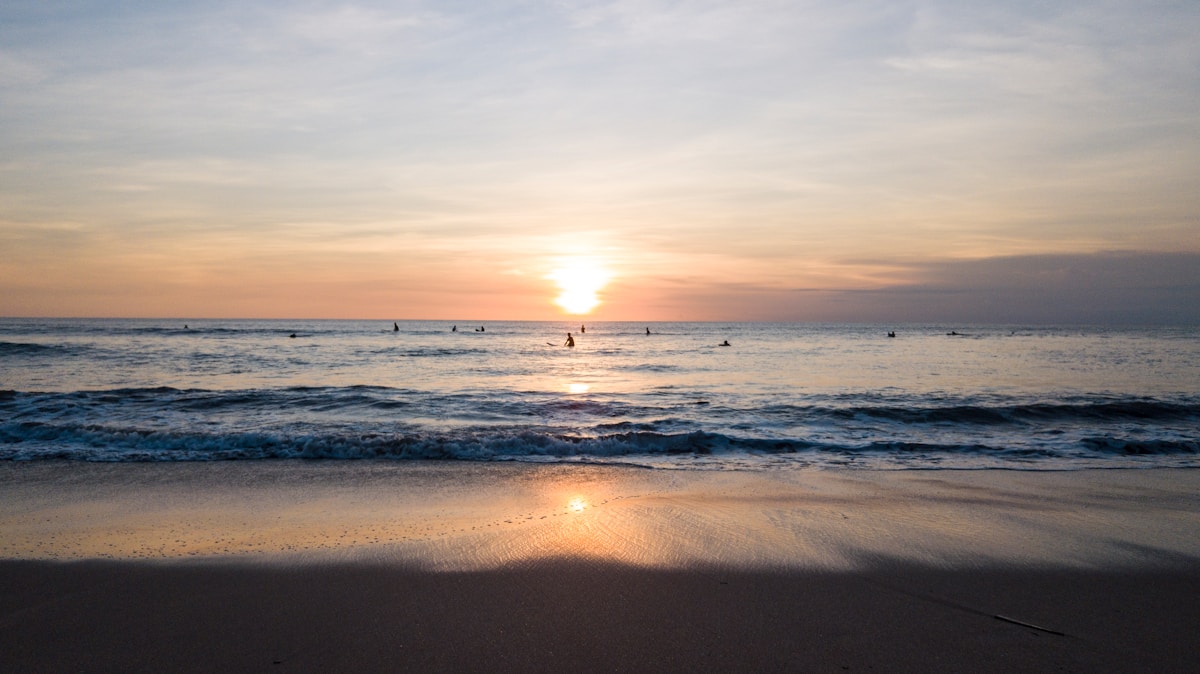
Kuta’s central spine is Jalan Pantai Kuta, which runs parallel to the beach before curving south toward the airport. Poppies Lane I and II branch east from the main beach road, forming a dense network of guesthouses, small restaurants, and tour operators - much of Kuta’s budget accommodation is concentrated here. Legian, immediately north, blends with Kuta without a clear boundary and is slightly quieter. Tuban, to the south near the airport, is where most of the larger resort-style hotels sit. The beach itself faces west, making it one of the better sunset vantage points on Bali’s coast.
Things to Do in Kuta
For a complete rundown of surf breaks, beach activities, and day trips from Kuta, see our Kuta things to do guide.
Surfing and Beach Activities
Kuta Beach - A 3 km stretch of brown-grey sand with a consistent beach break that produces waves suitable for beginner and intermediate surfers. Free to access from multiple public points along the main beach road. The beach is lifeguarded, which distinguishes it from many of Bali’s more remote surf spots. Expect it to be busy from 9am onwards during high season. The best surf conditions are generally early morning (6–9am) before the wind picks up, and again in the late afternoon.
Named surf schools:
- Rip Curl School of Surf - The most established operation on the beach, located at the southern end near the Discovery Mall. Group lessons (1.5–2 hours including board and rashguard) cost approximately IDR 350,000 as of 2026. Private lessons approximately IDR 500,000. They also run intermediate sessions further up the coast.
- Odysseys Surf School - On the main beach strip near Poppies Lane II. Group lessons approximately IDR 250,000, private approximately IDR 400,000 as of 2026. Smaller groups than Rip Curl.
- Pro Surf School - Near the beach entrance on Jalan Pantai Kuta. Competitive pricing at approximately IDR 200,000 for a group lesson as of 2026. Good for absolute beginners.
The southern section of Kuta Beach (toward Tuban and the airport) tends to be less crowded and has a gentler break suitable for first-timers. The northern section approaching Legian has slightly larger waves.
Waterbom Bali
A well-maintained waterpark in Tuban, roughly 2 km south of the central beach strip. Regarded as one of the better waterparks in Southeast Asia in terms of slide variety and maintenance standards. The park covers 3.8 hectares and includes 22 rides ranging from gentle lazy rivers to the Climax - a near-vertical drop slide.
- Entry: approximately IDR 535,000 for adults, IDR 385,000 for children under 12, as of 2026
- Hours: daily 9am–6pm
- Tips: Book online in advance during July–August to guarantee entry and access cheaper advance-purchase rates (approximately 10–15% discount). The park is busiest 11am–2pm; arrive at opening for shorter queues. Lockers and towels available for rent.
Kuta Art Market
A covered market on Jalan Raya Kuta selling the standard range of Balinese tourist goods: sarongs, woodcarvings, paintings, bags, and clothing. Free to enter. Prices are tourist-tier and negotiation is expected - starting prices are typically 2–3 times the realistic final price. Similar goods are available more cheaply at Ubud Market, but Kuta is more convenient for airport-adjacent purchases. Open daily from approximately 9am to 9pm.
Beachwalk Shopping Centre
A modern open-air mall on Jalan Pantai Kuta, directly across from the beach. Air-conditioned shops, international brands (Zara, H&M, Swatch), a cinema, and a food court with both Indonesian and Western options. The upper-level terrace has direct views of the sunset over the beach. Free entry; a useful escape from the heat during the middle of the day. Open daily 10am–10pm.
Poppies Lane I & II
Less attractions in themselves than the physical structure of Kuta’s budget economy. The two lanes run parallel for several hundred metres, each packed with small restaurants, travel agencies, laundry services, and guesthouses. Walking both takes under 30 minutes and gives a comprehensive picture of what Kuta’s backpacker infrastructure looks like. Poppies Lane I has more restaurants and bars; Poppies Lane II is denser with budget accommodation and convenience stores.
Temples Near Kuta
Pura Tanah Lot - Bali’s most photographed sea temple, approximately 20 km northwest of Kuta (45 minutes by car or Grab). The temple sits on a rock formation offshore and is accessible on foot at low tide. Entry approximately IDR 60,000 for international visitors as of 2026. Best visited in the late afternoon for sunset. Extremely popular - expect crowds.
Pura Uluwatu - A clifftop temple at Bali’s southern tip, approximately 30 minutes south of Kuta. Entry approximately IDR 50,000 as of 2026. The Kecak fire dance performance at sunset (approximately IDR 150,000) is worth attending. Watch for monkeys - they steal sunglasses, hats, and phones.
Nightlife on Jalan Legian
Kuta’s bar and club strip concentrates on Jalan Legian and the streets branching off it. The scene is loud, commercial, and geared toward younger travellers.
- Sky Garden - The most well-known venue. A multi-floor nightclub with rooftop bar, free entry before 11pm, paid entry (approximately IDR 150,000 including one drink) after. Different music on each floor: top 40, EDM, hip-hop. The rooftop has the best views.
- Paddy’s Bar - An institution on Jalan Legian (rebuilt after the 2002 bombings). Open-air setup, live music early evening, DJs later. No cover charge. Drinks from approximately IDR 50,000.
- Engine Room - A rock and metal bar on Jalan Legian. Niche crowd, live bands some nights. No cover.
- Bounty Discotheque - Shaped like a pirate ship, impossible to miss on Jalan Legian. The interior is as excessive as the exterior suggests. Cover approximately IDR 100,000 on weekends as of 2026.
The strip is active from approximately 10pm until 3–4am. Drink prices at the established venues run approximately IDR 60,000–120,000 for cocktails, IDR 40,000–60,000 for beer.
Hotels
For a neighbourhood-by-neighbourhood breakdown of accommodation across Kuta, Legian, and Tuban, see our Kuta where to stay guide.
Pullman Bali Legian Nirvana (upscale) - A large resort hotel on Jalan Melasti at the northern end of Kuta/Legian, with an outdoor pool, beach access, and the infrastructure expected of a five-star international brand. From approximately USD 150 per night as of 2026. The best upper-end option directly in the Kuta corridor.
Hard Rock Hotel Bali (mid-range) - On Jalan Pantai Kuta, with a large pool complex, direct beach access, and a family-oriented atmosphere. From approximately USD 100 per night as of 2026. The pool area is consistently busy during high season; book a room with pool view if paying the higher rate.
Masa Inn (budget) - A family-run guesthouse on Poppies Lane II with clean rooms, reliable air conditioning, and a simple breakfast included. From approximately USD 15 per night as of 2026. Representative of the honest budget end of Kuta’s accommodation market - no frills, functional, and centrally located.
Restaurants
For a broader look at Kuta’s dining scene from local warungs to beachfront bars, see our Kuta food guide.
Made’s Warung - One of Kuta’s oldest surviving restaurants, open since 1969 on Jalan Pantai Kuta. The menu covers Balinese staples - nasi goreng, mie goreng, satay, gado-gado - alongside some Western options. Approximately IDR 100,000–200,000 per person. The food is consistent and the setting unpretentious; it has outlasted dozens of more fashionable restaurants nearby.
Poppies Restaurant - A garden restaurant on Poppies Lane I, operating since 1973, with a menu that straddles Indonesian and international cooking. Approximately IDR 150,000–300,000 per person. The setting - low lighting, lush garden, thatched pavilions - is a reminder of what Bali’s tourist dining once looked like before open-air concrete replaced it.
Kopi Pot - A two-floor café-restaurant on Jalan Legian with a menu covering Indonesian dishes, sandwiches, and a solid breakfast list. Approximately IDR 80,000–150,000 per person. Popular with longer-stay visitors for its reliable quality and consistent wifi.
Kuta’s bar strip concentrates on Jalan Legian and extends into the streets south of Poppies Lane II. The cluster includes Sky Garden (multi-floor nightclub with food, free entry before 11pm) and numerous smaller bars running open-tab promotions. The area is loud from 10pm onwards and quiet by comparison before 9pm.
Getting There and Getting Around
Kuta is the closest beach district to Ngurah Rai International Airport - roughly 3 km by road, taking approximately 15–20 minutes without traffic. A Grab or Gojek ride costs approximately IDR 60,000–80,000. Airport taxis at the fixed-rate desk inside arrivals charge significantly more - the metered Blue Bird taxis outside departures are a cheaper alternative for the short Kuta transfer.
Within Kuta, most of the central area is walkable. Poppies Lanes and the beachfront are best navigated on foot - the roads in the grid are often congested and scooter movement is difficult during the day. For travel north to Seminyak or Canggu, or east to Ubud, Grab is practical. Scooter rental is available throughout (approximately IDR 70,000–100,000 per day) but the main streets require patience with traffic.
Best Time to Visit
Dry season (May to September) is the conventional recommendation. Kuta’s beach conditions are most consistent from June to August, though these months also bring the largest crowds and the highest accommodation prices. If Kuta is purely a transit point before moving elsewhere, the timing matters less - the airport proximity and range of transport connections work year-round.
Practical Tips
An honest assessment: Kuta is the most commercially saturated and crowded beach area in Bali. It suits short stays, budget travellers, and first-time visitors who want convenience and nightlife. Those seeking a quieter or more culturally immersive Bali experience are better served by basing themselves in Seminyak (upscale, 10 minutes north), Canggu (surf and café culture, 30 minutes north), or Ubud (cultural and arts, 1.5 hours east). Kuta does what it does efficiently - affordable accommodation close to the airport, surf lessons, organised tours to the rest of the island, and a complete range of budget dining. Don’t arrive expecting anything else and it will not disappoint.
Money changers in Kuta have a documented history of short-changing through sleight of hand. Use Dirgahayu or Central Kuta exchange counters, always verify the rate on the board before handing over cash, and count every note yourself before walking away.
Browse tours and day trips in Kuta - a half-day with a local guide is one of the most efficient ways to get oriented on arrival. For airport transfers into Kuta, Kiwitaxi offers fixed-price pickups from the main airports - no surge pricing and the driver meets you at arrivals.
More Kuta Guides
- Things to do in Kuta - surf schools, temples, markets, and day trips from Bali’s original resort strip
- Where to stay in Kuta - budget hotels, surf hostels, and mid-range options near the beach
- Kuta food guide - the best warungs, seafood spots, and restaurants in Kuta and Legian
- Getting around Bali - Grab, scooters, and drivers for moving between Kuta, Ubud, and beyond
- Airport transfer Bali - options for the short transfer from Ngurah Rai to Kuta
Book an experience
Top experiences in Kuta
Explore the best tours and activities in Kuta , with instant confirmation and free cancellation on most bookings.