Where to Stay in Raja Ampat: Homestays, Eco-Resorts & Liveaboards
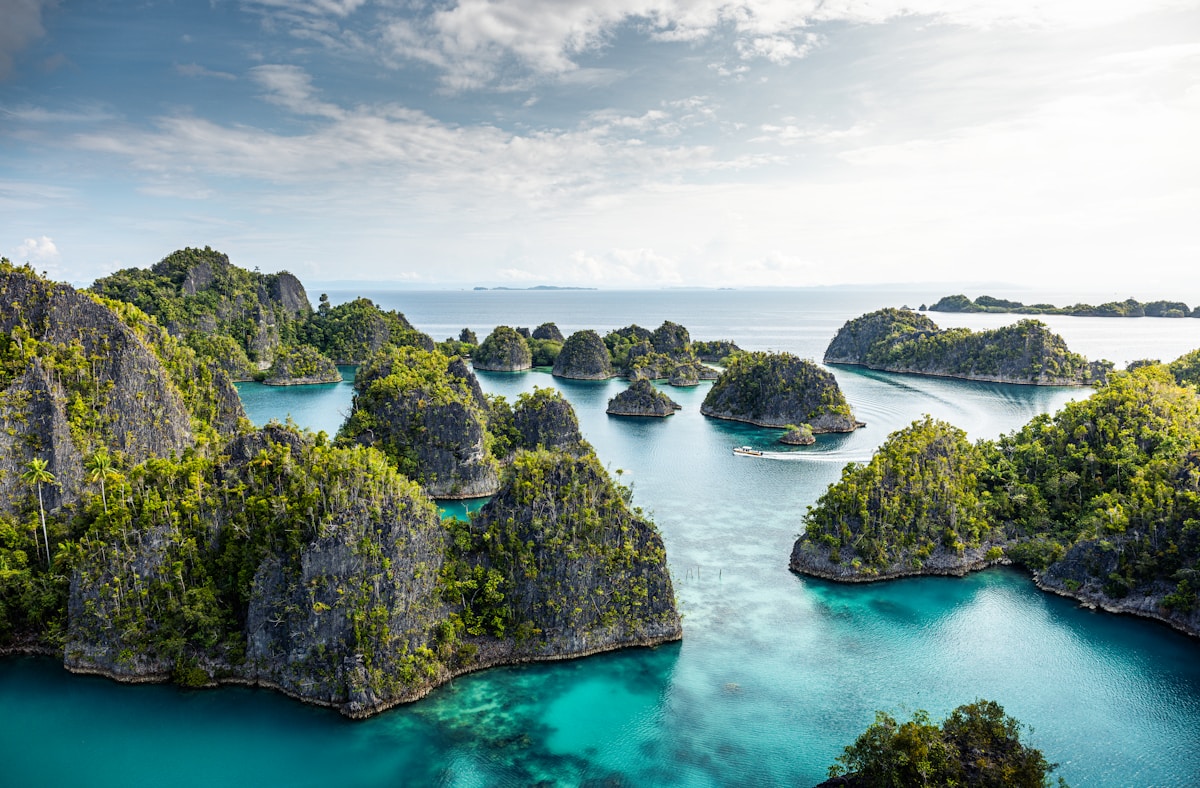
Raja Ampat, in Indonesia’s West Papua province, is a 4-million-hectare marine park holding the world’s most biodiverse coral reef system. Getting there requires a flight to Sorong followed by a ferry to the island of Waigeo, then onward boat travel to wherever you are staying — a journey of 6–10 hours from Bali or Jakarta. That distance is part of what keeps the reefs intact.
Accommodation here falls into three clear tiers with minimal overlap. The choice between homestays, eco-resorts, and liveaboards determines not just your budget but the entire character of your trip.
Important Logistics Before You Book
Cash only: There are no functioning ATMs in Raja Ampat outside Waisai town, and even the Waisai machine runs out. Bring all cash you will need in Indonesian rupiah from Sorong’s city centre or from Manado. Most resorts and homestays quote prices in USD but accept IDR at a reasonable exchange rate. Card readers exist at a handful of resorts but connectivity is not reliable.
Power: Most homestays and smaller resorts run diesel generators, typically providing power from late afternoon until around 10pm–midnight. Solar systems are increasingly common. Assume your devices may charge only a few hours per day unless a resort specifically states 24-hour power.
Mosquitoes: Present at dawn and dusk across all islands. Bring repellent and a mosquito net if you are staying in a basic homestay.
Entry fee: All visitors to Raja Ampat must pay a marine park entry fee of approximately IDR 1,000,000 (around USD 65 as of 2026) per person. This is separate from accommodation costs and valid for one year. Collect the tag from the Waisai harbour office — rangers check for it on patrol.
Tier 1: Homestays
Local homestays are the budget tier in Raja Ampat and also the option that puts money most directly into community hands. Typically run by Papuan families on small islands, they offer basic accommodation: a plank room, a mattress, a mosquito net, and a fan. Meals — three a day — are usually included in the rate, and fresh fish is frequently on the menu.
What to expect: Basic outdoor bathrooms (mandi — bucket shower over a drain). Generator power evenings only. A house reef accessible by swimming directly from the jetty. A family who will take you to snorkel sites by boat for a negotiated additional fee (approximately IDR 300,000–500,000 per boat trip).
Cost: Approximately IDR 400,000–700,000 per person per night, including three meals. This represents significant value given the remoteness of the location.
How to book: Homestays are not consistently listed on booking platforms. The best routes are the Raja Ampat Dive Lodge homestay network, recommendations from the Waisai tourism office, or direct contact via WhatsApp numbers shared in diving and travel forums. English communication may be limited — patience is useful.
Best islands for homestays: Kri, Gam, Mansuar, Arborek, Yenbuba.
Tier 2: Eco-Resorts
Eco-resorts occupy the middle and upper-middle market in Raja Ampat. Most were established by conservationists and dive operators rather than hospitality groups, and the emphasis on reef protection tends to be genuine rather than cosmetic. Many operate as dive camps as much as hotels, with house dive boats, equipment rental, and guided dive packages included or available on-site.
Kri Eco Resort (Kri Island) is one of the oldest established resorts in Raja Ampat with a reputation for excellent diving off the house reef. Accommodation is simple but sea-facing, from approximately USD 80–120/night per person on a full-board basis. This is a no-frills resort — comfort is basic but the location and diving quality are consistently rated.
Raja Ampat Biodiversity Eco Resort (Gam Island) offers more polished accommodation with overwater bungalows and PADI dive centre, from approximately USD 150–250/night per person all-inclusive. Diving and snorkelling are the primary activities; the house reef is accessed directly from the jetty.
Sorido Bay Resort (Kri Island) offers bungalow accommodation in a forested setting with a private beach and dive packages available, from approximately USD 120–200/night. The operation has a long track record and consistent reviews.
Misool Eco Resort (South Raja Ampat) is in a different category — a luxury conservation resort operating within a privately funded no-take marine sanctuary. Rooms and dive packages from approximately USD 350–600/night per person, all-inclusive. The marine sanctuary status means the diving around Misool is among the best in the entire region, with visibly higher fish density and larger sharks than most north Raja Ampat sites. Bookings require significant lead time — the resort has limited capacity and a waiting list during peak season (October to April).
Tier 3: Liveaboards
A liveaboard dive boat is the highest-mobility option and the only way to access Raja Ampat’s most remote dive sites in a single trip. You sleep on the boat, move to a new dive location every day or two, and cover 5–10 dive sites per day across the 4-day to 10-day itinerary. The diving quality available via liveaboard is categorically higher than any fixed-base resort, simply because the best sites are scattered across a 300-kilometre stretch of ocean.
Budget liveaboards cater to younger divers and backpackers with smaller boats (typically 6–12 guests), simpler cabins, and reasonable diving at approximately USD 130–200/night per person inclusive.
Mid-range liveaboards offer en-suite cabins, air conditioning, a proper dining area, and experienced dive guides for approximately USD 200–350/night per person. Operators include Kararu, Damai, and others operating seasonal itineraries from Sorong.
Luxury liveaboards (Arenui, Rascal, Seven Seas) run fully air-conditioned vessels with private cabins comparable to boutique hotel rooms, photography facilities, and expert naturalist guides at USD 400–700/night per person. These vessels book 6–12 months ahead for October–April peak season.
Book via: liveaboard.com is the most comprehensive aggregator; direct booking with operators is sometimes available at slight discount for longer itineraries. Confirm that the operator holds a Raja Ampat National Park permit before booking.
When to Go
October to April is peak diving season, with calmer seas and the best visibility. May to September brings rougher conditions in the southern areas (around Misool particularly) but the north remains diveable. Liveaboard and eco-resort peak season bookings should be made 3–6 months ahead.
While you're there
Things to do while you're there
Sorted your stay? Browse the top-rated activities and day trips from here.
Sorted your stay?
Here's how to get there — and get around once you arrive.
Airport Transfer
Fixed-price airport pickup — driver meets you at arrivals, no haggling.
Book a Transfer →We may earn a small commission — at no extra cost to you.